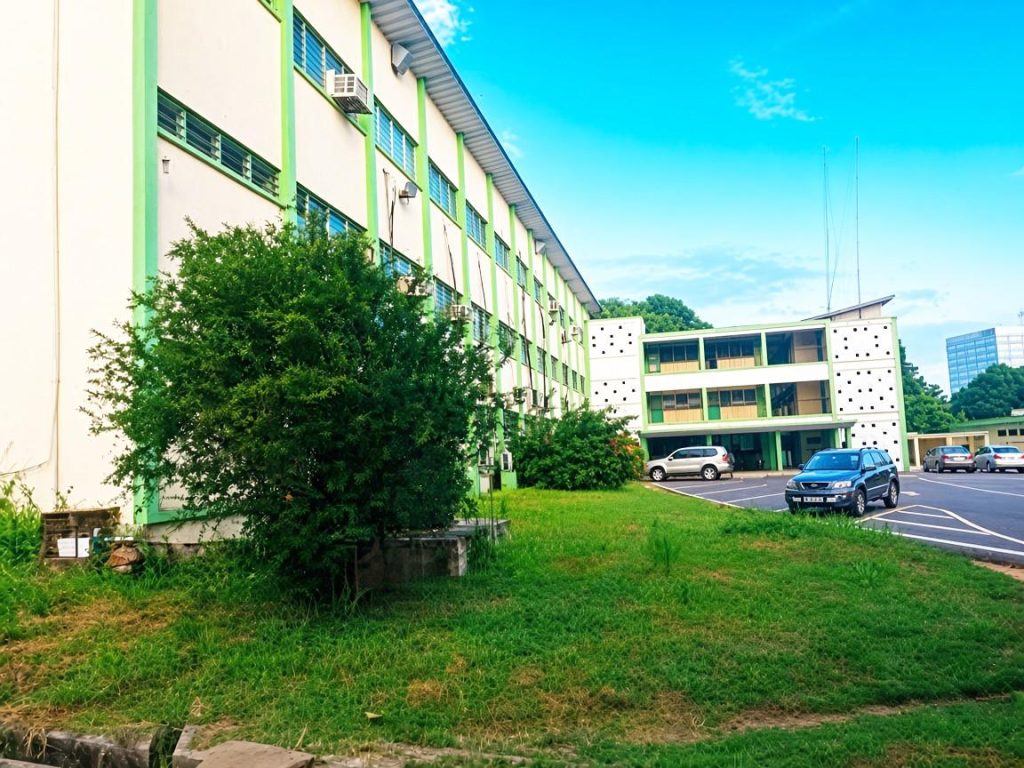
For decades, the Ghana Broadcasting Corporation (GBC) has been more than just a television and radio station. It has been a national institution — a familiar voice in Ghanaian homes, a keeper of important historical moments and one of the country’s most recognisable public broadcasting platforms.
But today, the physical environment and some aspects of the broadcasting infrastructure associated with GBC raise an uncomfortable question: has Ghana allowed one of its most important national institutions to fall behind the times?
A visit to parts of the corporation can easily create the impression that the institution desperately needs a comprehensive facelift.
This is not just about painting walls, replacing old furniture or putting up a new signboard. It is about rethinking what a modern public broadcaster should look like, how it should operate and what kind of environment its journalists, producers, technicians and other professionals deserve.
The national institution (GBC) deserves a national-standard facility carries a unique responsibility.
Unlike a purely commercial broadcaster whose survival is primarily tied to ratings and advertising revenue, a public broadcaster has a broader mandate. It is expected to inform, educate and entertain while preserving important aspects of Ghana’s cultural and national identity. That responsibility should be reflected in its working environment.
A modern public broadcaster should have attractive studios, properly equipped newsrooms, reliable production facilities, comfortable working spaces, modern editing suites and infrastructure capable of supporting both traditional broadcasting and digital media.
GBC should not merely tell the story of Ghana’s transformation. Its own facilities should be part of that transformation. The media industry has undergone a technological revolution. Television is no longer confined to the television set. Radio programmes are streamed online. News is consumed through smartphones. Interviews can be broadcast simultaneously on television, YouTube, Facebook and other digital platforms.
Newsrooms now require facilities that can support video production, podcasts, livestreams, social media content, digital archives and rapid multimedia publishing. This means that renovating GBC cannot be treated as a cosmetic project.
The corporation needs infrastructure designed for 21st-century broadcasting. A modern newsroom, for example, should allow journalists to move seamlessly between television, radio and digital production. Studios should be flexible enough to accommodate different programmes. Technical infrastructure should be reliable enough to minimise interruptions and production challenges.
The Working Environment:
There is another important dimension that is sometimes overlooked: the people who work at GBC. Journalists, producers, camera operators, engineers, presenters, administrative staff and other employees spend significant portions of their lives inside the corporation’s facilities.
The quality of their working environment can affect morale, productivity and creativity. A broadcaster cannot expect its employees to consistently produce world-class content while working in facilities that appear neglected or outdated.
Renovation should therefore be viewed not just as an investment in only the buildings, but as an investment in the working crew. There is also an opportunity here that goes beyond repairing old infrastructure.
A renovated GBC could become a showcase of Ghanaian architecture, art, culture and creativity. Imagine entering the headquarters of Ghana’s public broadcaster and seeing a modern reception area celebrating the country’s broadcasting history, carefully curated photographs of historic broadcasts, digital displays showcasing Ghanaian achievements and spaces designed by Ghanaian architects and creatives.
The building itself could tell a story. It could preserve the past while communicating a clear message about the future.
One of GBC’s most valuable assets may not be its buildings at all. It is the enormous historical record contained within its archives. For generations, GBC has recorded political events, cultural programmes, national celebrations, interviews, sporting moments and other events that form part of Ghana’s history. These materials are priceless.
A serious renovation programme should therefore include a major digital preservation and archival project. Old tapes and recordings should be professionally preserved, digitised, catalogued and made accessible where appropriate. Future generations should not have to depend on deteriorating physical media to discover the country’s broadcasting history.
Jon Germain Hits 30 Years In Media – Exclusive Reflections
Calls for renovation should also come with a demand for accountability. Ghana has seen major public projects become unnecessarily expensive because of weak procurement practices, poor supervision, abandoned contracts and cost overruns.
Any GBC redevelopment programme should therefore have clearly defined phases, transparent procurement, professional project management and publicly available information about costs and progress.
The objective should not be to create another expensive government project. It should be to create a functional, sustainable and professionally managed public broadcasting centre. GBC does not necessarily have to compete with commercial broadcasters by copying everything they do.
Its strength lies in its public-service role. It can become the institution that provides credible national information, preserves Ghanaian culture, documents history and gives space to voices that may not always attract commercial interest.
But to fulfil that role effectively in today’s media environment, it needs the tools to match the ambition.
A modern GBC could have integrated television and radio studios, digital production rooms, podcast facilities, modern newsrooms, training centres, upgraded transmission infrastructure and dedicated spaces for emerging technologies.
The debate about GBC’s physical condition should therefore not be reduced to whether the premises need a fresh coat of paint. The deeper issue is what kind of public broadcaster Ghana wants in the future.
If Ghana believes that public broadcasting still has a role to play — and there are strong reasons to believe it does — then the institution must be given the infrastructure, technology and working environment necessary to fulfil that role by the government.
GBC has been part of Ghana’s story for generations. Now, Ghana has an opportunity to ensure that GBC remains part of its future. The country does not only need to renovate a building. It needs to renew a national institution.