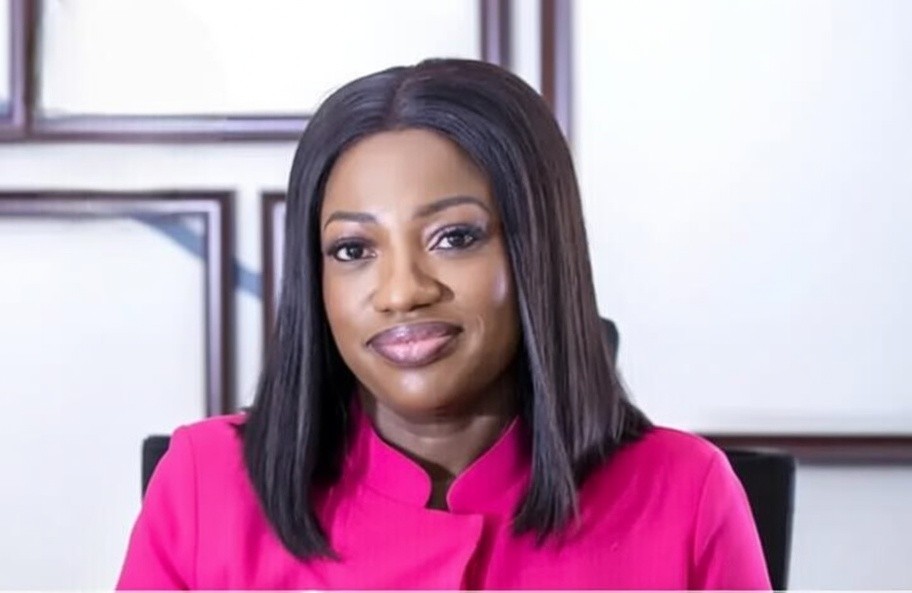
President Mahama has nominated a seasoned public finance expert to lead Ghana’s financial oversight institution — and if confirmed, she will shatter a glass ceiling that has stood since the nation’s founding.
On April 10, 2026, President John Dramani Mahama set in motion what could become one of the most consequential appointments in Ghana’s fiscal governance architecture. His nominee: Pamela Graham — a veteran public finance expert and Senior Partner at Ernst & Young (EY) Ghana — tapped to become the country’s next Auditor-General.
The nomination was not a quiet administrative move. Officially communicated to the Council of State by the Secretary to the President, it followed the constitutional framework laid out in Article 70(1)(b) of Ghana’s 1992 Constitution, which mandates that the President seek the advisory body’s input before finalising such an appointment.
The Council of State is now expected to review Graham’s curriculum vitae and render its advice before the President proceeds with the formal confirmation.
Who Is Pamela Graham?
Graham is no stranger to the complex terrain of public financial management. Since joining EY Ghana as Senior Partner in 2020, she has built a reputation that straddles the worlds of technical auditing and high-level institutional advisory — a rare combination that those familiar with her work say makes her exceptionally well-suited for the role she has been nominated to fill.
Female Lawyers Changing The World: From Pioneers To Modern Leaders
Her professional profile encompasses auditing, public financial management, and institutional governance — the very pillars upon which the Auditor-General’s office rests.
Sources close to the nomination describe her as carrying a strong reputation for integrity and professional excellence, paired with what they characterise as a deep and nuanced understanding of both the technical complexities and the institutional fault lines that define public finance in Ghana.
Her years at EY have not merely been a corporate posting. The firm’s advisory reach across government institutions has given Graham a front-row seat to the inner workings of public financial oversight — an advantage that, observers note, could translate into immediate institutional effectiveness if she assumes the role.
A Historic Threshold
Perhaps the most striking dimension of this nomination is what it represents beyond the technicalities of public finance. If confirmed by the Council of State and formally appointed by President Mahama, Pamela Graham would become the first woman to hold the office of Auditor-General in Ghana’s history.
That milestone has not been lost on the public. Media commentary and public reactions since the announcement have underscored the symbolic magnitude of the moment — a recognition that Ghana’s most senior financial oversight role has, for the entirety of the republic’s existence, been occupied exclusively by men. Graham’s potential appointment would change that, irrevocably.
The Auditor-General’s office is not a ceremonial institution. It is one of the most consequential arms of Ghana’s accountability architecture — charged with auditing government accounts, enforcing compliance with financial regulations, and serving as a frontline guardian of public funds. Done well, the role is a bulwark against waste, misappropriation, and the quiet erosion of fiscal discipline that can hollow out public institutions from within.
Women’s Development Bank: Government Says The Big Launch Is in Final Stages
Graham would be stepping into the role at a moment when expectations are unusually high. Her nomination arrives against the backdrop of sustained national emphasis on fiscal discipline, economic stabilisation, and transparency — a policy climate in which the Auditor-General’s independence and assertiveness carry particular weight. Public discourse around the appointment has already signalled what Ghanaians expect: a proactive, independent, and firm enforcer of accountability, one who will not be reluctant to follow the numbers wherever they lead.
As of the announcement, the incumbent Auditor-General remains Johnson Akuamoah Asiedu, who has held the position since his appointment in 2021 under the previous administration. His tenure is drawing toward a close as the constitutional wheels of transition turn.
With the Council of State now in possession of Graham’s credentials and the formal advisory process underway, the appointment is expected to advance within the coming days. Should she clear that final constitutional hurdle, Pamela Graham will assume leadership of an institution that Ghana is counting on — perhaps more urgently now than at any point in recent memory — to hold the line on financial probity and public trust.