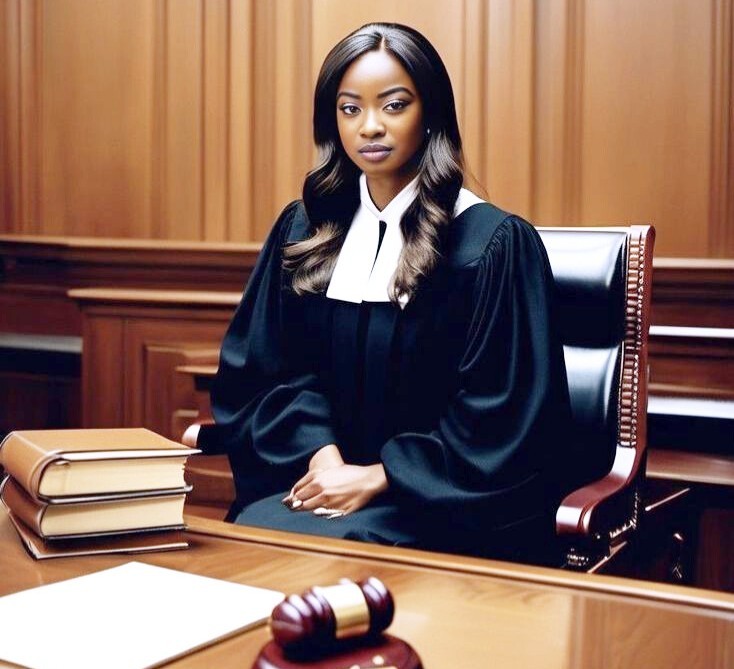
There is a version of legal history that fits neatly into textbooks — landmark rulings, towering institutions, names etched into marble. For most of that history, those names were exclusively male. The courtrooms were male. The judgeships were male. The bar associations, the law schools, the very concept of who belonged in a legal career — all of it constructed around the assumption that women had no place inside it.
That assumption did not go quietly. It was fought, argued down, legislated against, and ultimately dismantled — largely by the very women it was designed to exclude.
Female lawyers have not merely participated in the legal profession. They have remade it — breaking open its doors, reshaping its values, redirecting its power toward the people it most often failed, and building a more inclusive vision of what justice can look like.
The Pioneers Who Refused to Be Told No!
The resistance to women in law was not subtle. It was institutional, deliberate and sustained. Which makes the story of those who broke through all the more remarkable.
In 1869, Arabella Mansfield became the first woman admitted to the bar in the United States, earning her licence in Iowa at a time when most of the country considered the idea of a female lawyer somewhere between scandalous and incomprehensible. Three years later, Charlotte E. Ray made history as the first Black woman lawyer in America — navigating not one but two systems of exclusion simultaneously, and prevailing against both.
Belva Lockwood refused to accept that the doors of the nation’s highest court were closed to her. After Congress passed enabling legislation, she became the first woman to argue before the United States Supreme Court in 1879 — a milestone she did not stumble into but actively campaigned for. These were not women who found a gap in the wall. They were women who built the gap themselves, and held it open for everyone who followed.
Transforming the Law From the Inside:
Breaking into the profession was only the beginning. The deeper transformation came when female lawyers began using their positions to reshape the law itself. Ruth Bader Ginsburg did not simply sit on the United States Supreme Court — she arrived there having spent years as a litigator strategically dismantling gender discrimination case by case, rewriting equal protection jurisprudence from the ground up before she ever donned a justice’s robe. Her work fundamentally altered how American law understood and addressed sex-based inequality.
Sandra Day O’Connor, the first woman appointed to the Supreme Court in 1981, brought a pragmatic and independent judicial voice to some of the most contested questions of her era — reproductive rights, affirmative action, federalism — demonstrating that a woman’s perspective on the bench was not a novelty but a necessity.
Constance Baker Motley channelled her legal brilliance into the civil rights movement, contributing to landmark litigation including Brown v. Board of Education, the ruling that struck down racial segregation in American public schools and reshaped the moral and legal landscape of the nation.
Dr. Sheila Addo Named Woman Leader Of The Year In Energy Regulation At IWCA 2026
Beyond the United States, women were making their mark on the highest levels of legal authority worldwide. Beverley McLachlin became the first woman to serve as Chief Justice of Canada, presiding over the country’s Supreme Court with a legacy of principled, independent jurisprudence that influenced legal thinking across the common law world.
What these women achieved collectively goes beyond individual biography. They shifted the legal profession from an almost exclusively male preserve into one that increasingly reflects the diversity of the society it exists to serve. Their presence in courtrooms and on benches changed not only who practised law, but how it was practised — introducing greater attention to the lived experiences of women and marginalised communities, and expanding the profession’s understanding of whose rights deserve vigorous defence.
Their influence rippled outward into policy, into law school enrolment, into the expectations of an entire generation of young women who grew up seeing themselves reflected in the legal world for the first time. Today, women form a substantial and growing share of the global legal workforce — a demographic shift that did not happen by accident. It happened because women who were told they did not belong decided, generation after generation, to show up anyway:
In the U.S., women comprise about 41% of all attorneys (up from 36% in 2014), a majority of law school students (~56% in recent years), and a majority of law firm associates for the first time. The period 2016–2026 has been called the “Decade of the Female Lawyer” by the American Bar Association.
In many countries, women make up over 50% of new entrants and law graduates, with near parity at entry-level positions in large firms. However, representation drops sharply at senior levels: globally, women hold only about 31–32% of senior roles in law firms despite comprising ~50% of lawyers in many jurisdictions. In judiciaries, women are ~43% of judges but far fewer in senior or leadership positions (e.g., 26% in some studies).
This “leaky pipeline” phenomenon highlights both progress in entry and persistent challenges in retention and advancement.
Contributions to Justice, Equality, and Societal Change:
Female lawyers and judges bring diverse perspectives that enrich legal outcomes:
Broader judicial perspectives and empathy: Research and observations suggest women judges often emphasize people-centered justice, exhibit greater empathy in areas like family law, gender-based violence, and labor rights, and help build public trust in courts. They contribute to more collaborative decision-making and consensus-building on collegial courts.
Dede Mantey Is Back: Opens Up On Radio, Music, New Identity And More
Advancing gender justice and human rights: Women in law have driven reforms in areas such as reproductive rights, anti-discrimination, workplace equality, and protections against harassment. Their presence correlates with heightened attention to issues affecting women and marginalized communities, improving the quality and fairness of justice delivery.
Institutional reform and access to justice: Female legal leaders advocate for reforms like better work-life policies, anti-harassment measures, and inclusive practices. Globally, increased numbers of female lawyers enhance access to legal services for women clients, as some studies indicate female practitioners are more likely to serve female clients.
Corporate and policy influence: Women general counsel and partners influence corporate governance, compliance, and ethical standards. They also shape policy through roles in government, international organizations, and advocacy.
Overall, greater female participation strengthens the rule of law by making legal systems more representative, legitimate, and responsive.
Challenges Limiting Full Impact:
Despite gains, barriers constrain the potential impact of female lawyers: Glass ceiling and underrepresentation in leadership: Opaque promotion paths, bias in work allocation, and fewer networking opportunities hinder advancement to partnership or judicial seniority.
Gender pay gap, discrimination, and harassment: These remain widespread, contributing to higher attrition rates among women, especially at mid-career stages.
Work-life balance pressures: Long hours and inflexible structures often clash with family responsibilities, leading to burnout and exits from the profession.
Intersectional issues: Women of color and those from other underrepresented groups face compounded biases, with even lower representation in senior roles.
Recent International Bar Association surveys (covering thousands of women lawyers across 100+ jurisdictions) confirm these structural issues persist despite diversity initiatives.
The growing presence of women in law promises continued positive disruption: more innovative problem-solving, empathetic justice delivery, and equitable reforms. Initiatives like mentorship programs, flexible policies, and data-driven accountability (e.g., tracking promotions and pay) are helping close gaps. Full realization of their impact requires addressing retention, bias, and cultural shifts so that entry-level parity translates to leadership parity.
Generally, female lawyers have not only expanded opportunities within the profession but have made justice systems fairer, societies more equal, and legal outcomes more reflective of diverse human experiences. Their influence continues to grow, even as challenges underscore the need for ongoing systemic change. Progress benefits not just women in law but the rule of law itself.