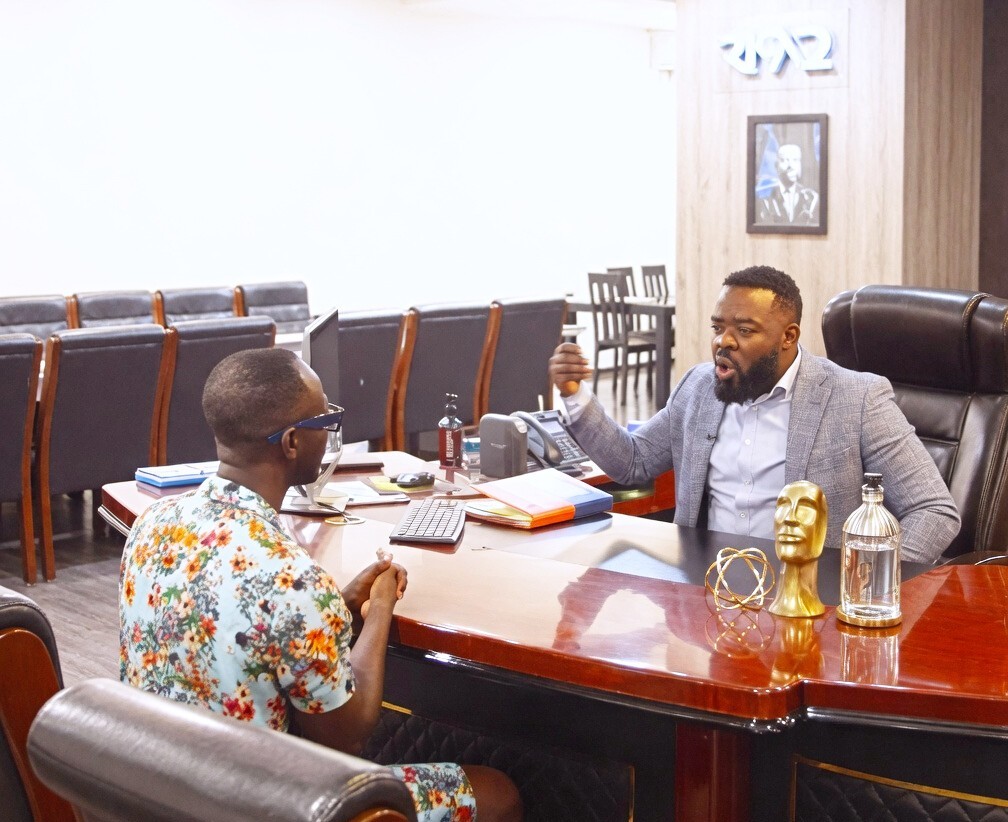
When a powerful businessman publicly honours a promise to a musician, it rarely stays quiet for long. That is exactly what happened when Richard Nii Armah Quaye fulfilled a pledge to award-winning rapper Okyeame Kwame — and the conversation it has sparked is cutting across boardrooms and backstages alike.
The details of the commitment have not been publicly disclosed, but sources familiar with the meeting indicate it was tied to a shared engagement rooted in creativity, entrepreneurship, and building influence within Ghana’s fast-evolving cultural economy. What is known is the rapper’s unambiguous gratitude.
Taking to social media, Okyeame Kwame wrote:
“I wish to thank @richardniiarmahquaye for honoring his promise and showing me this much love. Listen to what he said about appreciation for others and national development.”
Richard Nii Armah Quaye is not a name unfamiliar to Ghana’s financial establishment. Widely respected for his leadership in building one of the country’s foremost financial institutions, he has in recent years carved out a reputation as a champion of youth-driven innovation and cross-sector partnership.
His decision to honour this commitment is being read — by those watching closely — as something more than a personal gesture. It is, industry observers say, a signal. A deliberate one.
“This is about respect for the creative economy,” one industry voice noted. “When influential business figures honour commitments to artists, it sends a message that creative work is valuable and deserves serious investment.”
In a landscape where promises between the corporate world and the entertainment industry often dissolve quietly, the act of following through carries its own symbolism.
More Than a Rapper:
For his part, Okyeame Kwame has spent decades making the case that artists deserve a seat at the table — not as accessories to corporate agendas, but as genuine contributors to national development.
The man they call the “Rap Dacta” has built a career that stretches well beyond the recording booth. From public health advocacy to brand consulting and education, he has methodically bridged the worlds of entertainment and corporate Ghana. His track record of institutional collaborations has helped reshape how the country thinks about the economic value of its artists.
This moment, then, is not incidental. It is the product of years of positioning — of an artist who insisted on being taken seriously, finally being met with the seriousness he demanded.
Fans on social media were quick to make that connection. “This is what he’s been talking about for years — respect, structure, and real partnerships,” one user wrote.
The timing of this development is not lost on observers. Ghana’s creative industry is experiencing a period of mounting domestic and international attention. Music, film, and digital content are no longer peripheral to the economy — they are increasingly central to how Ghana projects itself to the world.
Against that backdrop, the image of a top-tier business leader publicly delivering on a promise to one of the country’s most respected artists lands differently than it might have a decade ago. It feeds a growing conversation about accountability, structured partnerships, and what deliberate investment in the creative sector could unlock — in mentorship, in capital, and in global reach.
Online reactions have been largely celebratory. Many Ghanaians praised Richard Nii Armah Quaye for his integrity, with some describing the move as “a refreshing example of leadership.” Others used the moment as an entry point to broader arguments about recognising creatives as core economic actors, not cultural footnotes.
The full terms of the original promise may remain private. But its fulfilment has made something very public: that when business and creativity converge with mutual respect and follow-through, the ripple effects reach far beyond the two individuals involved.
For Ghana’s next generation of artists watching this unfold, that may be the most valuable thing of all.