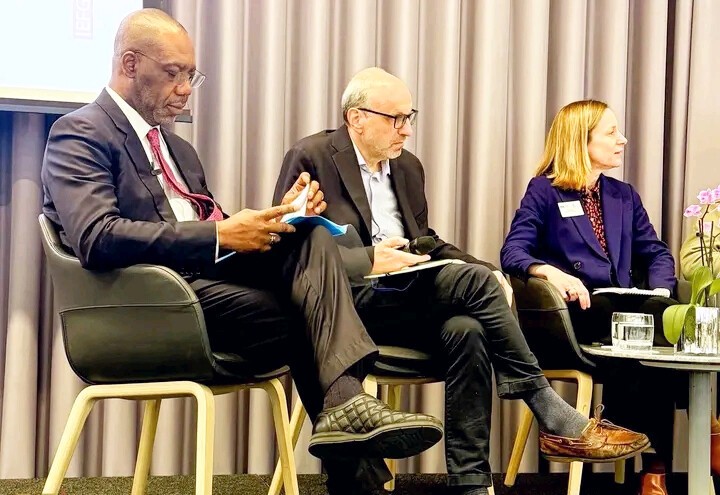
At a moment when the global education landscape is shifting beneath everyone’s feet, some of the world’s leading thinkers on learning and philanthropy gathered in the British capital to ask a pointed question: is the sector doing enough — or merely talking?
Matthew Opoku Prempeh, Ghana’s former Minister of Education and Energy, was among the international voices at the 2026 Annual Convening of the International Education Funders Group (IEFG), a high-level gathering that brought together policymakers, practitioners, and young leaders to confront what many described as one of the defining challenges of the era.
Panelists at the convening painted a picture of a world in flux — declining international aid flows, the creeping advance of isolationist politics, and the sweeping disruption of artificial intelligence reshaping classrooms and curricula across the globe.
Alongside these structural pressures, speakers raised the alarm over something perhaps less visible but equally corrosive: the fragmentation of shared reality. The erosion of trusted information ecosystems, they warned, is quietly undermining civic discourse and making the work of educators immeasurably harder.
In that environment, education systems are being asked to do far more than teach. They must now produce learners capable of thinking critically, resisting misinformation, and navigating a world where facts themselves have become contested terrain.
Opoku Prempeh joined fellow panelists in interrogating whether global stakeholders are rising adequately to these challenges — and the consensus that emerged was uncomfortable for some in the room.
Why Ghana’s Education System Needs an Urgent Revamp Now!
Philanthropy, speakers cautioned, risks becoming its own obstacle. Excessive caution, a preference for funding conversations over action, and the absence of meaningful accountability could render even well-resourced initiatives irrelevant. The message was direct: the era of talking boldly while acting tentatively must end.
What the moment demands, participants agreed, is a decisive shift toward practical, results-driven investment — initiatives that can be measured, held accountable, and built to outlast the funding cycles that created them.
Prempeh and other delegates reinforced a broader conviction that has long underpinned development thinking: that education remains among the most powerful levers available to any society pursuing lasting transformation. But that power, they stressed, is only unlocked when leaders move beyond policy rhetoric and commit to building systems that are genuinely resilient, inclusive, and capable of delivering change at scale.
The 2026 IEFG convening closed with a clear message to the philanthropic community — that the urgency of the moment demands more than consensus. It demands action.