The Grand Arena of the Accra International Conference Centre was transformed into a cathedral of sound and spectacle on Saturday night, May 9, 2026, as the 27th edition of the Telecel Ghana Music Awards brought together the full weight of Ghanaian music culture under one roof — glamour, glory, controversy and all.
Before the first award was called, the red carpet set the tone. Hosted by Godwin Namboh and Regina Van Helvert, the pre-show was a parade of fashion moments that had social media buzzing well before the main event began — some outfits celebrated, others debated, none ignored.
Inside, hosts Naa Ashorkor, AJ Akuoko-Sarpong, and Foster Romanus swept onto a dazzling stage framed by precision lighting, synchronised dancers and dramatic musical transitions, immediately signalling that this was going to be more than a routine awards ceremony.
The Stage Belonged to the Artists:
When the performances began, the Grand Arena came alive in ways that reminded everyone why live music still holds a power no streaming number can fully capture.
Stonebwoy delivered what many in the room described as an elemental experience — a fiery reggae-dancehall set that drew some of the loudest crowd reactions of the evening and reaffirmed his stranglehold on the genre.
Sarkodie commanded the stage with the quiet authority of a veteran who has nothing left to prove. But it was Black Sherif who left the deepest impression, performing selections from his Iron Boy project in a deeply emotional set that fans immediately took to social media to call the performance of the night.
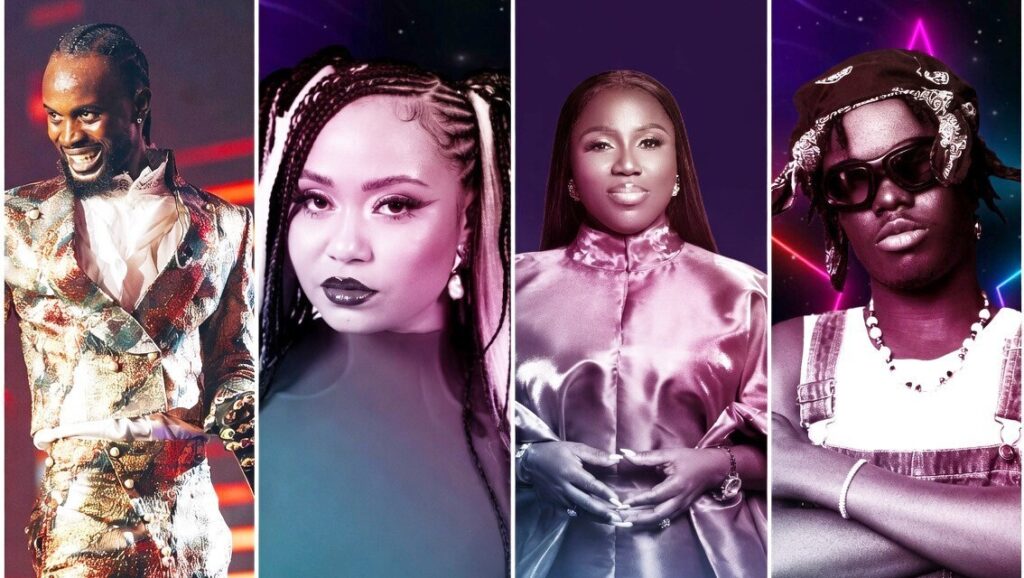
Gyakie, Wendy Shay, Medikal, MOLIY and Diana Hamilton each added their own texture to the evening — afrobeats, rap, soul and gospel woven together into a programme that felt genuinely representative of where Ghanaian music stands right now.
Black Sherif’s Dominant Night:
When the biggest moment of the evening arrived, it belonged to one man. Black Sherif was named Artiste of the Year, defeating a formidable shortlist that included Stonebwoy, Medikal, Wendy Shay, Sarkodie and Diana Hamilton.
The win confirmed what his streaming figures and international profile had been signalling for months — that he is currently operating at a level few Ghanaian artists can match. He did not stop there. He also claimed Album/EP of the Year for Iron Boy and Songwriter of the Year for Sacrifice, making him unquestionably the biggest winner of the night.
Medikal, meanwhile, had plenty of his own reasons to celebrate. He walked away with Best Hiplife Song and Most Popular Song for Shoulder, his infectious collaboration with Shatta Wale and Beeztrap KOTM.
Kofi Kinaata continued his quiet, consistent excellence, retaining Best Highlife Artiste, while Stonebwoy extended his unbroken run by claiming Best Reggae/Dancehall Artiste once again.
The night also paused for something more timeless. Daddy Lumba received the Lifetime Achievement Award to a standing ovation — a moment of collective reverence for one of the architects of modern Ghanaian music.
The Arguments That Followed:
No TGMA night is complete without its controversies, and 2026 delivered its share.
The Artiste of the Year announcement triggered immediate debate across X, TikTok and Facebook, with supporters of Medikal and Stonebwoy insisting their preferred artist was the more deserving recipient.
Some questioned the criteria behind the decision; others pointed to Black Sherif’s streaming dominance and international visibility as definitive evidence. The conversation was still running hot long after the venue lights came up.
Sound inconsistencies during certain live performances drew complaints from viewers watching at home, and the familiar post-ceremony discourse about “snubs” made its annual appearance — a sign, perhaps, that people care enough about the awards to argue about them passionately.
Why Ghana Highlife Remains Authentic And Ear-Pleasing
Whatever the debates, the 27th TGMAs delivered what the country’s premier music ceremony is supposed to deliver: a night where artistry, ambition, legacy and spectacle collide in a room full of people who genuinely love Ghanaian music. The arguments will continue — they always do — but so will the music. And on this particular Saturday night in Accra, that felt like more than enough.
Full List of Winners:
Artiste of the Year — Black Sherif
Album/EP of the Year — Iron Boy — Black Sherif
Most Popular Song of the Year — Shoulder — Medikal ft. Shatta Wale & Beeztrap KOTM
Songwriter of the Year — Sacrifice — Black Sherif
Record of the Year — Can I Live — Ayisi
Best New Artiste — Beeztrap KOTM
Lifetime Achievement Award — Daddy Lumba
Best Hiplife Song — Shoulder — Medikal ft. Shatta Wale & Beeztrap KOTM
Best HipHop Song — Where Dem Boyz — Black Sherif
Best Highlife Song — It Is Finished — Kofi Kinaata
Best Reggae/Dancehall Song — Shake It To The Max Remix — MOLIY ft. Shenseea, Skillibeng & Silent Addy
Best Gospel Song — Victory — MOGmusic
Best Afrobeat/Afropop Song — Excellent — Kojo Blak ft. Kelvyn Boy
Best Hiplife/HipHop Artiste — Medikal
Best Highlife Artiste — Kofi Kinaata
Best Reggae/Dancehall Artiste — Stonebwoy
Best Gospel Artiste — Diana Hamilton
Best Afrobeat Artiste — King Promise
Best Rap Performance — Mensei Da — Strongman
Best Male Vocal Performance — Akoma Asiama — Akoma Asiama
Best Female Vocal Performance — Amin — Enam
Collaboration of the Year — Shoulder — Medikal ft. Shatta Wale & Beeztrap KOTM
International Collaboration of the Year — Shake It To The Max Remix — MOLIY ft. Shenseea, Skillibeng & Silent Addy
Urban Gospel Song of the Year — Kofi Owusu Peprah
Best Music Video — Jejereje — Stonebwoy
Producer of the Year — MOG Beatz
Group of the Year — Team Eternity Ghana
Unsung Artiste of the Year — Yaw Darling