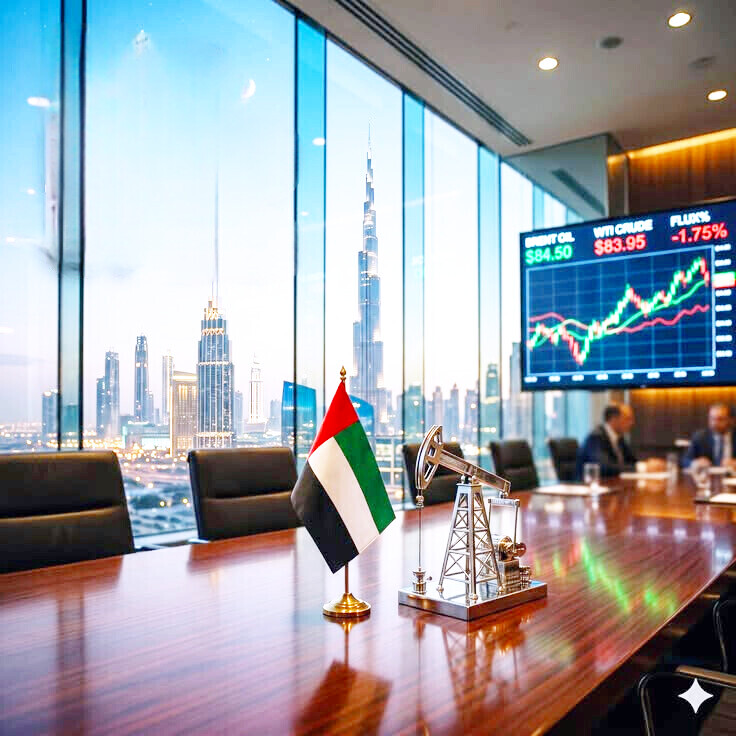
After nearly six decades of membership, the United Arab Emirates has walked away from OPEC. The withdrawal, effective May 1, 2026, ends an association stretching back to 1967 and removes one of the cartel’s most consequential players from the table — a move that analysts are already describing as a potential turning point for global energy governance.
The UAE is no minor departure. As OPEC’s third-largest producer, with a production capacity of between 4.8 and 5 million barrels per day, its exit does not merely shrink the cartel’s headcount. It materially weakens OPEC+’s ability to coordinate output, manage supply signals, and exert meaningful influence over global oil prices — particularly at a moment when energy markets are already under severe strain.
Why the UAE Left: The Official Case
UAE Energy Minister Suhail Al Mazrouei framed the decision in the language of national interest and long-term strategic positioning. But behind the diplomatic phrasing lies a set of frustrations that have been building for years.
Production quotas sit at the heart of it. The UAE has long operated well below its actual capacity, with utilisation rates frequently constrained to around 66–70% under OPEC+ limits. For a country with the infrastructure to produce significantly more and a stated target of 5 million barrels per day by 2027, watching low-cost capacity sit idle while the energy transition gradually erodes long-term demand has become an increasingly difficult position to defend.
Monetising reserves before the window narrows is an explicit part of the calculus. Unlike some of its Gulf neighbours, the UAE has spent years diversifying its economy, giving it a greater tolerance for lower oil prices and a stronger incentive to produce at volume now rather than wait. The risk of stranded assets — reserves that become economically unviable as the world decarbonises — is one the UAE appears unwilling to accept on OPEC’s timeline.
Venezuela Turmoil Could Unlock $100B+ In Oil And Foreign Investment Opportunities
Market flexibility was the third pillar of the official rationale. Officials argued that a world facing growing energy demand requires producers capable of responding independently, and that OPEC’s collective framework increasingly constrains rather than enables that response.
The Deeper Story
The official reasons tell part of the story. The geopolitical subtext tells the rest. The UAE’s relationship with Saudi Arabia — OPEC’s dominant force and the architect of much of its post-2016 strategy — has grown increasingly complicated. Riyadh’s calculus centres on higher prices to fund its ambitious Vision 2030 reform programme. Abu Dhabi’s calculus centres on volume, flexibility, and an increasingly independent foreign policy footprint that includes the Abraham Accords, deepening ties with Washington, and a posture toward Russia and OPEC+ that has grown more sceptical over time.
The Iran war and disruptions to the Strait of Hormuz provided the immediate backdrop to the announcement, but they also illuminated a broader truth: the Gulf is not monolithic, and the tensions that have simmered within OPEC+ for years — over quotas, over pricing philosophy, over regional influence — have now broken into the open in the most consequential way possible.
Oil markets responded with volatility but no immediate supply surge. With Hormuz disruptions limiting export capacity in the short term, the UAE cannot flood the market overnight even if it wanted to. The near-term impact, in that sense, is contained.
The long-term implications are a different matter entirely. The UAE’s departure accelerates a trend that has been visible for some time: the gradual erosion of cartel discipline in favour of national production strategies. If other members draw the lesson that OPEC membership costs more than it delivers, the pressure on the organisation’s cohesion will only intensify.
For a cartel that has already navigated internal fractures, a pandemic-era price collapse, and the strains of managing an alliance with Russia, losing the UAE is a blow it can ill afford. The global oil order that OPEC helped construct over six decades is shifting — and the UAE just made that shift impossible to ignore.