Ghana is setting its sights on a landmark gold purchasing target, with Finance Minister Dr. Cassiel Ato Forson announcing that the government plans to acquire at least $20 billion worth of gold this year — a significant escalation of the country’s strategy to strengthen its foreign exchange reserves and deepen its grip on the gold value chain.
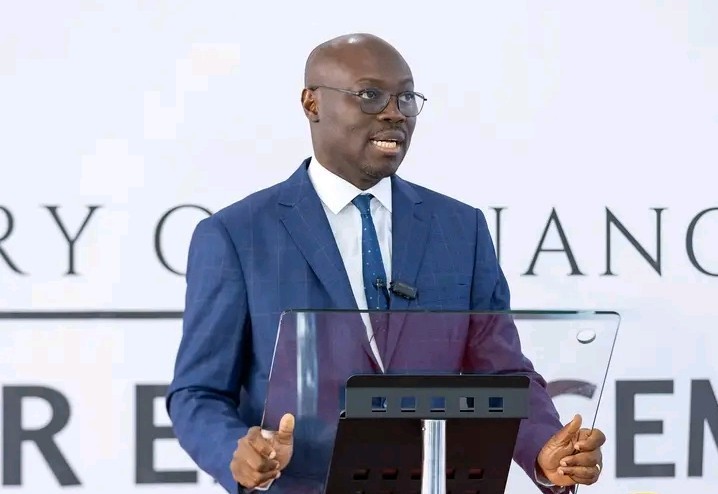
Speaking at the Ghana–UK Investment Summit in London, Dr. Forson outlined an approach that would see gold purchased from both small-scale and large-scale miners, refined locally, and either added to the Bank of Ghana’s reserves or sold on the international market.
Central to the strategy is the Ghana Gold Board — GoldBod — which President Mahama’s administration deliberately established to take control of gold exports and clamp down on the smuggling that had long deprived Ghana of the full benefit of its most valuable natural resource.
Dr. Forson was candid about the scale of what had previously been lost.
“We needed to ensure that we capture our gold — to control the gold export — and so we introduced what is called GoldBod. GoldBod was to ensure that gold that was hitherto leaving the country through smuggling, and the country was not benefitting from the value chain, is actually stopped,” he explained.
The results, he said, have already been significant. In its first full calendar year of operation, GoldBod purchased $14 billion worth of gold — a figure that directly supported the Bank of Ghana in rebuilding its reserve position.
“Today, the Central Bank has a very healthy reserve position, and this year we expect to buy gold of at least $20 billion,” Dr. Forson stated.
GANRAP: The Next Phase
Behind the $20 billion target sits a structured programme with its own ambitious mechanics. GoldBod Chief Executive Sammy Gyamfi has revealed that the government, through the Ghana Accelerated National Reserve Accumulation Programme — known as GANRAP — is targeting the purchase of three tonnes of gold every week, a pace expected to generate in excess of $400 million weekly for Ghana’s economy through to 2028.
Under the programme’s framework, 2.45 tonnes per week will be sourced from the artisanal and small-scale mining sector, with large-scale mining companies expected to contribute a further 0.55 tonnes weekly.
Gyamfi described GANRAP as a cornerstone of President Mahama’s broader economic reset agenda — designed not only to accumulate reserves, but to stabilise the cedi and insulate the economy against future external shocks.
G-24 2026: Mobilising Finance For Sustainable And Inclusive Growth
The transition to GANRAP, which has received approval from both Cabinet and Parliament, also represents a significant improvement in operational efficiency. When GoldBod was first established in April 2025, it initially continued running the Bank of Ghana’s existing Domestic Gold Purchase Programme while undertaking internal reforms and rebuilding systems across the gold trading sector.
That earlier programme operated at a cost of approximately 16 percent. Under GANRAP, that figure has already been reduced to 7.25 percent — with projections to bring it down further to 5 percent next year and ultimately to 3 percent as the programme matures.
Africa’s Gold Giant Reclaims Its Share
The ambition behind these figures reflects a deeper frustration. Ghana is Africa’s largest gold producer, yet for decades the country exported the bulk of its output in raw form, capturing only a fraction of the value its mineral wealth should generate.
The combined architecture of GoldBod and GANRAP represents the most concerted effort in the country’s history to change that equation — keeping more gold within Ghana’s borders, refining it locally, and ensuring that its reserves and its economy feel the full weight of what lies beneath its soil.