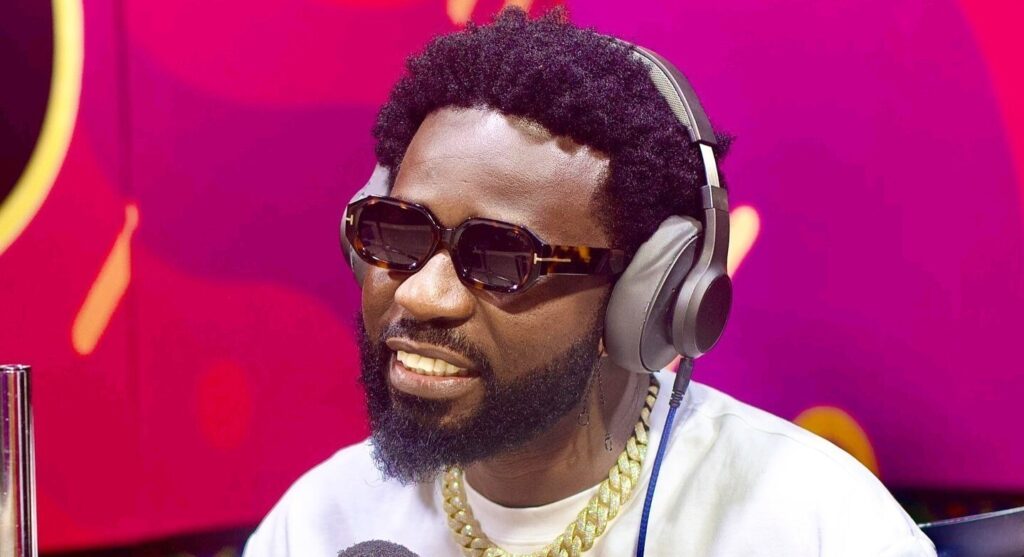
As Ghana prepares to light up the 2026 FIFA World Cup, highlife star Bisa Kdei has thrown his full weight behind the Black Stars — declaring the team can go all the way and lift the trophy.
In the weeks building towards football’s grandest stage, the voices of belief growing loudest around the Black Stars are not coming from the dugout or the boardroom alone. They are rising from Ghana’s cultural heart — and Bisa Kdei, one of the country’s most beloved musical exports, has added his to the chorus with characteristic conviction.
The highlife and Afrobeats-infused star has gone on record saying he believes Ghana can win the 2026 FIFA World Cup outright — a statement that is bold by any measure, but one that speaks to a deeper emotional current running through the Ghanaian public as the tournament draws near.
Bisa Kdei is not alone in his optimism. Ghana’s Sports Minister, Kofi Adams, recently made headlines when he declared that the Black Stars possess the quality to “possibly even win the World Cup” — remarkable words from a government official in a nation where footballing realism has, at times, tempered expectations in recent years.
Together, the musician and the minister represent a mood that appears to be crystallising across Ghana: a refusal to approach this tournament with anything less than full belief. It is a posture rooted not in naivety, but in a genuine sense that this squad — assembled under renewed leadership and technical direction — carries real potential.
Yet for all the high-profile declarations, the mood among the wider Ghanaian football faithful is more layered. Conversations among supporters reveal a more measured set of expectations — ones shaped by the team’s inconsistent performances in recent major tournaments.
For many fans, advancing beyond the group stage would itself represent a meaningful and celebrated achievement. That cautious benchmark is not defeatism; it is the voice of supporters who have ridden the emotional rollercoaster of Black Stars football long enough to temper hope with experience.
The gap between institutional optimism and grassroots expectation is itself a telling portrait of where Ghana football stands heading into 2026.
The Ghost of 2010 — and the Hunger to Surpass It
Beneath all the predictions lies the shadow of a single, unforgettable night. The Black Stars’ greatest World Cup moment remains their quarter-final appearance at the 2010 FIFA World Cup in South Africa — a run that ended agonisingly on penalties against Uruguay and left an entire continent wondering what might have been.
No Bottles Allowed: FIFA’s New Stadium Rules For The 2026 World Cup Explained
Sixteen years on, that performance remains both the high-water mark and the haunting standard. Every Ghana World Cup campaign since has been measured against it, and every supporter knows that surpassing Accra’s 2010 dream would require something truly extraordinary.
Whether Bisa Kdei’s prediction proves prophetic or premature, its significance runs deeper than football forecasting. In Ghana, the relationship between music, culture, and national identity is inseparable — and when artists of his stature speak, they often give voice to what millions feel but haven’t yet said aloud.
His declaration is, at its core, an act of communal belief. And as any football romantic knows, at a World Cup, belief has a way of becoming its own kind of currency.
The Black Stars head to 2026 carrying the hopes of a nation. Whether those hopes culminate in glory, heartbreak, or something quietly in between, Ghana will be watching — and Bisa Kdei, for one, already knows how the story ends.