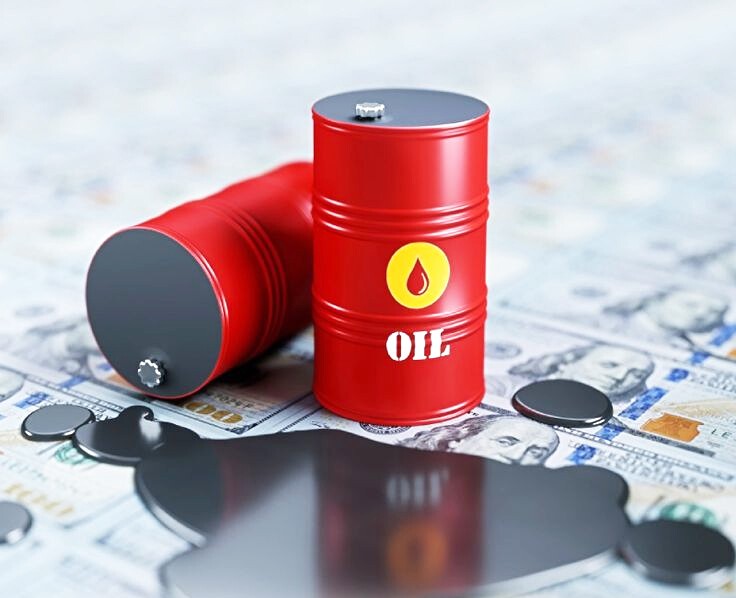
The ongoing escalation involving Iran—specifically the recent US and Israeli military strikes on Iran (referred to as Operation Epic Fury in some reports), which resulted in the death of Iran’s Supreme Leader Ayatollah Ali Khamenei—has significantly impacted global oil prices.
The conflict has triggered retaliatory actions from Iran, including attacks on tankers and disruptions in the Strait of Hormuz, the critical chokepoint through which about 20% of the world’s daily oil supply (roughly 15-20 million barrels per day) passes. This has led to:
- A de facto halt or sharp reduction in tanker traffic, with many shipowners, oil majors, and traders suspending shipments due to security risks, insurance issues, and warnings from Iran’s Revolutionary Guards.
- Attacks damaging multiple tankers in the Gulf, further deterring passage. These disruptions have caused immediate market reactions, with oil prices surging in the first trading sessions following the strikes.
Current Oil Price Impact (as of early March 2026):
Brent crude (international benchmark): Spiked as much as 13% in early trading, briefly reaching around $82 per barrel (a 14-month high), before paring gains to trade in the high $70s to low $80s (e.g., around $78-79 in recent quotes, up 7-8% or more from pre-escalation levels).
WTI crude (US benchmark): Rose sharply, with gains of 7-8%, reaching highs near $75 before settling around $71-72 per barrel.
This marks a notable jump from earlier 2026 levels, where prices were in the mid-$60s or lower in some forecasts, though they had already been rising due to prior tensions.
Why This Affects Global Oil Prices Supply Disruption Risk:
Even without a full official closure, the effective restriction on the Strait of Hormuz creates a major risk premium. Prolonged issues could block supplies from key producers like Saudi Arabia, Iraq, UAE, Kuwait, and others.
Market Reaction: Traders price in fear of shortages, pushing prices higher even if actual physical supply losses are limited initially. Analysts note that a sustained halt could drive prices to $90-$100+ per barrel or more in worst-case scenarios (e.g., full closure or extended conflict).
Broader Effects: Higher oil feeds into increased gasoline, heating oil, and other energy costs worldwide, potentially pressuring economies, inflation, and stock markets (which have seen declines amid the risk-off sentiment).
Trump On Iran Conflict: No End Date, ‘Whatever It Takes’
Outlook and Uncertainties
Short-term: Prices are expected to remain elevated for days or weeks as markets monitor Hormuz flows, any further retaliation, and responses from OPEC+ (some members have signaled production boosts to offset).
Longer-term: Many analysts suggest the spike could moderate if disruptions prove brief, infrastructure remains intact, and strategic reserves (from the US, China, etc.) are tapped. Some forecasts still anticipate softer fundamentals later in 2026 without prolonged chaos. However, escalation risks (e.g., wider regional involvement or attacks on production facilities) could push prices higher and sustain them.
The situation remains fluid, with diplomatic signals (e.g., potential talks or sanction relief) possibly emerging to de-escalate. For now, the conflict has already delivered a clear upward shock to global oil prices due to the strategic importance of the Strait of Hormuz.