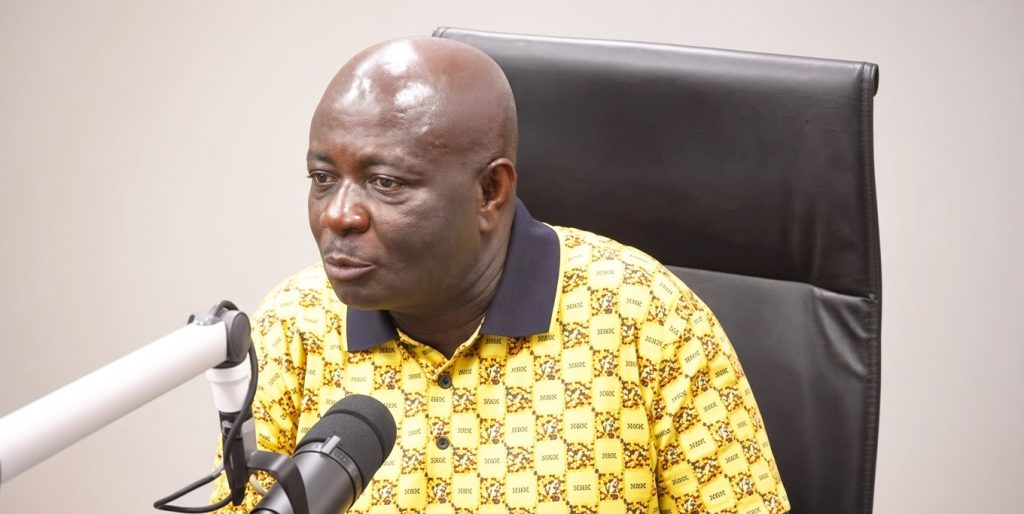
Businessman and politician Akwasi Addai Odike has voiced serious doubts about Ghana’s justice system, arguing that political influence has eroded public trust in how justice is administered. He also went further, taking aim at the 1992 Constitution itself.
Speaking on Adom FM’s morning show on Wednesday, 21 October 2026, Odike said plainly that he has never trusted the country’s courts, because in his view they are run by politicians. His remarks have reopened questions about judicial independence, the separation of powers and how far political interests reach into public institutions.
In any democracy, the judiciary has a crucial job. It interprets the law, safeguards citizens’ fundamental rights and is expected to dispense justice without fear, favour or political interference.
Odike’s comments reflect a worry that Ghana’s courts may not be sufficiently shielded from political influence to earn the confidence of every citizen. They also show how much public perception matters to democratic institutions. Even when courts act within the law, lingering doubts about their independence can weaken trust and cast suspicion on the fairness of their rulings.
That said, claims of political control over the judiciary deserve careful scrutiny. The 1992 Constitution sets out a framework for judicial independence, and criticism of the system does not, by itself, prove that politicians dictate court decisions.
“The Constitution Is Taking Ghana Backwards”
Odike did not stop at the courts. He argued that the 1992 Constitution is holding the country back rather than driving development, describing it as a document that moves Ghana in reverse instead of forward.
His remarks suggest he believes the constitutional framework needs serious rethinking if Ghana is to tackle its governance challenges and build a more effective system of leadership.
Some context is useful here. Since the return to constitutional rule in 1993, Ghana has kept a multiparty democracy, held successive general elections and seen power change hands peacefully between parties. Even so, the debate over constitutional reform has never gone away. It tends to centre on executive power, appointments to public institutions, accountability and the balance of power among the three arms of government.
Does Ghana Need a Constitutional Rethink?
At the core of Odike’s comments is a basic question: is the current constitutional framework delivering the quality of governance and accountability citizens expect?
Advocates of reform argue that certain provisions of the 1992 Constitution should be revisited to strengthen democratic institutions and improve public accountability. Others counter that the Constitution has given Ghana a relatively stable democratic foundation, and that the priority should be enforcing existing safeguards rather than overhauling the whole system.
When The Law Bends For The Powerful — Ghana’s Struggle With Political Impunity
The debate also touches on how judicial appointments are made, how public institutions can stay free of partisan interests, and what recourse citizens should have when they feel those institutions have failed them. Any serious review would need to separate genuine weaknesses in the Constitution from failures to implement or respect what it already provides.
Odike’s remarks are likely to rekindle discussion about public confidence in the judiciary and the effectiveness of Ghana’s constitutional arrangements. For many citizens, the credibility of the justice system depends not only on what the law says but on whether it is applied fairly, consistently and free of political considerations.
The wider challenge is to keep democratic institutions accountable to the people while preserving the independence they need to carry out their constitutional duties.
It remains unclear from his comments whether Odike is calling for constitutional amendment, institutional restructuring or a complete overhaul of Ghana’s system of governance. What is clear is that his criticism raises a pressing national question: are Ghana’s democratic institutions working as well as they should for the people they exist to serve?