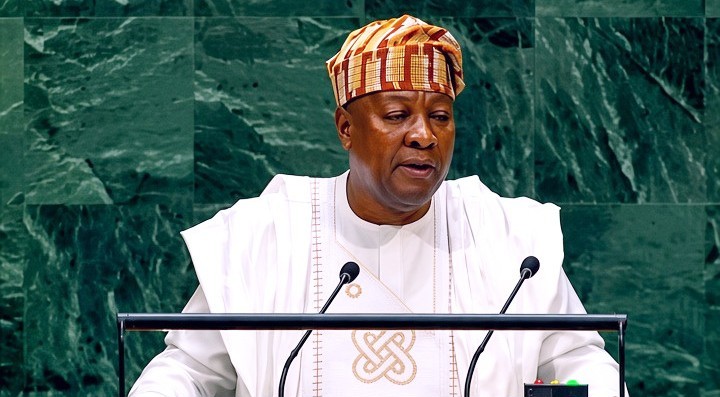
When world leaders gathered for the 81st United Nations General Assembly in New York, Ghana’s President John Dramani Mahama brought a surprisingly personal—yet globally resonant—perspective to the sidelines of the summit.
Reflecting on the political scars that shape his leadership, President Mahama made it clear that public hostility will not sway his focus from serving Ghana and the broader continent.
Navigating public discourse in the digital age requires a sturdy foundation. Over a career marked by fierce political battles, intense vilification, and a high-profile electoral defeat, Mahama noted that he has developed a “crocodile skin”—a resilience built to withstand the harshest political crosswinds. Personal barbs, he insisted, are simply part of the territory and will never deter him from carrying out his duty.
However, Mahama’s reflection on his own thick skin served as a springboard into a far more urgent national dilemma: the chaotic, unregulated frontier of social media.
While President Mahama remains indifferent to insults targeting him personally, he raised serious alarms regarding the broader societal impact of platforms like TikTok. Modern digital channels have fundamentally democratized publishing—giving anyone with a smartphone the power to broadcast to thousands instantly.
The President highlighted key structural risks inherent to these platforms:
Algorithmic Echo Chambers: Recommendation engines continually feed users hyper-specific, often polarizing content based on tracking habits, deepening societal divides.
Anonymous Hostility: The shield of online anonymity enables individuals to launch targeted abuse and malicious commentary without accountability.
Overzealous Policing: A reliance on law enforcement to manage online speech risks setting dangerous precedents for state overreach.
Addressing these challenges, Mahama revealed that he often discovers police arrests of online critics through news reports rather than official briefings. He expressed skepticism over whether every offensive comment warrants handcuffs, warning that once law enforcement begins policing speech, setting clear boundaries becomes exceptionally difficult.
Rather than relying on heavy-handed state intervention, President Mahama is advocating for a collaborative, democratic solution. Following up on an official directive sent to key media custodians—including the Ghana Journalists Association (GJA) and the Media Foundation for West Africa (MFWA)—he called for a nationwide stakeholder summit.
Ghanaian Poet Nakeeyat Meets President Mahama In New York
The proposed forum aims to bring together journalists, legal experts, content creators, influencers, and the Ghana Police Service to establish sensible digital guidelines.
The strategy focuses on some key pillars:
Protecting Core Freedoms: Safeguarding genuine political commentary, satire, robust dissent, and investigative journalism.
Defining Clear Boundaries: Establishing precise legal definitions to separate offensive rhetoric from actionable threats, incitement, or criminal behavior.
Reforming Police Conduct: Creating standard operating protocols for law enforcement to prevent arbitrary arrests over political insults.
Exploring Non-Carceral Alternatives: Utilizing dispute resolution, platform-level moderation, and civil remedies instead of criminal prosecution for non-violent speech offenses.
At its core, President Mahama’s position balances personal resilience with institutional responsibility. While he continues to shrug off online vitriol, he recognizes that an unguided digital space threatens the health of public discourse.
Ultimately, his message from New York remains grounded in purpose over provocation:
“I’m doing what I can for my country and my continent. I’m doing what I can for Ghana and Africa, and I will do what is right.”