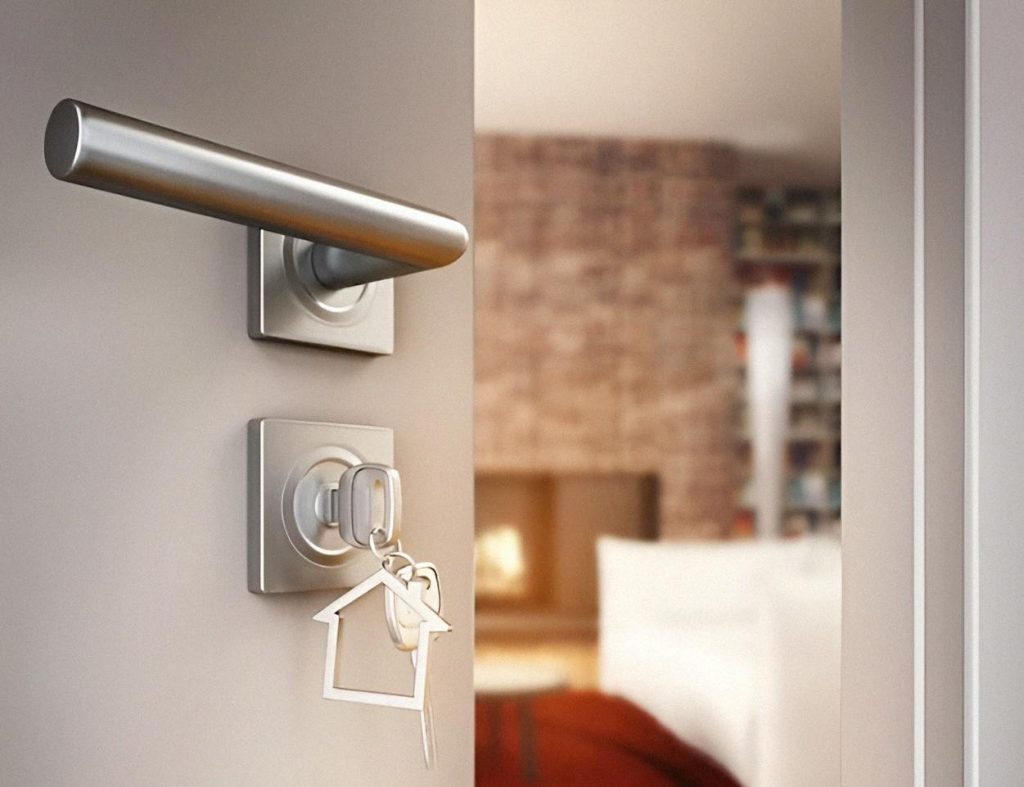
That reassuring clack of a key turning in the deadbolt gives a uniquely satisfying feeling of safety. For many, the natural next step is simply leaving the key sitting right there in the keyhole—a mental final stamp on the evening routine. It feels proactive, protective, and complete. Yet, despite the comforting ritual, this habit frequently compromises the very security it is meant to provide.
The reasoning seems foolproof: if a key already occupies the keyway from the inside, an intruder cannot insert a lockpick or a bump key from the outside. This piece of home-defense folklore has been passed down for generations, particularly among those living alone.
Modern lock mechanisms, however, rarely work this way. Experienced burglars and modern entry tools can often manipulate standard European-style cylinders even with a key seated on the interior side. Techniques using specialized tools, strong magnets, or sheer mechanical leverage can still force the mechanism to turn.
Worse, if an intruder enters through a secondary access point—such as a ground-floor window or sliding patio door—that key left idling in the front door becomes a free pass. Instead of struggling to haul stolen electronics back through a window, the intruder can effortlessly unlock the front door from the inside and walk out unnoticed.
When Safety Becomes an Obstacle
The most critical threat posed by an interior key is not always a burglar outside; it is the barrier it creates against those trying to help you.
On standard, non-clutch lock cylinders, an inserted interior key mechanically disengages or blocks the outer keyway. If a medical crisis occurs, or if a fire breaks out, loved ones with spare keys, paramedics, or firefighters will find themselves locked out. Forcing a heavy exterior door takes precious time—and in a life-or-death scenario, lost minutes carry heavy consequences.
Why Fireplaces Are Becoming A Popular Feature In Modern Homes
Emergency responders and locksmiths regularly recount scenes where a habit intended to protect a home actively delayed critical rescue efforts.
The actual risk of leaving a key in the door depends entirely on the design of your locking hardware:
Standard Cylinders (High Risk): The most common lock type in residential homes. Leaving a key inside directly blocks outside access while providing virtually zero extra resistance against break-ins.
Thumbturn Cylinders (Safest Overall): These feature a keyway on the outside and an integrated turning knob on the inside. They eliminate interior keys entirely, ensuring fast, frictionless egress during a fire and unobstructed access for keyholders outside.
Emergency-Function / Dual-Action Cylinders (Low Risk): Engineered with a special friction clutch that allows an exterior key to operate the mechanism even if an interior key is fully inserted and turned.
Double-Cylinder Deadbolts (Egress Risk): These require a key to open the door from both sides. While they prevent intruders from reaching through a broken window to open the door, they create a severe safety hazard during a quick building evacuation, which is why many modern fire safety codes prohibit them.
Smarter Habits for Home Defense
Upgrading your home security doesn’t require a total overhaul. A few simple adjustments to your daily routine can eliminate these hidden vulnerabilities:
Adopt the “Lock, Remove, and Deposit” Rule: Make it a reflex to turn the lock, withdraw the key, and store it in a designated spot nearby. Choose a location that is easily reachable in the dark—like a small hook inside a hallway cabinet—but positioned well out of sight and reach from letterboxes, pet doors, or adjacent glass panels.
Upgrade Your Hardware: If you rely on standard cylinders, consider swapping them for thumbturn models or cylinders with built-in emergency functions. A high-grade cylinder paired with a reinforced door frame provides infinitely more protection than any key sitting in a keyway ever could.
Leaving a key in the lock provides a false sense of control grounded more in routine than reality. True home security comes down to clear escape routes, reliable emergency access, and robust hardware. Lock the door, pull the key, and rest easy knowing your home is genuinely secure.