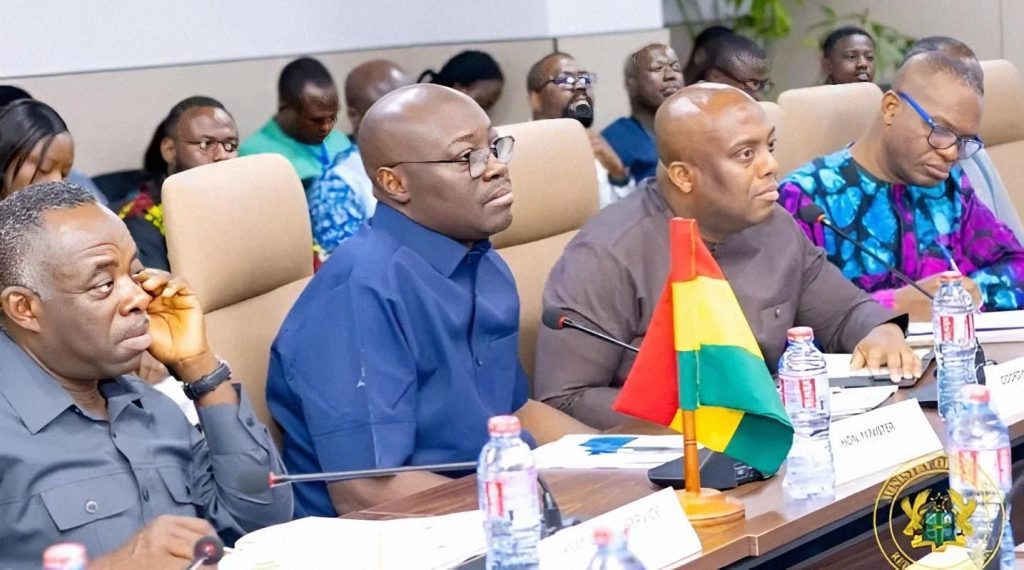
The Ministry of Finance says five statutory funds that support schools, hospitals, roads and local development have each received their third-quarter payments for 2026 in full and on schedule. Finance Minister Dr Cassiel Ato Forson is presenting the payments as proof that the government is spending where ordinary Ghanaians feel it most.
In a Facebook post, Mr Forson tied the announcement to everyday life.
“We are spending where it matters most, on the services Ghanaians depend on every day!” he wrote, adding that the funds were paid on time and in full to support schools, healthcare, roads and community development. He closed with a line meant to stress urgency: “Behind every payment are people whose needs cannot wait.”
The ministry is using the payments as evidence that public money is reaching the institutions and programmes that deliver services.
The Five Funds Paid
According to the ministry, these funds received their full third-quarter payments:
- District Assemblies Common Fund (DACF): backs local development projects and the work of district assemblies.
- Ghana Education Trust Fund (GETFund): pays for education infrastructure and other approved interventions in the sector.
- National Health Insurance Fund (NHIF): supports the National Health Insurance Scheme and its financing obligations.
- Ghana Medical Trust Fund: funds designated medical care and related health interventions.
- Road Maintenance Trust Fund: provides money to maintain and preserve the road network.
Statutory funds exist to serve specific public purposes, so how quickly and completely they are paid shapes how well they can work. District assemblies rely on the DACF for local projects. GETFund money supports classrooms and other approved education work. Health funding keeps insurance arrangements and targeted medical programmes running, and road funds pay for upkeep of the country’s roads. When money arrives late or short, the institutions that depend on it struggle to meet their duties.
Zanetor Agyeman-Rawlings Speaks On Political Finance Reform In Africa
Mr Forson has made this a recurring theme. He said the government has paid GH¢24.8 billion to statutory funds since January 2026, and that the new approach marks a break from the past.
“Unlike in the past, when payments were marked by delays, capping and arrears, we now release these funds on time and in full,” he said.
Paying the funds in full is an administrative milestone, but the real test is what people see afterwards. Citizens will want to know whether schools get the support they need, whether healthcare becomes easier to access, whether roads are better maintained, and whether district assemblies can deliver projects. A payment on the books helps only if institutions allocate, release and spend the money well.
The ministry’s update reports that the payments were made, but it does not give the amount paid into each fund or list the projects that will benefit. Publishing those figures, along with how the money is shared out and what it ends up funding, would let the public judge for themselves whether the payments turn into tangible results.
The Ministry of Finance says the DACF, GETFund, NHIF, Ghana Medical Trust Fund and Road Maintenance Trust Fund were all paid in full for the third quarter of 2026.
The announcement backs the government’s stated position that public spending should put everyday services first. As the funds go to work, attention will shift to how effectively they improve education, healthcare, roads and local development, and the payments will ultimately be judged by the difference citizens notice in their daily lives.