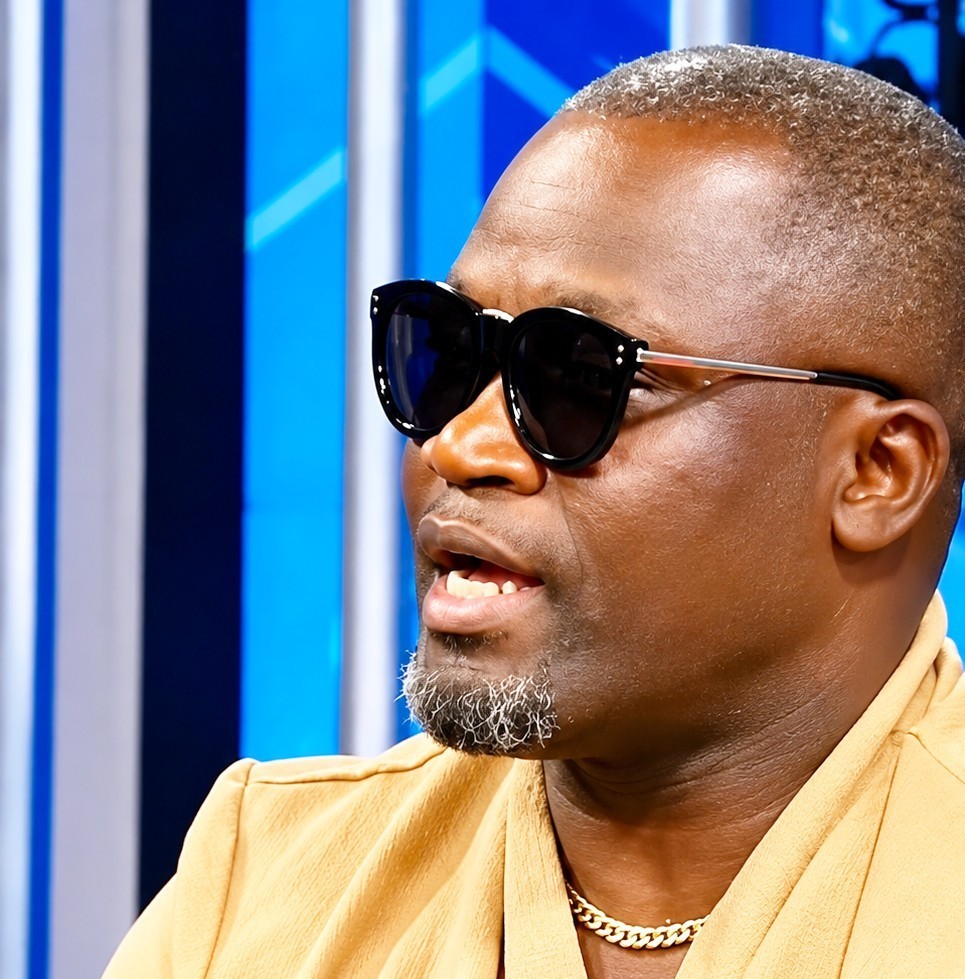
Host of ‘Entertainment Ghana’ and ‘Entertainment Review’ Ola Michael has sparked a fresh debate about the growing number of self-proclaimed prophets in the country, questioning the authenticity of some individuals who claim to have been called by God to operate in the prophetic ministry.
In a rather blunt assessment of the situation, Ola Michael declared that “the cheapest thing to do in Ghana now is being a prophet,” suggesting that the increasing number of people presenting themselves as men of God raises serious questions about spiritual authenticity and religious accountability.
According to him, becoming recognised as a prophet does not necessarily require someone to be a genuine Christian or to have received a divine calling, as some individuals allegedly engage in questionable spiritual practices to acquire what they later present as supernatural abilities.
He made these remarks during an appearance on Neat FM on Monday, November 2, 2026, amid the public controversy involving Reverend Isaac Owusu Bempah and renowned preacher Dr. Mensah Otabil.
His comments have added another dimension to the ongoing conversation about prophetic ministry in Ghana, particularly concerning the distinction between genuine spiritual gifts and practices allegedly designed to deceive unsuspecting believers.
Ola Michael expressed concern about what he perceives as the increasing ease with which people establish themselves as prophets and convince others that they possess special spiritual abilities.
He argued that there are several things people can allegedly do to acquire experiences that may appear spiritual to others, without necessarily being committed Christians or having a genuine relationship with God.
In his view, the ability to claim that one can see spiritual things should not automatically qualify someone to be recognised as a prophet.
He suggested that some individuals may be using alternative spiritual practices to create an impression of supernatural authority, subsequently presenting themselves as people who have been specially selected by God.
His argument raises an important question for religious followers: does the ability to demonstrate something supernatural automatically mean that the individual behind it has received a divine calling?
‘Some People Go for Charms and Pretend to Be Called by God’
One of the most striking aspects of Ola Michael’s intervention was his allegation that some individuals resort to charms and other spiritual practices before publicly presenting themselves as prophets.
He claimed to have encountered people who engage in such activities but later portray themselves as spiritually gifted individuals who receive revelations directly from God.
According to him, some of the things presented to church members as divine revelations may not necessarily have originated from the source their practitioners claim.
Ola Michael believes this situation deserves serious attention because unsuspecting Christians may place enormous trust in individuals whose spiritual backgrounds and practices they know very little about.
Consistent Prayers Without Results: The Frustration, Expectations And More
His comments also highlight the difficulty many religious followers face when trying to distinguish between genuine prophetic ministry and individuals allegedly using spiritual claims to gain influence, recognition or financial benefits.
However, his allegations should not be taken as proof against any particular religious leader without supporting evidence. Despite his strong criticism, Ola Michael was careful to make an important distinction.
He warned against the generalisation that every prophet in Ghana is fake, acknowledging that there are genuine individuals who operate in the prophetic ministry.
His position, therefore, was not that prophetic ministry itself is fraudulent, but that the activities of certain individuals have created reasons for the public to become more cautious.
This clarification is significant because the controversy surrounding religious leaders often leads to widespread accusations against entire churches and Christian ministries.
Ola Michael’s argument suggests that genuine prophets should not be placed in the same category as people who allegedly use questionable spiritual methods to manufacture a religious identity.
He appears to be calling for greater discernment among Christians, encouraging believers not to accept every spiritual claim simply because the person making it occupies a pulpit or has a large congregation.
Owusu Bempah and Mensah Otabil Brouhaha Brings Prophetic Ministry Into Focus
Ghana’s public square is once again fixated on the intersection of faith, authority, and accountability, triggered by media personality Ola Michael’s sharp commentary regarding high-profile figures Reverend Isaac Owusu Bempah and Dr. Mensah Otabil. Beyond the immediate clash of personalities, the fallout has sparked a deeper, national self-examination about the immense power wielded by spiritual leaders and the ease with which millions surrender their critical thinking to pulpit figures.
Religion in Ghana is not merely a Sunday routine; it is the dominant lens through which millions interpret life, seek hope, and make critical life choices. Within this culture, prophets are often elevated to direct conduits of divine power—custodians of absolute truth whose word carries immediate authority. However, this unquestioned reverence has created a landscape where spiritual authority can easily drift into manipulation.
The recent controversy brings this reality into sharp focus, raising uncomfortable questions about whether public trust is being honored or exploited.
Ola Michael’s intervention moves the discussion past simple church gossip, framing it around a far more crucial issue: spiritual discernment. The central takeaway of his critique is a stark reminder to believers that charismatic authority, dramatic predictions, and claims of supernatural encounters are not guaranteed proof of divine mandate.
Adunni Ade Speaks On Losing Fans After Revealing Her Faith
True spiritual leadership carries heavy ethical responsibilities, yet the modern prophetic landscape often rewards performance and shock value over integrity.
The unfolding debate ultimately challenges Ghanaian Christians to rethink their approach to religious devotion:
Distinguish influence from authenticity: Divine calling cannot be measured solely by public notoriety, large followings, or sensational claims.
Cultivate healthy skepticism: Believers must evaluate spiritual claims critically rather than accepting every prophecy with blind compliance.
Demand pastoral accountability: Leaders must be held to high ethical standards, recognizing that spiritual authority is a public trust, not a personal license.
As the noise surrounding these prominent preachers eventually settles, the core question facing Ghanaian society remains unresolved: how can a deeply religious populace honor genuine faith while protecting itself from those who exploit spiritual trust for personal gain?