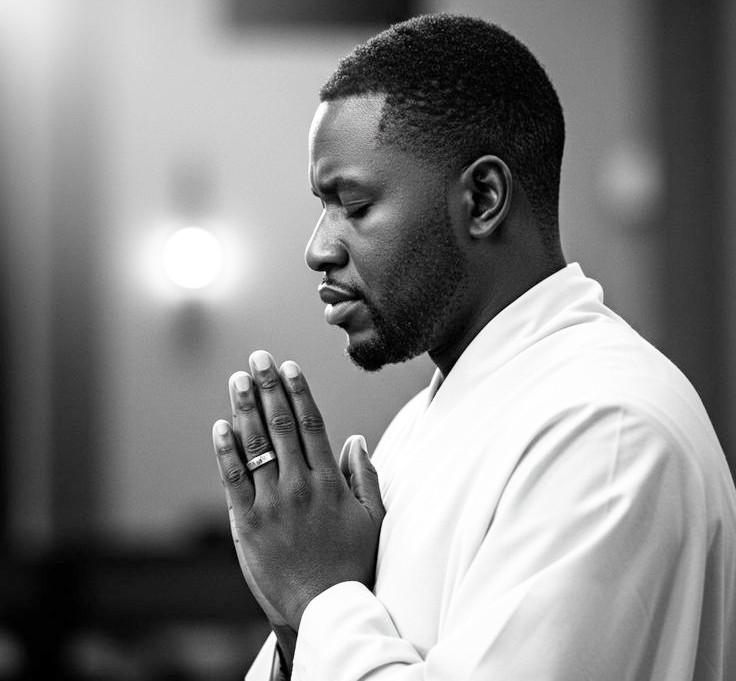
Prayer is often described as a conversation with God—a place where people bring their hopes, fears, disappointments and deepest desires. For many believers, prayer is also an expression of faith: the conviction that no matter how difficult life becomes, God hears and can make a way.
But what happens when the prayers continue and the answers seem not to come?
What happens when someone has prayed for years for a breakthrough, a job, a child, healing, marriage, financial stability, restoration or a solution to a family problem, yet nothing appears to change?
This is where one of the most difficult experiences in faith begins: the frustration of praying consistently without seeing the result one expected.
It is easy to encourage someone to “keep praying” when the problem has lasted for only a short time. But when months become years, prayer can begin to feel less like an expression of hope and more like an exhausting routine.
A person may attend church regularly, fast, participate in prayer meetings, give offerings and spend countless nights calling on God. Yet the same problem remains.
Eventually, difficult questions begin to emerge.
“Does God hear me?”
“Am I doing something wrong?”
“Why does it seem to work for others but not for me?”
“How long am I supposed to wait?”
These questions do not necessarily mean a person has lost faith. Sometimes they simply reveal the emotional weight of prolonged disappointment.
The Danger of Unrealistic Expectations
One of the reasons unanswered prayers can become painful is that people sometimes attach specific expectations to how God must respond. Someone may believe that because they have prayed for a particular period, the answer must come at a particular time. Another person may hear testimonies of dramatic breakthroughs and conclude that their own breakthrough should happen in exactly the same way.
But life does not always follow predictable patterns. Prayer is not a mathematical formula where a certain number of prayers automatically produces a desired result. Faith should not become a transaction in which people believe that performing enough religious activities obligates God to deliver a particular outcome.
This does not make prayer meaningless. Rather, it challenges believers to understand prayer beyond simply getting what they want.
When “Keep Praying” Is No Longer Enough
There are moments when telling someone to simply “pray harder” may unintentionally deepen their frustration. Some problems require prayer and action. If someone is praying for employment, they may also need to acquire new skills, improve their CV, apply for opportunities and build professional relationships.
If someone is praying about financial difficulties, prayer can be accompanied by budgeting, learning financial discipline and exploring legitimate income opportunities. If there is conflict in a relationship, prayer may need to be accompanied by honest communication, counselling, forgiveness and sometimes difficult decisions. Prayer and responsibility do not have to compete with each other.
For many people, the question should not only be, “What am I praying for?” but also, “What am I doing while I am praying?”
One of the hardest realities of faith is accepting that an answer may not arrive in the form a person imagined.
Someone may pray for one particular door to open, while another opportunity appears.
Someone may pray for a relationship to be restored, while the eventual answer may be the courage to walk away.
Someone may pray for immediate financial prosperity, while the journey instead involves learning patience, discipline and building something gradually.
BamBam Says She Fights Depression With Constant Prayers
This is not an argument for pretending that disappointment does not exist. It is an invitation to remain open to possibilities beyond the original expectation.
The Psychological Weight of Waiting
Long periods of uncertainty can affect a person’s emotional wellbeing. When disappointment continues for years, people can become discouraged, anxious, bitter or withdrawn. Some begin comparing their lives with those around them. In modern times, social media can make this even worse. Every day, people see testimonies of someone buying a house, getting married, having a child, receiving a promotion or experiencing a financial breakthrough.
The natural question becomes: “When will it be my turn?”
But comparison can create an illusion that everybody else is moving forward while one’s own life is standing still. The reality is that people rarely display their struggles with the same enthusiasm with which they display their victories.
What Next After Years of Prayer?
Perhaps the most important question is not whether a person should stop praying, but how they should continue. Prayer can evolve from repeatedly asking for the same outcome into seeking wisdom, strength, clarity and direction. Instead of only saying, “God, give me this,” a person can also ask:
- “What should I learn from this season?”
- “What can I change?”
- “What opportunity am I failing to recognize?”
- “Who can help me?”
- “What step should I take next?”
Those questions can transform waiting from passive frustration into purposeful action. Faith does not require people to pretend that everything is fine. There are moments when the honest prayer is simply: “I am tired.” There are moments when someone may not have the words to pray. There are moments when silence feels more natural than another long prayer.
Acknowledging frustration does not automatically mean abandoning faith. It can be part of honestly confronting what one is experiencing. The important thing is not to allow disappointment to destroy one’s sense of worth or convince them that their life has no meaning simply because one particular prayer has not been answered.
Don’t Let an Unanswered Prayer Define Your Entire Life
One unanswered prayer can become so dominant that it overshadows everything else. A person waiting for marriage may forget the value of friendship, family and personal development. Someone waiting for wealth may overlook the opportunities and relationships already present. Someone waiting for a particular career opportunity may fail to appreciate another path opening elsewhere.
Life is bigger than the one thing we desperately want. Sometimes the healthiest approach is to continue hoping while also learning to live meaningfully in the present. Perhaps the mature response to prolonged unanswered prayer lies somewhere between faith, action and acceptance.
The Journey After the Prayer
Consistent prayer without visible results can be one of the most challenging seasons a believer experiences. It can produce questions, frustration and even periods of doubt. But it can also become a season of reflection. Sometimes the most important transformation does not happen in the circumstances being prayed about, but within the person doing the praying. Sometimes it is seeking counsel, changing direction and doing everything within one’s power.
Prayer can be a place to ask for answers—but it can also be a place to find the strength to face questions that do not yet have answers.