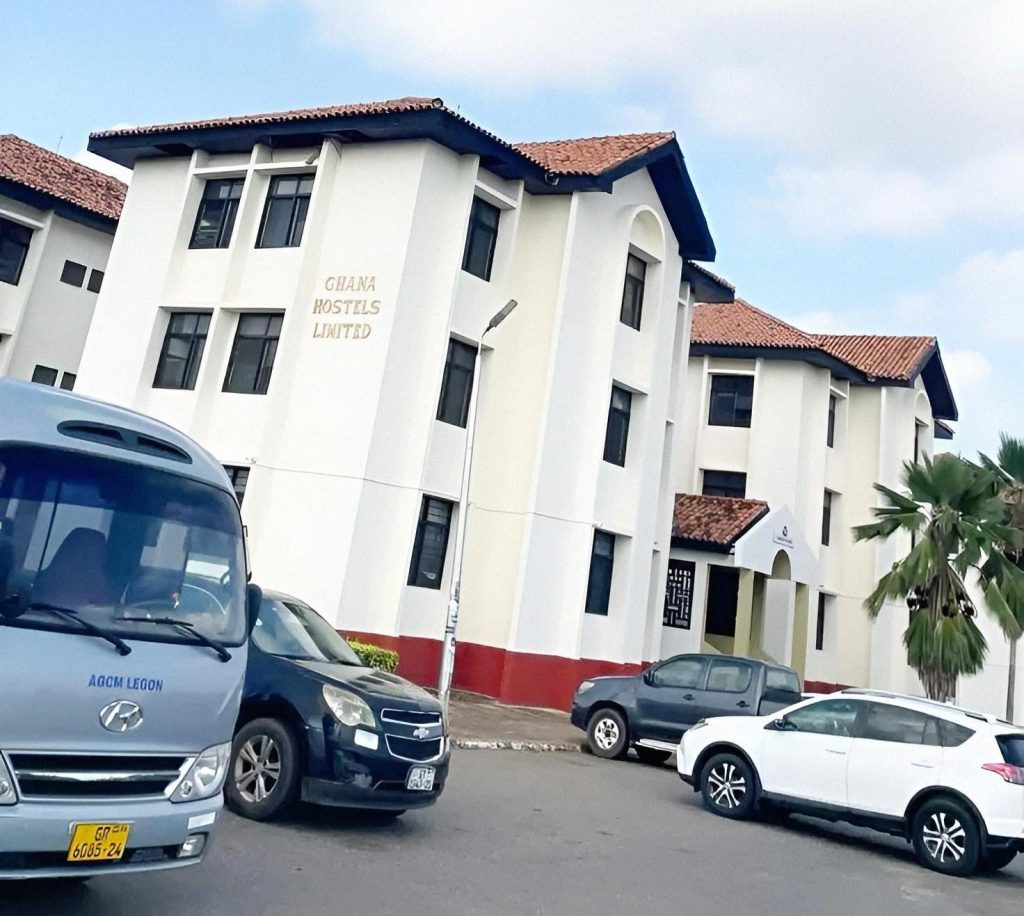
From outrageous hostel fees and questionable charges to unfulfilled government promises, Ghanaian university students are increasingly being forced to pay heavily for a basic necessity that should not be a luxury — a decent place to sleep while pursuing their education.
For many young Ghanaians, gaining admission into a university is supposed to be the beginning of an exciting journey towards a brighter future. It is a moment of pride for families who have sacrificed their limited resources to give their children the opportunity to pursue higher education.
But beyond the excitement of receiving an admission letter lies another difficult reality: finding somewhere affordable to live.
For thousands of students across Ghana’s public universities, securing accommodation has become almost as stressful as gaining admission itself. What should be a basic part of the university experience has gradually turned into a financial nightmare, with students and their parents struggling to meet the increasingly expensive demands of hostel accommodation.
The situation raises an uncomfortable question: Has university education in Ghana become a journey where students must first prove their financial strength before they can comfortably pursue their academic ambitions?
Private Hostels Exploiting Desperate Students
Private hostels have undoubtedly helped fill the accommodation gap in Ghana’s universities. With public university halls unable to accommodate every admitted student, private hostel operators have become important players in the country’s tertiary education system.
However, concerns are growing over the cost of accommodation and the conditions under which some of these businesses operate.
Around university campuses, particularly in areas where accommodation is in high demand, students are often confronted with hostel fees that place enormous pressure on their families.
Some private hostel operators appear to have turned student accommodation into a highly profitable venture, taking advantage of the limited alternatives available to young people who desperately need a place to stay.
The situation is particularly troubling when students have little bargaining power. Once admission has been secured and academic activities are about to begin, finding an affordable alternative may be extremely difficult.
For some parents, the only option is to stretch their finances, borrow money or make sacrifices elsewhere to ensure their children have somewhere to sleep.
It is this imbalance between demand and available accommodation that makes the situation worrying.
When students have no meaningful alternatives, the market can become heavily tilted in favour of hostel operators.
University Lands or Private Accommodation Empires?
Another issue deserving serious public attention is the growing presence of private accommodation businesses around university campuses, including developments on or associated with university lands.
University lands are valuable public and institutional assets. They are meant to support the educational mission of these institutions, including academic facilities, student welfare, research, recreation and residential accommodation.
Consequently, questions must be asked whenever commercial accommodation developments occupy university-controlled land or operate through arrangements involving public universities.
Who owns the land? Who approved the development? What agreements govern its use? Are the terms transparent? And, most importantly, what benefits do students receive from these arrangements?
There is nothing inherently wrong with private investment in student accommodation. Indeed, responsible partnerships between universities and private developers could help address the housing shortage.
But such arrangements must serve a clear public interest.
It would be unfortunate if land associated with public educational institutions became an avenue for commercial interests to generate substantial returns while the very students these institutions are established to serve continue to struggle with accommodation costs.
Rent Commissioner Accuses Most Hostel Operators Of Breaking The Law
Students deserve transparency, accountability and accommodation policies that put their welfare at the centre.
Successive governments have recognised the challenges facing students in Ghana’s tertiary institutions. The accommodation deficit has repeatedly attracted attention, with promises, proposals and discussions about expanding hostel infrastructure.
Yet, for many students, the practical experience remains largely unchanged: limited spaces, expensive private alternatives and intense competition for available rooms.
The gap between political assurances and what students experience on campus deserves closer examination.
Students do not need another round of speeches about the importance of education. They need affordable rooms, completed accommodation projects, properly maintained university halls and a credible plan to address the shortage.
Whenever new accommodation projects are announced, the public deserves to know their timelines, funding arrangements, expected capacity and progress of construction.
Where projects have stalled, explanations should be provided. Where commitments have not been fulfilled, those responsible should be held accountable.
The question should no longer be simply how many accommodation projects have been promised, but how many additional students have actually been provided with decent and affordable places to live.
The Hidden Cost Of Expensive Accommodation
The consequences of expensive hostel accommodation extend far beyond the pockets of parents.
Students who spend an unreasonable proportion of their financial support on accommodation may struggle to afford food, transportation, textbooks, internet bundles, printing and other essential academic expenses.
Some may be forced to share overcrowded rooms, travel long distances to lectures or accept accommodation conditions that are unsuitable for studying.
Others may become financially dependent on relatives, engage in additional work to support themselves or constantly worry about how to pay their next hostel bill.
These pressures can affect concentration, academic performance and the overall university experience.
University life should provide an environment where young people can concentrate on learning, developing their talents and preparing for the future. It should not become a continuous struggle to secure a roof over their heads.
The emotional burden on parents is equally significant. Families who have already invested heavily in their children’s education should not have to face accommodation expenses that threaten their financial stability.
Why Can’t Universities Do More?
Ghana’s public universities must also take responsibility for addressing the accommodation challenge.
Although universities operate within financial and infrastructural constraints, they cannot afford to treat student accommodation as a problem that belongs exclusively to private hostel operators.
Institutional authorities should publish clear accommodation development plans and explore sustainable ways of increasing residential capacity.
This could include renovating existing halls, constructing additional facilities, partnering with credible private developers and introducing transparent pricing arrangements for accommodation projects connected to university lands.
Universities should also establish effective monitoring systems to protect students against unfair charges, misleading accommodation advertisements and unacceptable living conditions.
Where private developers are permitted to operate on university lands, the agreements should clearly establish the responsibilities of investors, the university and the intended beneficiaries.
Students should not be left in the dark about decisions that directly affect their welfare.
What Must Change?
Addressing Ghana’s university accommodation crisis requires more than temporary interventions. It demands a coordinated response involving government, university authorities, private investors and student representative bodies.
First, government must move beyond promises and demonstrate measurable progress in expanding affordable student accommodation.
Second, university authorities must review land-use arrangements and ensure that developments on institutional lands serve the interests of students and the wider university community.
Third, private hostel operators should be encouraged to provide quality accommodation at reasonable and transparent prices. Relevant authorities must also ensure compliance with applicable building, safety and tenancy requirements.
Fourth, universities and student representative councils should establish mechanisms through which students can report excessive charges, poor facilities and unfair accommodation practices.
Finally, government and universities should consider structured public-private partnerships that make affordability a central requirement rather than an afterthought.
There is something fundamentally troubling about a situation in which a student can successfully gain admission into a public university but struggle to find an affordable place to live.
Education is widely recognised as one of the most important investments in Ghana’s future. But that investment becomes increasingly difficult when the cost of simply staying close enough to attend lectures places an unbearable burden on families.
University Of Ghana Unveils A New App to Connect Graduates Worldwide
Private hostel operators deserve the opportunity to run legitimate businesses and earn returns on their investments. However, student accommodation must not become an environment where desperation is treated as a business advantage.
University authorities must remember that institutional lands and resources should be managed with the interests of education and student welfare in mind.
Government must also recognise that access to higher education means more than opening university gates and distributing admission letters. It includes creating an environment in which students can realistically afford to live, learn and complete their programmes.
The time has come for Ghana to take a serious look at the economics of student accommodation.
Because an admission letter should open the door to opportunity, not the beginning of another financial struggle.
If Ghana truly wants to make higher education accessible, affordable accommodation must become part of the promise — not another burden students are expected to carry alone.