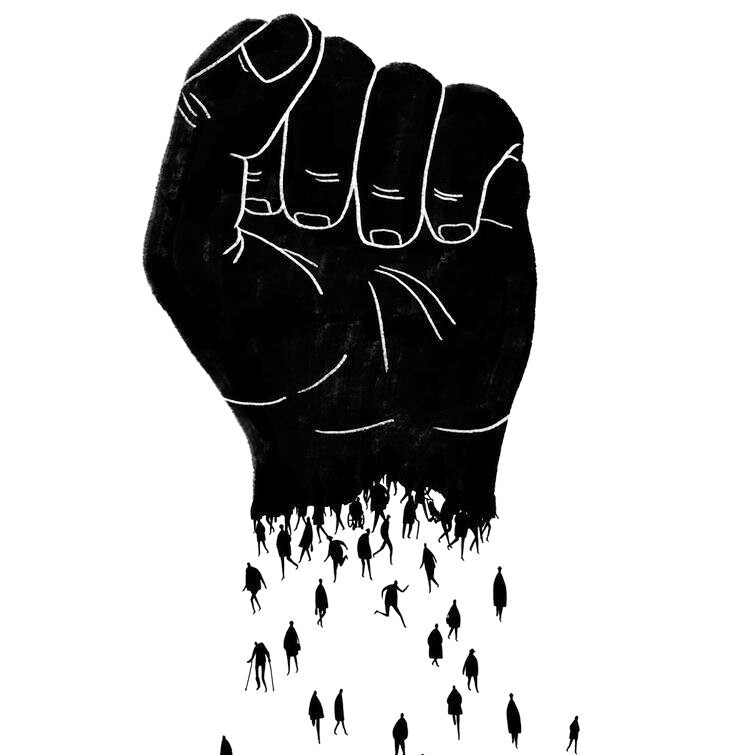
In Ghana, the perception that public officials can loot state resources and walk free is not merely a cynical talking point — for many citizens, it is a lived reality reinforced by decades of evidence. High-profile corruption cases that drag on for years, collapse without conviction, or are quietly discontinued have entrenched a culture of impunity that continues to erode public trust in state institutions.
A Pattern of Cases That Go Nowhere
The early months of 2025 offered a stark illustration of the problem. President John Dramani Mahama’s administration discontinued a string of politically charged prosecutions inherited from the previous NPP government. Among those whose cases were dropped were former Finance Minister Dr. Kwabena Duffuor, facing charges linked to the UniBank collapse; Collins Dauda, accused in connection with the Saglemi Housing scandal; and NDC stalwart Samuel Ofosu Ampofo, whose leaked tape case was similarly shelved. The Attorney General cited reasons ranging from insufficient evidence to incompetent prior filings — but critics saw a more familiar pattern: cases built for political effect, abandoned when the political winds shifted.
The COCOBOD prosecution offered perhaps the most glaring example. Former CEO Dr. Stephen Opuni and businessman Seidu Agongo had spent years navigating a protracted trial, only for the case to be dropped in January 2025, with both men acquitted and discharged. For a case that had consumed enormous public attention and judicial resources, the outcome left many Ghanaians deeply disillusioned.
A Judiciary Struggling to Keep Pace
Beyond case discontinuances, the sheer pace of Ghana’s judicial system compounds the impunity problem. Prosecutions launched between 2017 and 2020 remain unresolved in 2026, weighed down by endless adjournments, appeals, and a backlog that rewards delay. For defendants with resources and legal firepower, the slow grind of the courts is often an advantage — and for ordinary citizens watching from the sidelines, every postponement reads as another signal that the system is not designed to deliver swift justice.
ORAL and the Accountability Gap
The Mahama administration’s flagship anti-corruption initiative, Operation Recover All Loot (ORAL), was launched with considerable fanfare and a mandate to recover billions in allegedly stolen public funds. Yet by early 2026, the initiative had recovered only an estimated 0.26% of its projected target — a figure that encapsulates the vast distance between political promise and institutional reality. Frozen assets remain frozen; convictions remain elusive; and the treasury remains largely empty of recovered funds.
Structural Rot at the Core
Analysts, civil society organisations, and independent surveys consistently point to the same underlying causes: political interference in prosecutorial decisions, a judiciary stretched beyond its capacity, weak evidence-gathering capabilities, and a legal culture that too often opts for plea arrangements or discontinuances over full accountability trials. Throw in the revolving door of political power — where today’s prosecutors become tomorrow’s accused, and vice versa — and the result is a system that struggles to hold anyone truly powerful to account.
The Cost of Impunity
The consequences extend well beyond any individual case. Each acquittal, each discontinued prosecution, each decade-long trial that ends in nothing chips away at the social contract between the Ghanaian state and its citizens. When people see politicians accused of stealing billions continue to live lavishly and participate freely in public life, the message is clear: the rules do not apply equally.
Ghana Demands Reciprocity In Global Extradition Framework At Fraud Summit
Until Ghana confronts the structural and political conditions that allow impunity to thrive — independent prosecutorial oversight, judicial reform, fast-track courts for corruption cases, and genuine political will that transcends party loyalty — the cycle is unlikely to break. The country has no shortage of anti-corruption rhetoric. What remains in short supply is accountability that actually sticks.
Signs of Progress, But Ghana’s Fight Against Corruption Remains an Uneven Battle
Amid the frustration, there are tentative signs that Ghana’s anti-corruption architecture is beginning to show more muscle — even if the results remain modest relative to the scale of the problem.
The Office of the Special Prosecutor (OSP), under Kissi Agyebeng, has noticeably ramped up its activity through 2025 and into 2026. The office reports seven convictions to date — some secured through plea bargains — with 29 individuals currently standing trial. Among the outcomes are six convictions linked to a payroll fraud scheme involving the Ghana Education Service and Tamale Teaching Hospital, resulting in GH¢106,319 being refunded to the state. Modest figures, perhaps, but convictions nonetheless.
High-Profile Cases Now in Motion
More significantly, a number of prominent names are now facing active prosecution. Former Finance Minister Ken Ofori-Atta and seven others were charged in late 2025 over alleged procurement irregularities and financial impropriety involving SML and the Ghana Revenue Authority. The trial is ongoing in 2026, with Ofori-Atta currently in United States custody under an Interpol Red Notice — a rare and significant development by Ghanaian standards.
Former NPA CEO Mustapha Abdul-Hamid and nine others face corruption and money laundering charges, while businessman and NPP figure Bernard Antwi Boasiako — widely known as Chairman Wontumi — alongside Percival Kofi Akpaloo, are answering fraud charges related to alleged diversions of Exim Bank and COCOBOD funds. A separate NPA rice importation corruption case also continues, with some charges dropped in exchange for testimony while others proceed.
Recoveries and Structural Reforms
On the recovery front, the OSP has recouped over GH¢31.12 million, seized assets including properties, vehicles, and cash worth billions of cedis, and claims to have averted losses of approximately GH¢34 million through payroll fraud interventions. The controversial SML contract with the Ghana Revenue Authority has also been closed following OSP scrutiny.
Structurally, 2026 has brought some encouraging signals. The government approved plans to reintroduce special tribunals designed to fast-track corruption cases — a reform long advocated by legal experts — and the OSP has published a court calendar for high-profile matters, lending some transparency and predictability to proceedings.
Still an Uneven Fight
But for all these developments, the broader picture remains deeply uneven. Convictions are still few relative to the volume of allegations. Recoveries, while real, are fractional compared to the sums allegedly stolen. The “big men” perception persists — that senior officials with political connections, legal resources, and institutional familiarity can outlast prosecutions through delay, appeal, and attrition, while ordinary Ghanaians face swifter and harsher consequences for far lesser offences.
From A Big Promise To Bureaucratic Bog: The Struggles Of Ghana’s Operation Recover All Loot
Public trust in Ghana’s anti-corruption institutions will not be rebuilt through press releases or court calendars alone. It requires faster trials, genuinely independent prosecutorial bodies insulated from political interference, and — perhaps most critically — a consistent standard of accountability that applies regardless of which party holds power. Until those conditions are met, progress will continue to feel like too little, too late.