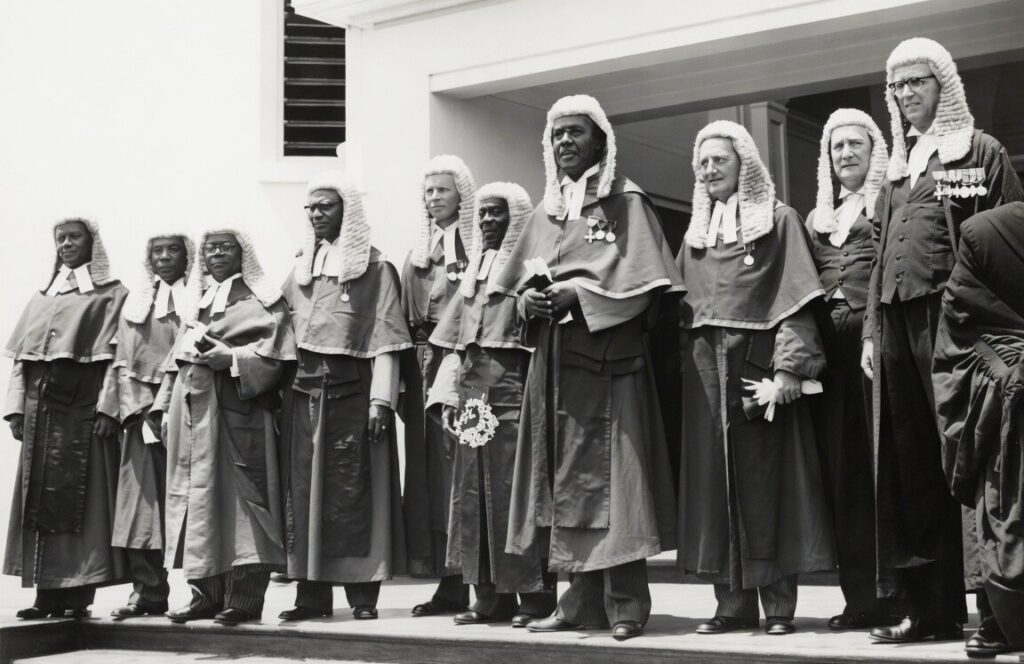
After a century and a half of largely traditional courtroom practice, Ghana’s judiciary has signalled that the future of justice delivery will look fundamentally different.
The timing was deliberate. At events marking the Supreme Court’s 150th anniversary on April 16, the Chief Justice and senior judicial officials used the milestone not just to reflect on the institution’s history, but to announce its most significant structural shift in generations — a comprehensive move toward digital court processes that will reshape how justice is delivered across the country.
The reform agenda is broad. Officials outlined plans to expand the existing e-Justice infrastructure, introduce and scale virtual court hearings, roll out electronic filing of documents and motions, and deploy digital case management systems designed to cut through the delays and backlogs that have long frustrated litigants, lawyers, and the courts themselves.
Remote participation — allowing lawyers and parties to appear in certain proceedings without being physically present — forms another pillar of the transition.
The driving logic, as judicial stakeholders made clear, is not modernisation for its own sake. Ghana’s courts carry a well-documented burden of congestion, and the pace at which cases move through the system has been a persistent source of public grievance. Officials framed the digital shift as a practical response to that reality — a means of making court processes faster, more accessible, and more transparent at a time when the demand for justice is outpacing the capacity of traditional infrastructure.
What the Shift Actually Means:
For those expecting overnight transformation, officials were careful to set realistic expectations. The transition is not a wholesale move to fully online courts — it is a structured, phased integration of digital tools into existing processes.
Tsatsu Tsikata Credits Wife Esther Cobbah for Survival During Imprisonment
In practice, this means hybrid hearings that combine physical attendance with video participation, virtual appearances for qualifying cases, electronic submission of evidence and legal documents, and digital recording and case tracking systems running alongside courtroom proceedings.
The architecture being built is one of supplementation rather than replacement — at least for now.
What is changing, fundamentally, is the baseline assumption. For most of its 150-year history, Ghana’s judiciary — which traces its origins to 1876 — has operated on the premise that justice requires physical presence in a physical courtroom. That premise is being formally retired.
Judicial officials were equally direct about what will be needed to make the transition work: sustained investment in technology and infrastructure, not as a peripheral budget line, but as a core requirement of effective justice delivery. The anniversary provided a symbolic moment to make that argument publicly — and to signal that the institution’s next 150 years will be built on a different foundation than the last.