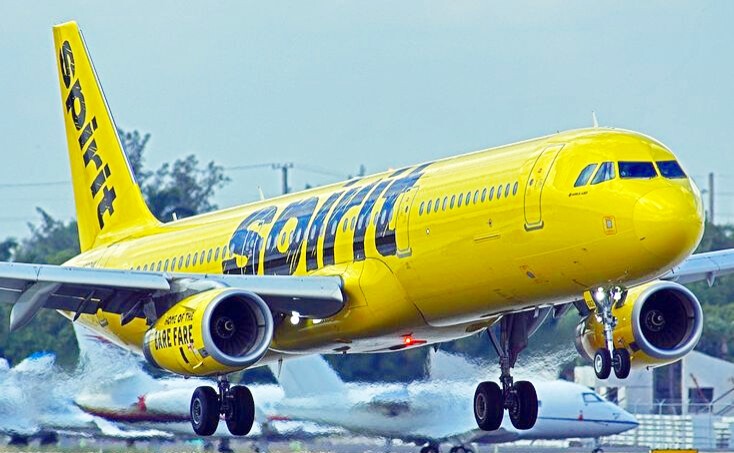
The president says he would consider purchasing the ultra-low-cost carrier ‘if the price is right’ — raising sweeping questions about government intervention in the airline industry
Spirit Airlines has a new admirer — and he happens to occupy the Oval Office. President Donald Trump confirmed on Thursday, April 24, that he would consider purchasing the beleaguered carrier, dangling the prospect of a government acquisition just as the airline teeters on the edge of collapse.
The remarks, made to CNN, mark the most direct indication yet that the White House is prepared to go beyond a simple bailout and potentially take ownership of one of America’s most recognisable budget airlines.
“Spirit is an airline that has had some trouble,” Trump told CNN. “They have some good aircrafts, some good assets, and when the price of oil goes down, we’d sell it for a profit.”
It is a striking posture from an administration that has otherwise championed deregulation and free market competition — and it signals just how seriously Washington is now treating the Spirit crisis.
Spirit’s troubles are not new, but they have accelerated sharply. The airline has been unable to turn a profit since the COVID-19 pandemic gutted demand for budget travel, and it has since filed for bankruptcy multiple times — most recently in August last year. Rising fuel prices, compounded by the effects of the Iran conflict and the blocking of the Strait of Hormuz, have added fresh pressure to an already fragile balance sheet.
In response, the airline has been aggressively cutting aircraft and routes, shrinking its network as it attempts to stabilise operations. Industry observers have warned in recent weeks that without intervention, Spirit could fold within months.
The Federal Aviation Administration has been in advanced discussions over a potential bailout package, though no formal offer has yet been made. Trump’s comments this week suggest the conversation inside the administration has moved well beyond emergency financial support.
The JetBlue Question:
Central to the White House’s framing of the Spirit crisis is what it describes as a critical regulatory misstep by the Biden administration. In 2022, Spirit and JetBlue Airways proposed a merger that many in the industry believed could have provided Spirit with the financial backbone it needed to survive. The Biden-era Department of Justice blocked the deal on competition grounds.
The current administration has been pointed in its criticism of that decision, arguing that Spirit would be in a far stronger position today had the merger been permitted to proceed. The argument carries a subtext that is hard to miss: under Trump, deals that previous regulators blocked could find a more sympathetic audience.
It is a question that now hangs over the entire airline sector. If the administration is willing to consider government ownership of a struggling carrier — and if it is prepared to revisit the regulatory philosophy that killed the JetBlue merger — the implications for future consolidation in the industry could be far-reaching.
The CEO’s Response:
Spirit’s Chief Executive Officer, Dave Davis, has welcomed the White House’s attention. In a statement, Davis said the airline was grateful for the president’s support and looked forward to working with his administration toward a solution that protects thousands of jobs, preserves competition, and ensures that Americans retain access to affordable fares.
Attending The 2026 World Cup Is Costing Fans More Than Ever
It is a carefully calibrated response — one that aligns Spirit’s survival with two of the administration’s stated priorities: employment and consumer costs. Whether that alignment is enough to seal a deal remains to be seen.
Founded as Charter One Airlines in 1990 and rebranded as Spirit Airlines in May 1992, the carrier grew steadily over three decades to become the seventh-largest airline in the United States by 2023. Its ultra-low-cost model — charging separately for checked baggage, carry-on items above a certain size, seat selection, and onboard food and drink — helped democratise air travel for millions of price-sensitive American passengers.
Today, Spirit operates a fleet of more than 100 aircraft, drawn entirely from the Airbus A320 family — including the A320neo, A320-200, A321neo and A321-200. Its hubs span ten major American cities: Atlanta, Chicago O’Hare, Dallas/Fort Worth, Detroit, Fort Lauderdale, Houston, Las Vegas, Miami, Newark and Orlando.
Beyond its domestic network, Spirit serves an international footprint across the Caribbean and Latin America, with routes to the Dominican Republic, Mexico, Costa Rica, Peru, Ecuador and Colombia.
Trump has not yet made a formal offer, and the mechanics of a government airline purchase would be legally and politically complex. But the direction of travel is clear. The administration is actively engaged, the FAA is in talks, and the president himself has now said publicly that ownership — not just a lifeline — is on the table.
For Spirit’s staff, creditors and passengers, the coming weeks may prove decisive. For the broader airline industry, they are already asking a harder question: if Washington is willing to buy Spirit, where does government intervention in commercial aviation end?