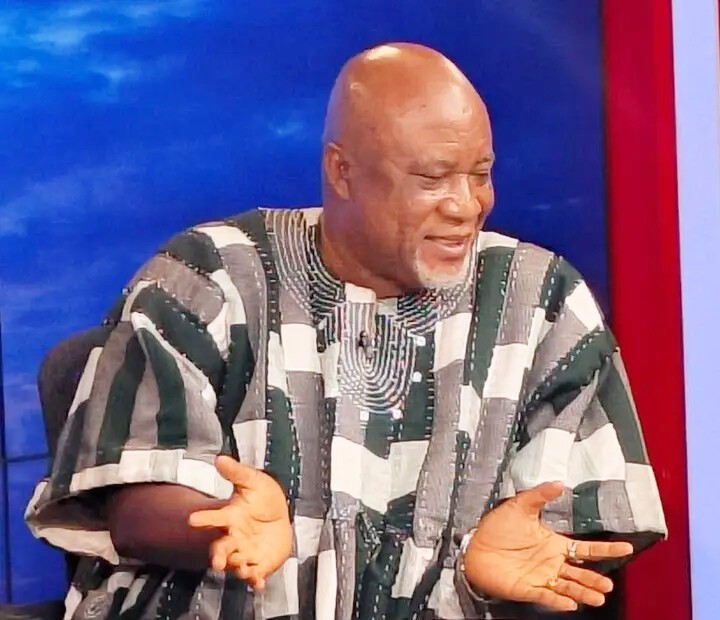
Hopeson Adorye, Director of Field Operations for United Party (UP), has taken aim at what he describes as a troubling pattern of partisan labelling in Ghana’s public sphere — one that he says is stifling independent thought and poisoning legitimate political debate.
The outspoken UP operative argued that the practice of tagging individuals with party affiliations based on their opinions, rather than their actual allegiances, has become a corrosive fixture of Ghanaian political commentary.
“This nonsense must stop: if you speak in favour of the NPP, you are not labelled NPP annex, but if you criticise them, you are called an NDC annex,” Adorye said, capturing what many observers recognise as a deeply entrenched double standard in the country’s political communication culture.
His remarks cut to the heart of a long-running tension between Ghana’s two dominant political forces — the New Patriotic Party and the National Democratic Congress — whose supporters have long traded accusations of hidden allegiance and manufactured bias against commentators, journalists, and public intellectuals who dare to express views that stray from either party’s preferred narrative.
Adorye maintained that such reflexive labelling does more than wound reputations — it actively discourages constructive criticism and, in doing so, insulates those in power from the very accountability that democratic governance demands. In his view, citizens and commentators who attempt to hold leaders to account deserve space to do so without being conscripted, by association, into partisan camps they have no loyalty to.
NIB Is Now BNI, As Parliament Passes Security Bill
The phenomenon has found particularly fertile ground on social media, where the velocity of public discourse means that a single statement can be enough to permanently brand a commentator as belonging to one political tribe or another — regardless of their broader body of work or stated positions.
Political analysts warn that this brand of polarisation, left unchecked, risks narrowing the space for nuanced national conversation and replacing issue-based engagement with tribal point-scoring.
Adorye’s intervention adds a notable voice to growing calls for a reset in how Ghanaians engage with political opinion — a reset built on tolerance, intellectual honesty, and a recognition that criticism of a party is not, by default, an endorsement of its rival.