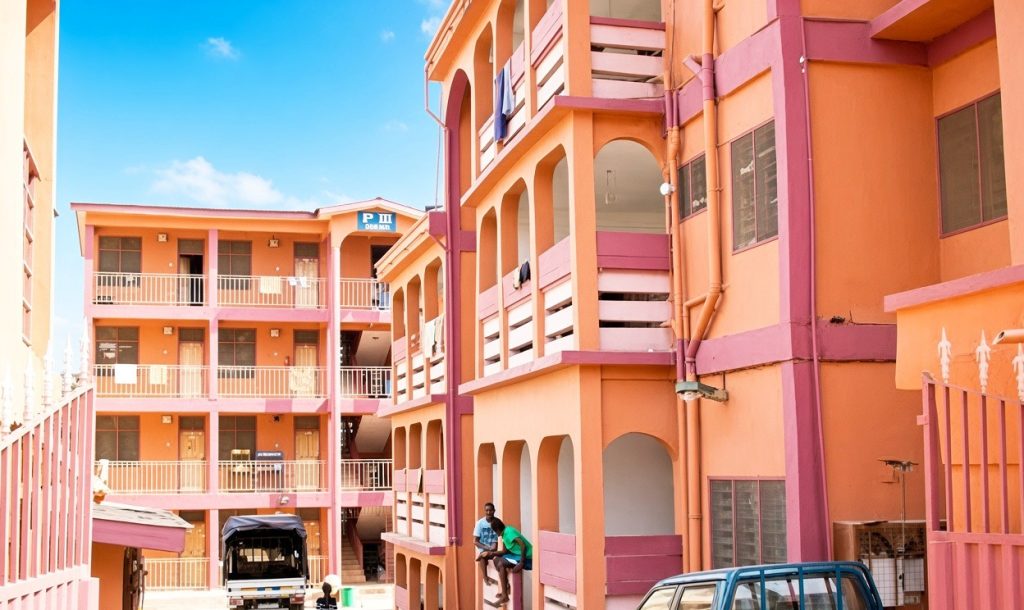
For many Kwame Nkrumah University of Science and Technology (KNUST) students, finding a place to sleep has grown to be nearly as crucial—and expensive —as paying their tuition.
The university’s hostel fees have been increasing at a rate that worries stakeholders and students alike. Many wonder how much more expensive housing can get before it becomes unattainable for the typical student.
According to KNUST’s own lodging data, the GUSSS hostel fees for Ghanaian candidates in 2025–2026 ranged from GH¢6,194 for a 4-in-1 room to GH¢9,581 for a 2-in-1 room, including utilities.
In Ghana, where students and their families already have to cope with tuition-related expenditures, transportation, food, learning materials, and other academic expenses, the situation has reignited discussions about the rising cost of postsecondary education.
Accommodation at KNUST is still particularly difficult since there is still a greater demand for rooms than there are available, which allows private hostel operators to charge ever-higher rates.
Private hostels are frequently the only viable option for students who are unable to find housing managed by the institution. However, families may experience severe financial strain due to the costs associated with these facilities.
What was formerly thot of as just another aspect of attending college has progressively grown to be a significant financial factor for students.
Depending on the location, room layout, amenities, and duration of stay, the price of a hostel room might differ significantly. Students who are searching for less expensive solutions frequently have to give up privacy, comfort, or distance.
Some must share a room with multiple coworkers in order to keep lodging costs within their means.
For students whose parents or guardians reside outside of Kumasi, the situation becomes much more challenging because they must pay for housing, food, transportation, and other costs during the school year.
KNUST’s New Doctoral Program Will Promote Herbal Medicine Education
Calls for a long-term solution to the housing issue have been made by government organizations, university administrators, and hostel operators in response to the mounting concerns.
Students contend that access to high-quality postsecondary education should not be hampered by housing. They are also worried that ongoing hikes would put some students in difficult financial circumstances, making them travel great distances to attend classes or settle for cramped housing just because it is less expensive.
Concerns about growing hostel fees have also drawn political attention, as Youth Minister George Opare-Addo has indicated preparations to petition the Education Ministry and other pertinent agencies.
Demand is a straightforward but intricate issue at the core of the hostel conundrum. Thousands of students attend KNUST, but the supply of reasonably priced housing has not kept up with the expanding student body. Prices for lodging are inevitably under pressure when demand is strong and supply is constrained.
However, students and their supporters feel that precautions must be taken to keep housing costs from rising too high.
In response to the growing national concern about the cost of student housing, the Rent Control Department has also taken action to address projected hikes in private student hostel fees for the 2026–2027 academic year.
The debate over KNUST hostel fees is unlikely to disappear soon. As the university continues to attract students from across Ghana and beyond, the demand for accommodation will remain strong.
The bigger question is whether the government, university authorities and private hostel operators can work together to expand affordable accommodation without compromising safety and basic living standards.
For students, however, the issue is much more immediate. They are not simply asking for cheaper rooms. They are asking for accommodation that their families can realistically afford while they pursue their education.
And as hostel fees continue to rise, one question is becoming increasingly difficult to ignore: How much can the average Ghanaian family realistically afford to pay for a student’s room before accommodation becomes another major barrier to university education?