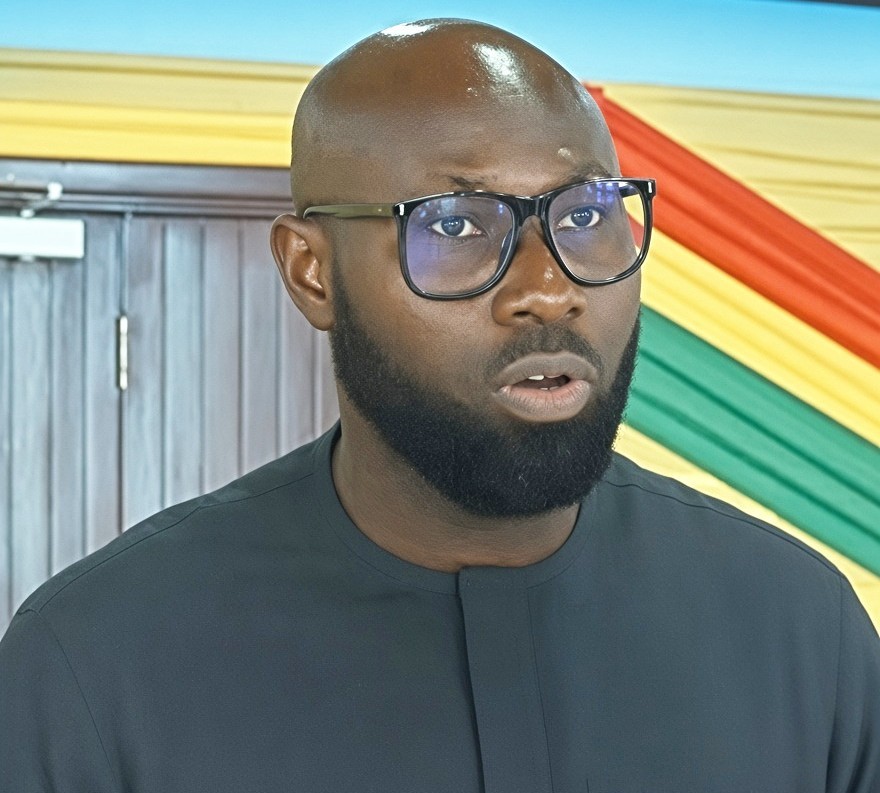
The Member of Parliament for Suame, John Darko, has issued a pointed warning against what he calls a dangerous logic creeping into how Ghana fills seats on its Council of State — specifically, the idea that an appointment could be deliberately delayed until a more convenient candidate becomes available.
The NPP MP says it would be deeply concerning if the government were to wait for a specific judicial officer to retire before appointing that person to the Council, purely on the expectation that they’d prove easier to influence once in the role. Speaking on TV3’s The Key Points on Saturday, September 12, Darko didn’t mince words:
“It is dangerous to await a Chief Justice to retire and appoint him.”
Darko laid out the reasoning he finds most troubling — if the argument for holding off on an appointment boils down to wanting someone the government believes it can more easily steer, then the whole approach becomes a dangerous proposition for the country’s institutions.
His remarks land amid an unresolved standoff over a vacant Council of State seat reserved for a former Chief Justice — a vacancy left open since former Chief Justice Sophia Akuffo’s resignation from the post.
Chief Justice To Create A New Audit Court
The delay has already drawn legal fire, with a citizen suing President Mahama at the Supreme Court, arguing the Constitution obligates him to fill the seat and that his inaction is unlawful. Speculation has swirled that the administration may be waiting on the retirement of sitting Chief Justice Paul Baffoe-Bonnie, who has been floated as a possible eventual occupant of the Council seat.
For Darko, the entire episode raises deeper questions about the principles that ought to guide appointments to Ghana’s constitutional bodies. He argues such appointments should hinge on merit, independence, and genuine suitability — not on the calculated pursuit of someone perceived as sympathetic to whoever holds power at the time.
The MP’s caution touches a nerve that runs deeper than any single appointment. Established under the 1992 Constitution, the Council of State exists to counsel the President — a role that only functions if its members can offer genuinely independent advice.
Handpicking members for their perceived pliability, in Darko’s view, risks hollowing out that independence and eroding public trust in the institution altogether. His message, ultimately, is a call to keep constitutional appointments free from the pull of political convenience.