Ghana is quietly orchestrating a massive transformation in its athletic landscape, aiming to evolve from a regional powerhouse into a dominant host on the global sporting stage.
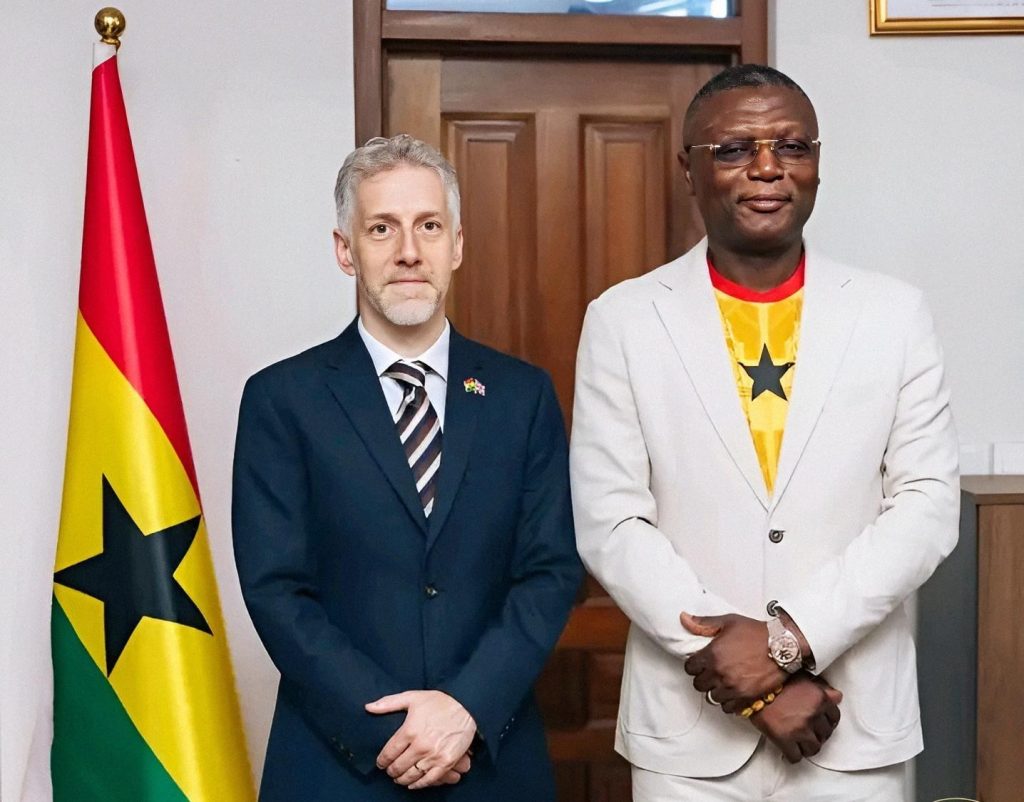
To turn this ambition into reality, the nation is actively seeking strategic international alliances that combine foreign direct investment with high-level operational expertise. A pivotal moment in this effort took place during a high-profile meeting between Kofi Adams, Ghana’s Minister for Sports and Recreation, and Alastair Long, the United Kingdom’s Trade Commissioner for Africa.
Together, the two leaders mapped out a comprehensive blueprint to revolutionize the Ghanaian sports ecosystem through cross-border cooperation.
Modernizing the Arena:Infrastructure as the Core Catalyst
At the center of Minister Adams’ vision is a fundamental overhaul of Ghana’s physical sports assets. Top-tier athletic performace demands top-tier facilities. The plan focuses heavily on constructing, upgrading, and modernizing state-of-the-art arenas, multi-sport complexes, and high-performance hubs capable of supporting everything from grassroots youth leagues to elite international games.
Upgrading these physical spaces fulfills a dual purpose:
Empowering Homegrown Talent: Providing national athletes, trainers, and sports science specialists with state-of-the-art equipment and environments necessary to compete at the world class level.
Global Host Readiness: Positioning
Ghana as an attractive, fully capable destination to stage multi-sport continental championships and international tournaments. By partnering with the UK, Ghana seeks to leverage British expertise in structural design, venue management, and sustainable sports technology to build infrastructure that endures long past the final whistle.
Human Capital and Knowledge Exchange: Elevating the Game Off the Field
Infrastructure alone cannot sustain a thriving sports sector; it requires an equally sophisticated network of skilled human talent. A major focal point of the UK-Ghana discussions was the establishment of bilateral exchange programs and technical alliances.
Through these knowledge-sharing pathways, Ghanaian coaches, technical staff, sports administrators, and athletes stand to gain direct access to the UK’s deeply entrenched sports development networks. These exchanges are designed to transfer best practices in high-performance coaching, sports medicine, refereeing, and facility administration.
Crucially, the initiative extends beyond elite performers to embrace youth development, opening up structured career paths for young Ghanaians aspiring to work in sports management, media, event production, and analytics.
The Road to 2027: Setting the Stage with the U-20 Africa Cup of Nations
The urgency behind these strategic moves is fueled by an upcoming benchmark on Ghana’s sports calendar: the 2027 U-20 Africa Cup of Nations. Hosting this premier youth tournament offers the nation an immediate test of its operational capacity, venue quality, and logistics coordination.
Inaki Williams Ends Ghana Career With An Emotional Message
Government strategy dictates using the 2027 U-20 AFCON not merely as a standalone event, but as a proof-of-concept. Continuous capital deployment into stadium capabilities and technical workforce readiness over the coming years is intended to prove that Ghana can seamlessly execute major continental competitions.
Successfully hosting this event will serve as a launchpad, establishing the credibility required to bid for even larger, higher-profile global athletic events in the future.
Unlocking the Sports Economy: Job Creation and Market Growth
Beyond the excitement of stadium victories, the dialogue between Adams and Long highlighted the immense macroeconomic potential of a commercialized sports industry. Sports is increasingly recognized as a powerful economic engine capable of driving trade, tourism, and job growth.
Strengthening cross-border ties in areas like venue operations, sports commerce, athlete representation, and leisure management unlocks brand-new avenues for entrepreneurship and investment.
For Ghana, cultivating a robust sports economy offers a practical solution to youth unemployment—transforming athletic passion into viable, lifelong professions across marketing, infrastructure, enterprise, and administration.
The summit between Kofi Adams and Alastair Long signals a deliberate shift toward treating sports as a high-value sector for national development. By merging UK capital and technical know-how with Ghana’s rich talent pool and bold ambitions, the country is laying down the foundation to become a premier sporting destination in Africa and beyond.