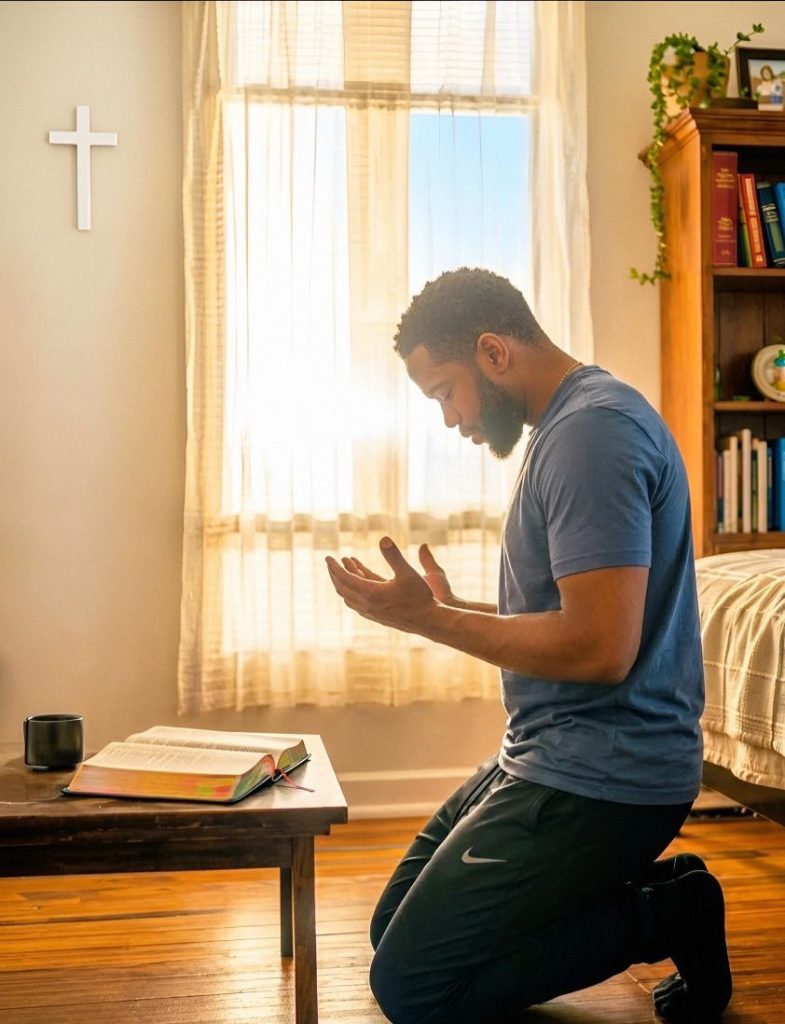
There are seasons in life when prayer feels like a conversation with heaven that has gone unanswered. You have cried, fasted, worshipped, trusted God and held on to His promises. Yet, the situation remains unchanged, and have even blamed it on a strange spiritual entanglement.
The breakthrough you have been expecting has not arrived. The marriage you have prayed for is still a distant dream. The job opportunity has not materialised. The financial burden remains heavy, and the healing you have been asking God for seems painfully delayed.
After several years of praying, an honest question may begin to emerge in your heart: Lord, what should I do next?
It is a deeply personal question, especially for someone who has built their life around faith. But when the answer seems slow, the next step is not necessarily to pray louder, abandon your faith or assume that God has forgotten you. Sometimes, the next step is to understand your season differently.
Do Not Confuse God’s Silence With His Absence
One of the most difficult experiences in the Christian journey is continuing to believe when circumstances provide little evidence of progress.
However, the absence of an immediate answer does not automatically mean that God has abandoned you.
In Psalm 13:1, David asks, “How long, O Lord? Will you forget me forever?”
Interestingly, this question came from a man who had a profound relationship with God. His words demonstrate that even people of strong faith can experience seasons of uncertainty, frustration and emotional exhaustion.
Faith does not require you to pretend that waiting is painless. You can acknowledge your disappointment while remaining open to God’s direction.
Sometimes, the most honest prayer is simply:
“Lord, I am tired of waiting. Help me understand what I should do next.”
Examine Whether You Are Waiting or Refusing to Move
There is an important difference between patiently waiting for God’s direction and remaining inactive because you are expecting everything to happen without your participation.
You may have prayed for employment for years, but have you consistently developed your skills, improved your CV, explored opportunities and connected with people who can help?
You may have prayed for financial breakthrough, but have you examined your spending habits, considered additional income opportunities or sought financial guidance?
Prayer and responsible action do not have to compete with each other. James 2:17 reminds Christians that faith without works is dead. This does not mean every unanswered prayer is caused by a lack of effort. Rather, it challenges believers to consider whether there are practical steps they can take while continuing to trust God.
Sometimes, the next answer to your prayer may involve something you need to do, learn, change or pursue.
Ask God for Direction, Not Only the Desired Outcome
When people pray for years, their prayers can become narrowly focused on one particular result. They may repeatedly ask God to restore a relationship, provide a specific job, open a particular door or make a certain person change.
But what happens when the situation does not change?
Perhaps the prayer needs to include another question:
“God, what are You asking me to understand or do in this situation?”
This is not about assuming that every disappointment is a divine lesson or that suffering is always necessary for personal growth. It is about remaining receptive to guidance beyond the outcome you initially imagined.
In Proverbs 3:5–6, believers are encouraged to trust in the Lord and acknowledge Him in all their ways.
Seeking direction may involve prayer, Scripture, wise counsel, careful reflection and an honest assessment of your circumstances. You may discover that the next step is to persevere. In another situation, it may be to change your approach, establish boundaries or pursue a different opportunity.
Do Not Allow Delayed Answers to Destroy Your Emotional Well-being
One of the dangers of prolonged waiting is that disappointment can gradually become discouragement, resentment or emotional exhaustion.
You may begin comparing your life with others who appear to have received answers to similar prayers.
Someone you started praying with years ago may now be celebrating marriage, financial stability, career advancement or personal success, while you are still waiting.
It is natural to wonder why your journey appears different. But comparison can make an already difficult season even heavier.
Remember that another person’s progress is not proof of your failure, and your present circumstances do not determine your entire future.
Allow yourself to rest. Speak with trusted people. Seek professional support when emotional distress becomes overwhelming. You do not have to carry every burden alone.
Your faith should not become a reason to neglect your well-being. Sometimes, after praying for a long period, it becomes helpful to examine the request itself.
Are you praying for something that genuinely aligns with your values and long-term well-being?
Are you holding on to a particular outcome because you believe it is the only way your life can become meaningful?
Are there circumstances you need to accept, even while continuing to hope for change?
For example, someone praying for the restoration of a relationship may need to recognise that reconciliation requires the willingness and participation of both individuals.
Someone praying for a particular career opportunity may need to consider whether other opportunities could also provide fulfilment and stability. Reconsidering your approach does not mean abandoning faith. It can mean allowing your understanding of the situation to mature.
Learn to Recognise Progress Beyond the Breakthrough
When you are focused on one major answer, it is easy to overlook smaller developments. Perhaps the situation has not completely changed, but you have acquired new skills, developed greater patience, built meaningful relationships or discovered opportunities you previously overlooked.
These developments do not erase your struggles, nor should they be used to dismiss your unmet needs. However, recognising them can help you avoid viewing your entire life through the lens of one unanswered prayer. A delayed breakthrough should not become the only measure of whether your life is moving forward.
Understand That Waiting Does Not Mean You Must Remain in the Same Position
There is a tendency among some believers to interpret patience as staying in one place indefinitely. But patience and movement can coexist. You can continue praying for financial stability while pursuing a new business idea. You can pray for healing while seeking appropriate medical care. You can pray for a better future while making practical decisions that improve your present circumstances.
BamBam Says She Fights Depression With Constant Prayers
You can trust God while asking questions, seeking advice and taking responsible action. The important thing is not to confuse faith with passivity or perseverance with refusing to reconsider your options.
Give Yourself Permission to Ask, “What If the Answer Looks Different?”
This may be one of the hardest questions to confront after years of prayer. What if the answer does not arrive in the form you expected?
What if the opportunity comes through an unexpected person? What if the solution requires a different route? What if the outcome is not what you originally imagined?
Christian faith includes the belief that God’s wisdom exceeds human understanding. Yet, this belief should not be used to make confident predictions about exactly when or how a particular prayer will be answered.
Instead, it can encourage humility, flexibility and continued trust amid uncertainty. You do not have to understand the entire journey before taking the next responsible step.
So, What Should You Do Next?
If you have prayed for several years and the response has been slow, consider taking these steps:
Continue praying honestly: Express your disappointment, fears and hopes without pretending everything is fine.
Review your circumstances: Identify what is within your control and what requires patience or acceptance.
Take practical action: Pursue reasonable opportunities instead of waiting passively for circumstances to change.
Seek wise counsel: Speak with mature, trustworthy people who can offer spiritual and practical guidance.
Protect your well-being: Rest, maintain meaningful relationships and seek professional help when necessary.
Remain open to different possibilities: Do not assume that one specific outcome is the only path to a meaningful future.
Perhaps the next step is not another year of waiting, but a new way of walking. The journey of faith is not always defined by immediate answers. Sometimes, it involves learning how to navigate uncertainty without allowing disappointment to consume your hope.
If you have prayed for years, do not automatically conclude that your prayers have been wasted or that you have failed spiritually.
But neither should you feel obligated to remain passive, suffer silently or ignore practical opportunities while waiting.
Keep praying. Keep reflecting. Keep growing. Take the steps available to you today.
And when the road ahead remains unclear, remember that you do not need to see the entire destination to take the next meaningful step.
Your waiting season may be long, but it does not have to be a season in which your life stands still.