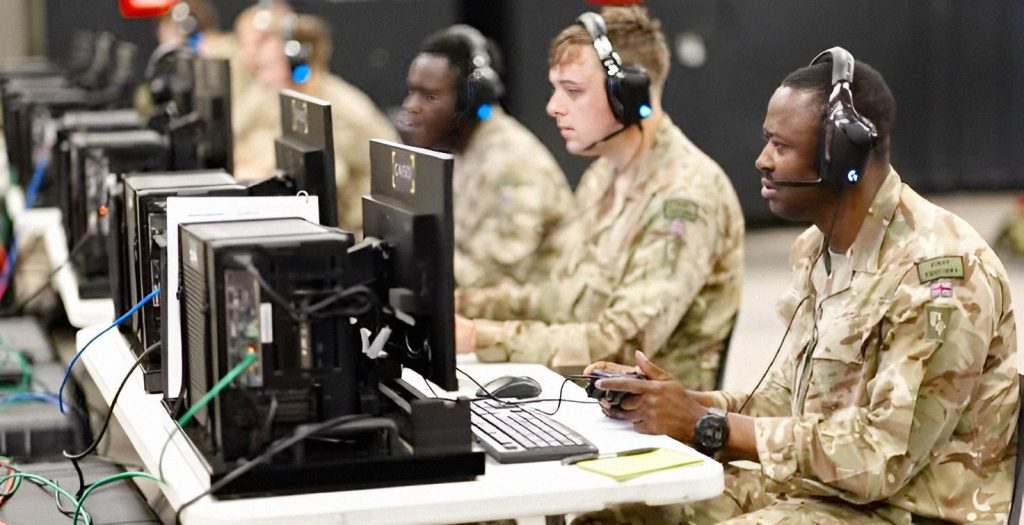
The controller may be becoming part of the soldier’s kit. British troops are being encouraged to play computer games, because the skills gaming sharpens line up with the demands of modern warfare: flying drones, defending against cyberattacks, making split-second calls and coordinating as a team.
The UK Ministry of Defence says military gaming initiatives are meant to build digital and cyber skills as warfare keeps changing. Armed forces increasingly see certain games as more than a pastime. They can train people to absorb information fast, spot threats and decide under pressure, exactly what military operations demand.
A big driver of this interest is how heavily today’s battlefields depend on drones. Remotely piloted aircraft and other digital systems now sit at the centre of operations, and the people running them need sharp hand-eye coordination, steady concentration, spatial awareness and quick reactions when conditions shift.
Many video games exercise just those abilities, especially ones built around navigating, aiming, tracking and controlling objects on a screen. The British Army has acknowledged that soldiers who game regularly may arrive with a head start on some of the basics of flying military drones.
But a high score does not make someone a qualified operator. Formal training and assessment remain essential before anyone handles military equipment.
In combat, a soldier may have only moments to read a situation and choose what to do next. Some games recreate that pressure by making players follow several developments at once, pick out threats and rework their strategy on the fly.
Regular play can help build:
- Rapid decision-making: reacting quickly when circumstances change.
- Situational awareness: tracking multiple events and recognising danger.
- Problem-solving: finding another route when the first plan collapses.
- Concentration: staying locked in while juggling several streams of information.
These traits are valuable in military settings, though how far gaming improves real-world performance depends on the person, the game and the task.
Cyber warfare and digital security are now central concerns, and gaming is part of the response. In November 2025, the UK Ministry of Defence launched the International Defence Esports Games, gathering military personnel from more than 40 nations to build skills through competitive play.
The event aimed to strengthen digital capability, deepen cooperation between allied forces and develop abilities relevant to modern operations. The British government has also pointed to competitive gaming as a way for personnel to practise tracking several threats at once, coordinating actions and adjusting tactics as new information arrives.
Most competitive multiplayer games reward players who work toward a shared goal. Teammates have to talk clearly, pass along information, move in sync and follow a leader’s instructions.
That mirrors military life, where poor communication can sink a mission. Military esports competitions give personnel a space to rehearse coordination and teamwork against other teams.
Still, gaming is no substitute for the discipline, leadership, physical conditioning and hands-on experience that service demands.
The military is also putting money into advanced digital simulations, which let soldiers practise responding to complex battlefield scenarios without staging each one in real life.
In July 2026, the Ministry of Defence announced a £2 billion contract for AI-driven training and analytics aimed at boosting military readiness. The system is expected to combine artificial intelligence, analytics and virtual environments to prepare personnel for fast-changing conditions.
Technology like this lets planners and soldiers test different scenarios, weigh the likely consequences of their choices and learn from simulated operations before taking to the field.
Introducing the iPhone Duo, Apple’s First Foldable iPhone (Video)
Games also offer entertainment and social connection during downtime, especially for troops stationed far from home. In April 2026, the Ministry of Defence announced plans to widen service personnel’s access to entertainment, including gaming and streaming services, as part of wider efforts to improve morale and the experience of military life.
There is a flip side. Too much screen time can eat into rest, exercise and face-to-face contact, so gaming has to be balanced with other activities.
No. The aim is to recognise and develop useful skills, not to turn the ranks into professional gamers.
The military’s interest reflects how warfare is changing. Alongside traditional soldiering, modern forces need people who are comfortable with digital technology, can operate remote systems and can make sense of complex information. Gaming may be a handy starting point for some of those abilities, while esports can give personnel a place to practise teamwork and communication.
Even so, no game can fully reproduce the danger, physical strain, psychological pressure and unpredictability of real combat.
British soldiers are being encouraged to embrace gaming because some of the skills it builds can be valuable in an increasingly tech-driven military. From drone operations and cyber defence to teamwork and decision-making, the British military sees promise in pairing gaming with formal training.
The point is not simply to let soldiers have fun. It is to find out how familiar digital habits can help prepare personnel for the challenges of modern warfare.