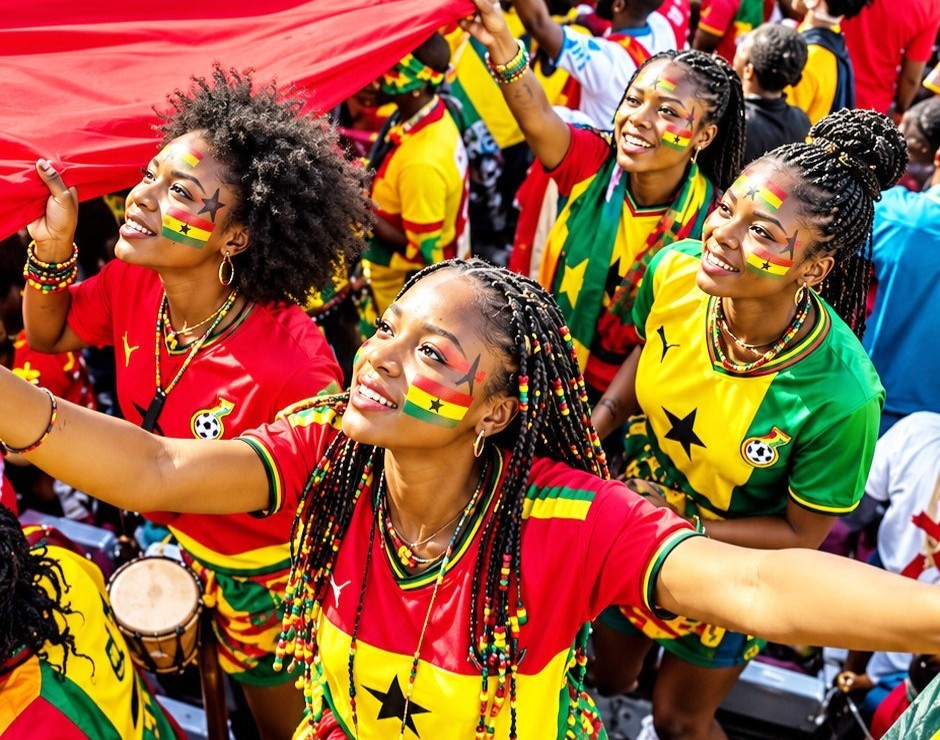
Ghana is crying, and the painful truth is that many of the people who should be wiping away her tears are too busy fighting over who gets to control the country.
From the corridors of Parliament to radio and television studios, from social media platforms to political rallies, one thing has become increasingly difficult to ignore: partisan politics is threatening the very unity, progress and collective conscience that Ghana needs to move forward.
The country is divided. Families argue over political loyalties. Friends become enemies because they support different parties. Public officials are defended or condemned, not necessarily based on the facts, but according to the colours they wear politically.
Meanwhile, the ordinary Ghanaian continues to struggle with the realities of daily life. The question we must ask ourselves is simple: When did winning political arguments become more important than solving Ghana’s problems?
Ghana’s Problems Have Become Political Weapons
In a healthy democracy, political parties compete by presenting ideas, offering solutions and demonstrating their ability to improve people’s lives.
In Ghana, however, political discourse too often descends into accusations, counteraccusations, insults and the relentless search for opportunities to embarrass opponents.
When one government makes a mistake, its opponents are quick to condemn it. But when the same opponents gain power and make similar mistakes, the explanations suddenly change.
Yesterday’s critics become today’s defenders. Yesterday’s defenders become today’s critics.
The principles remain the same, but the positions change depending on who occupies the seat of power. This is one of the greatest dangers of excessive partisanship: it makes consistency a casualty of political convenience.
Instead of asking whether a policy is good for Ghana, some people first ask whether it benefits their party. Instead of demanding accountability from every public official, they sometimes wait to discover the person’s political affiliation before deciding whether to speak.
When political loyalty becomes stronger than loyalty to the truth, accountability begins to die.
The Obuasi SHTS Scandal: When Justice Must Come Before Politics
The controversy surrounding the Obuasi Senior High Technical School (SHTS) scandal has once again brought difficult questions about accountability, student protection and the responsibility of institutions to the forefront of public discussion.
Cases involving alleged wrongdoing, especially where the welfare and safety of students are concerned, demand seriousness, sensitivity and a commitment to justice.
Yet Ghana must guard against allowing political affiliations to determine how such matters are discussed, investigated or judged in the court of public opinion.
If allegations emerge against someone perceived to belong to one political camp, the public must not rush to defend that person simply because of political loyalty. Equally, accusations against someone associated with an opposing camp should not become an excuse to abandon fairness and due process. The welfare of students must never become secondary to political calculations.
Where wrongdoing is established, the law must take its course. Where allegations remain unproven, the rights of the accused must also be respected. Ghana cannot build a just society if justice is celebrated only when it hurts political opponents. A child’s safety is not an NDC issue or an NPP issue. It is a national responsibility.
Political Parties Are Not More Important Than Ghana
The New Patriotic Party (NPP) and the National Democratic Congress (NDC) are major forces in Ghana’s democratic system. Their competition gives voters choices and allows citizens to hold governments accountable. But neither party is Ghana itself.
Ghana existed before today’s political leaders, and the country must continue to thrive long after the current generation of politicians has left office.
Unfortunately, political conversations can create the impression that criticising a party is equivalent to hating the country, while defending a party is proof of patriotism.
Nothing could be further from the truth. A Ghanaian can support the NPP and still criticise an NPP government. Another can support the NDC and still demand answers from an NDC administration.
Indeed, the ability to question leaders without fear or favour is one of the foundations of a functioning democracy. Political parties are supposed to serve the people. The people are not supposed to surrender their conscience to political parties.
If a politician fails, citizens must have the courage to say so. If a government introduces a good policy, citizens must be willing to acknowledge it, even when they support the opposition.
Ghana needs citizens who think independently, not political followers who applaud every decision made by their preferred leaders.
The Ordinary Ghanaian Is Paying the Price
Beyond the heated political debates lies a reality that cannot be ignored. Families must find ways to pay school fees, purchase food, access healthcare, secure employment and meet their daily expenses.
Young people continue to search for opportunities to build meaningful futures. Business owners struggle with operating costs. Parents worry about their children’s education and prospects.
“No More Boundaries” – Omanhene Kwabena Asante Slams Toxic Ghana Politics
For these citizens, political victories mean little if their everyday circumstances do not improve. A political party may celebrate an election victory, but what does that victory mean to a young graduate who cannot find a job?
A government may announce ambitious policies, but what do those announcements mean to a family struggling to afford basic necessities? Politicians may trade accusations for hours, but how does that help a community waiting for better roads, reliable water supply or improved healthcare?
Ghana’s development should not be measured by how fiercely political supporters defend their leaders. It should be measured by whether people’s lives are improving.
The tragedy is that political energy that could be channelled into solving national problems is sometimes wasted on defending the indefensible and attacking political opponents.
The ordinary Ghanaian deserves better.
Parliament Must Be a House of Solutions, Not Endless Political Warfare
Parliament is one of the most important institutions in Ghana’s democracy. It is where elected representatives are expected to scrutinise government policies, debate legislation and represent the interests of their constituents.
Political disagreement is normal and necessary. A democracy without disagreement would have little room for meaningful debate. But there is a difference between constructive disagreement and destructive confrontation. When political rivalry overshadows serious deliberation, the country loses an important opportunity to develop practical solutions to its challenges.
Ghana needs lawmakers who can disagree passionately on policy while recognising their shared responsibility to the nation. The opposition must scrutinise the government without deliberately obstructing every initiative simply to score political points. The government, in turn, must welcome legitimate criticism instead of treating every question as an attack.
The national interest must come before party interests. After all, when Parliament fails to deliver for Ghanaians, the consequences do not fall exclusively on NPP supporters or NDC supporters. They affect everyone.
The Media and Social Media Must Not Become Weapons of Division
Political polarisation is not sustained by politicians alone. Media platforms, commentators, political activists and ordinary social media users also influence the direction of national conversations.
Radio discussions can become shouting contests. Television debates can prioritise confrontation over substance. Social media can reward insults, inflammatory claims and misleading information with attention and engagement.
In such an environment, a carefully considered argument may attract less attention than a provocative statement designed to humiliate political opponents.
The result is a public conversation in which anger often travels faster than facts. Journalists and media organisations have a responsibility to scrutinise power, verify claims and give citizens the information they need to make informed decisions.
Social media users also have a responsibility to question what they share rather than spreading every allegation that supports their preferred political narrative.
Ghana needs a stronger culture of fact-checking, responsible commentary and respectful disagreement.
We cannot demand accountability from politicians while allowing misinformation and political hostility to flourish unchecked in our own conversations.
The Dangerous Culture of Selective Outrage
Perhaps one of the most troubling consequences of partisan politics is the tendency to condemn wrongdoing selectively. An action considered unacceptable when committed by an opponent may suddenly become understandable when committed by an ally.
Why Are Politicians Accused Of Corruption Rarely Seen Behind Bars?
A scandal that demands immediate investigation when it involves one political camp may be dismissed as propaganda when it involves another. This approach weakens the moral authority of citizens who claim to demand accountability.
It also creates an environment in which public officials may feel that their political connections matter more than their conduct. But accountability cannot operate according to party colours.
Corruption is wrong regardless of who commits it. Abuse of office deserves scrutiny regardless of political affiliation. Mismanagement must be questioned regardless of which party is in government.
Likewise, good policies deserve fair consideration regardless of which administration introduces them. If we want better leaders, we must first become citizens who are unwilling to excuse wrongdoing simply because the person responsible belongs to our political camp.
Ghana Needs National Unity, Not Blind Political Loyalty
National unity does not mean that everyone must support the same political party. It does not require citizens to abandon their convictions or remain silent when leaders make mistakes.
True unity means recognising that, despite our political differences, we share a common future.
The farmer in the north, the trader in Kumasi, the fisherman along the coast, the student in Accra and the entrepreneur in Takoradi all have a stake in Ghana’s future.
Their needs may differ, but they are all entitled to a country where institutions work, opportunities are accessible and public resources are managed responsibly.
Political competition should help Ghana find better answers to its problems. It should not turn citizens against one another to the point where they can no longer recognise their shared interests.
We can disagree without becoming enemies. We can support different candidates without losing respect for one another. We can criticise governments without wishing the country to fail. And we can acknowledge the achievements of political opponents without betraying our own convictions.
These are not signs of political weakness. They are signs of democratic maturity.
What Must Change?
Ghana does not need to abandon multiparty democracy. It needs to strengthen it by placing national interest above blind partisanship.
Political leaders must accept criticism, demonstrate accountability and stop treating every national issue as an opportunity for political point-scoring.
Political parties must encourage their members to defend principles rather than personalities. Public institutions must apply the law fairly, independently and consistently.
The media must prioritise accuracy and public interest over sensationalism and partisan narratives. Citizens must learn to judge policies, leaders and public officials by evidence and performance rather than political affiliation alone.
Most importantly, Ghanaians must recognise that elections are not permanent wars between citizens. They are democratic contests in which one side wins, another loses, and the country continues.
The real competition should be about who can offer the best ideas, build the strongest institutions and improve the lives of the people. That is the kind of competition Ghana needs.
Ghana Is Crying, But Must We Let Her Die?
Ghana’s greatest danger is not simply that political parties disagree. Political disagreement is part of democracy. The danger is that partisan loyalty can become so powerful that citizens lose the courage to tell their own leaders the truth.
It is the danger of a society where defending a politician becomes more important than defending a principle, where exposing wrongdoing is judged by the identity of the person exposed, and where national problems are treated as opportunities to score political points.
If this culture continues unchecked, Ghana risks weakening the very institutions and relationships that make national progress possible. But there is still hope.
Hope lies in the citizen who demands accountability from both government and opposition. Hope lies in the journalist who follows the evidence, even when it challenges a popular political narrative. Hope lies in the young Ghanaian who refuses to inherit the hatred of previous political battles.
And hope lies in leaders who understand that public office is a responsibility, not a licence to command unquestioning loyalty.
Ghana does not belong to the NPP. Ghana does not belong to the NDC. Ghana belongs to all Ghanaians, including those who support neither party. Our political affiliations may shape our choices at the ballot box, but they should never determine the value we place on truth, justice, human dignity and national progress.
The country is bigger than any politician. Its future is more important than any party’s next electoral victory.
Ghana is crying. The question is whether we will continue arguing over who is responsible for her tears or finally unite to do something about them. The time has come to put Ghana first—not merely in our campaign speeches, political slogans and patriotic declarations, but in our everyday actions.
Because if partisan politics continues to matter more to us than the country itself, we may win countless political arguments while losing something far more precious: the Ghana we all call home.