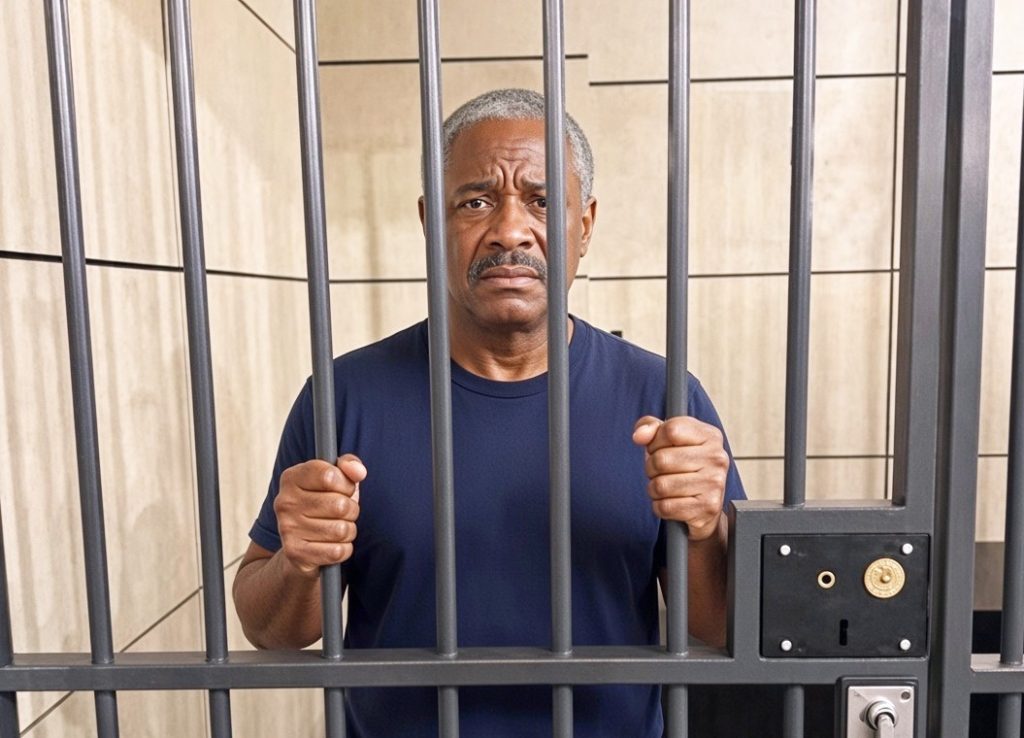
When was the last time a Ghanaian politician was sent to prison for corruption? It is a question that deserves serious public discussion, especially at a time when many ordinary Ghanaians are struggling to make ends meet.
For many citizens, the fight against corruption has become a recurring promise in Ghanaian politics. Politicians speak passionately about accountability, transparency and the need to protect public funds, particularly when seeking power. Yet, when questions arise about the misuse of state resources, citizens often demand to see more tangible results.
The question is simple: If an ordinary Ghanaian can face serious consequences for breaking the law, why should anyone entrusted with public office be treated differently when found guilty of corruption?
Across the country, hardworking Ghanaians wake up every morning to hustle for survival. Market women struggle to make daily sales, teachers work to educate the next generation, nurses care for patients under difficult conditions, and young people search desperately for employment opportunities.
For these citizens, every cedi matters. Parents worry about school fees, families struggle with rising living expenses, and young graduates wonder when their qualifications will translate into decent jobs.
Meanwhile, public resources that should support education, healthcare, infrastructure and job creation must be protected from waste and abuse. This is why corruption is not merely a political issue. It is a matter that directly affects the quality of life of ordinary people.
When public money is lost through corruption, the consequences can be felt in communities where roads remain unfinished, hospitals lack essential equipment and schools need better facilities.
The real victims are often citizens who have little influence over how public funds are managed but bear the consequences when those resources are not used properly.
One of the biggest concerns in the fight against corruption is whether accountability is applied consistently, regardless of a person’s political affiliation, position or connections. Ghanaians should be able to expect the same standard of justice for everyone.
A public official who is accused of corruption deserves a fair investigation and the opportunity to defend themselves in court. Equally, where the evidence establishes guilt beyond a reasonable doubt, the law should be applied without fear or favour.
They Keep Lying To Us: Kwabena Asante Slams Politicians’ Dishonesty
The objective should not be to jail politicians simply because they hold public office. Rather, it should be to ensure that nobody escapes the consequences of a proven crime because of political connections, wealth or influence. Justice must depend on evidence, not political affiliation.
Without that principle, public confidence in institutions responsible for fighting corruption can gradually weaken.
Why Do Citizens Keep Asking the Same Question?
Every election season, corruption frequently becomes a major subject of political debate. Parties accuse their opponents of wrongdoing, promise investigations and pledge to recover stolen public funds. However, citizens have a legitimate interest in what happens after the campaign speeches end.
Were allegations properly investigated? Were cases prosecuted where sufficient evidence existed? Were public funds recovered where appropriate? Were those convicted punished in accordance with the law? These are reasonable questions in any democracy.
Ghanaians should not have to depend on political accusations to understand whether the country is making progress in tackling corruption. They deserve credible information about investigations, prosecutions, court decisions and the recovery of public assets.
Accountability should be measured by transparent processes and demonstrable outcomes, not merely by the number of times politicians promise to fight corruption.
The Danger of Selective Justice
Another concern is the perception that corruption allegations are sometimes pursued more aggressively against political opponents than against people associated with those in power.
Whether or not that perception is justified in a particular case, public institutions must work to ensure that their actions are transparent, independent and supported by evidence.
The fight against corruption must not become a political weapon used only when convenient. If an official associated with one political party is investigated, citizens should expect the same commitment to due process when credible allegations involve an official from another party.
Otherwise, the public may begin to view anti-corruption efforts as a contest between political camps rather than a genuine attempt to protect the national interest.
Ghana needs institutions that can investigate wrongdoing without political interference and courts that can determine cases independently.
I Pity the Citizens
The greatest tragedy is that ordinary Ghanaians often have the least control over public financial decisions but are expected to endure the consequences when things go wrong. They pay taxes, buy goods and services, support their families and contribute to the country’s development. In return, they deserve public institutions that use national resources responsibly.
It is therefore understandable when citizens express frustration and ask why corruption remains such a persistent concern. However, frustration alone will not solve the problem. Ghana needs stronger accountability systems, transparent public procurement, effective audits, timely investigations and fair prosecutions.
Citizens also have a role to play by demanding answers, examining the records of public officials and refusing to excuse wrongdoing simply because the accused belongs to their preferred political party.
Democracy should not mean giving politicians a blank cheque to govern without scrutiny. It should mean entrusting people with power while retaining the right to question how that power is exercised.
Ultimately, the question of when a Ghanaian politician was last jailed for corruption should lead to a broader and more constructive discussion about the country’s justice system.
A proper answer requires examining documented cases, court judgments and the distinction between allegations, prosecutions and convictions. It would be misleading to assume that no politician has ever been imprisoned for corruption without verifying the historical record.
Ghana’s ‘Strange’ Corruption Epidemic: How Billions Vanish From The Public Purse Every Year
But the central concern remains important: Are Ghana’s institutions sufficiently effective at investigating and prosecuting corruption, regardless of who is involved?
Ghana cannot build lasting public trust through political speeches alone. Trust grows when institutions demonstrate that the law applies equally to everyone and that proven wrongdoing carries appropriate consequences.
The question is not whether politicians should be punished because they are politicians. The question is whether anyone who abuses public office and is proven guilty can be held accountable without special treatment.
Until Ghanaians can confidently trust that public resources are protected and justice is applied fairly, citizens will continue asking difficult questions.
And perhaps the most important question of all is this: If public office is a position of trust, why should anyone who betrays that trust be allowed to escape accountability?