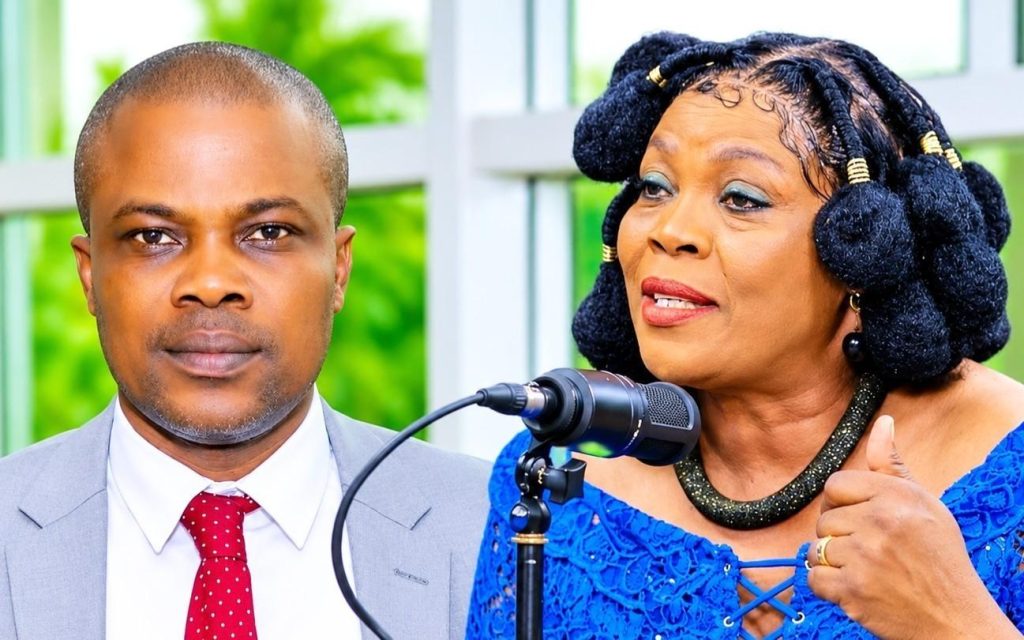
Ghana’s cocaine controversy has pulled another voice into the fray, and this time the argument is about who gets to interpret it. Janet Asana Nabla has publicly challenged security analyst Richard Kumadoe on Facebook. She says his commentary reads like party advocacy rather than independent expertise.
Nabla is the leader of the People’s National Party (PNP) and was its 2024 presidential candidate. She was direct in her post. In her view, Kumadoe’s recent appearances on the cocaine issue have been aimed at shielding the governing National Democratic Congress (NDC), not at examining the security questions the case raises.
Her full statement read:
“Richard Kumadoe is an Ndc party defender, not a security analyst. Trivialising the cocaine scandal to protect the NDC is irresponsible. Media houses must stop legitimising partisan propaganda as expert analysis”.
She is making two claims at once. The first is that Kumadoe is downplaying a grave matter for political convenience. The second is that the media is lending him a credibility he has not earned in this debate.
Nabla’s objection rests on a view of what the title means. A security analyst, she argues, is not paid in loyalty to a government, a party or a political personality. The role is to look at developments with a cool head, probe the available information and help ordinary citizens grasp what a national security episode could mean for them.
By that standard, she believes Kumadoe falls short. In her eyes, the cocaine issue is too serious to be run through the filter of party allegiance, especially while questions about accountability and institutional responsibility are still unanswered.
Drug trafficking is a global security threat, and Ghana’s place in West Africa makes it a particularly sensitive issue here. Any cocaine-related controversy tends to force harder questions. How well are law enforcement agencies working? How secure are the borders? How strong is intelligence gathering? Can state institutions stop criminal networks from exploiting national systems?
There is also the matter of public trust. When allegations or incidents involving narcotics surface, citizens expect credible explanations, established facts and visible proof that action is being taken. Nabla’s point is that waving the issue away, as she accuses Kumadoe of doing, is the opposite of what the public deserves.
She also argues that politics should never serve as a shield against legitimate questions. Whether the NDC or the New Patriotic Party (NPP) is in power, she says, allegations touching national security and criminal activity merit the same seriousness and the same scrutiny.
Nabla did not stop at Kumadoe. She turned to the broadcasters and outlets that give such commentators their platforms, urging them to stop dressing up partisan talking points as expert insight.
That raises a real question for radio and television stations about how they pick guests for discussions on security, governance and accountability. Ghana’s media space is lively and crowded, and political debates routinely bring together people from different parties and ideological camps. That diversity can enrich public conversation. But it also means audiences need to tell the difference between political commentary and professional expertise.
The two jobs are not the same. A party communicator might defend a government’s record or attack the opposition’s. A security analyst is generally expected to weigh the security dimensions, test the evidence and explain what developments could lead to. The roles can sometimes overlap, but viewers and listeners should always be able to see where one ends and the other begins. Nabla’s position is that media houses must take more care so the people they present as experts are offering informed, independent views and not simply pushing a narrative.
Her remarks also touch a broader pattern. On radio, television and social media, conversations about corruption, security, economic management and national development often turn into extensions of the rivalry between the country’s two big parties. Substance can slip into the background while supporters rush to defend their own side.
What This ‘Strange’ Cocaine Busts In Ghana Tell The World
The result is that the same incident can be read in completely opposite ways depending on who holds power. For citizens trying to find reliable information, it becomes hard to separate fact from partisan argument. The cocaine controversy is simply the latest case study.
The public interest should remain the centre of the discussion, whoever is commenting. Party affiliation should not automatically discredit a contribution, and it should not exempt anyone from scrutiny either. What counts is whether arguments rest on facts, professional knowledge and credible evidence.
Journalists and producers carry much of the responsibility here. They choose the guests, frame the questions and set the standard for what passes as analysis. That means being ready to challenge guests, ask for evidence and separate professional assessment from political opinion. Audiences have a part to play too, by questioning claims instead of accepting them because the speaker was introduced as an analyst. And anyone who offers public commentary on sensitive matters should expect their arguments to be tested.
Nabla’s intervention has shifted some of the spotlight away from the controversy itself and onto the credibility of those explaining it. Her central message is simple: national security should not be sacrificed on the altar of political loyalty.
The bigger questions remain open. Will the facts be established? Will accountability follow? Will public institutions give Ghanaians the transparency they expect? In the end, the fight against drug trafficking should rise above party lines, and the credibility of public commentary should rest on evidence, professional integrity and a willingness to hold every government to account, whatever its colours.