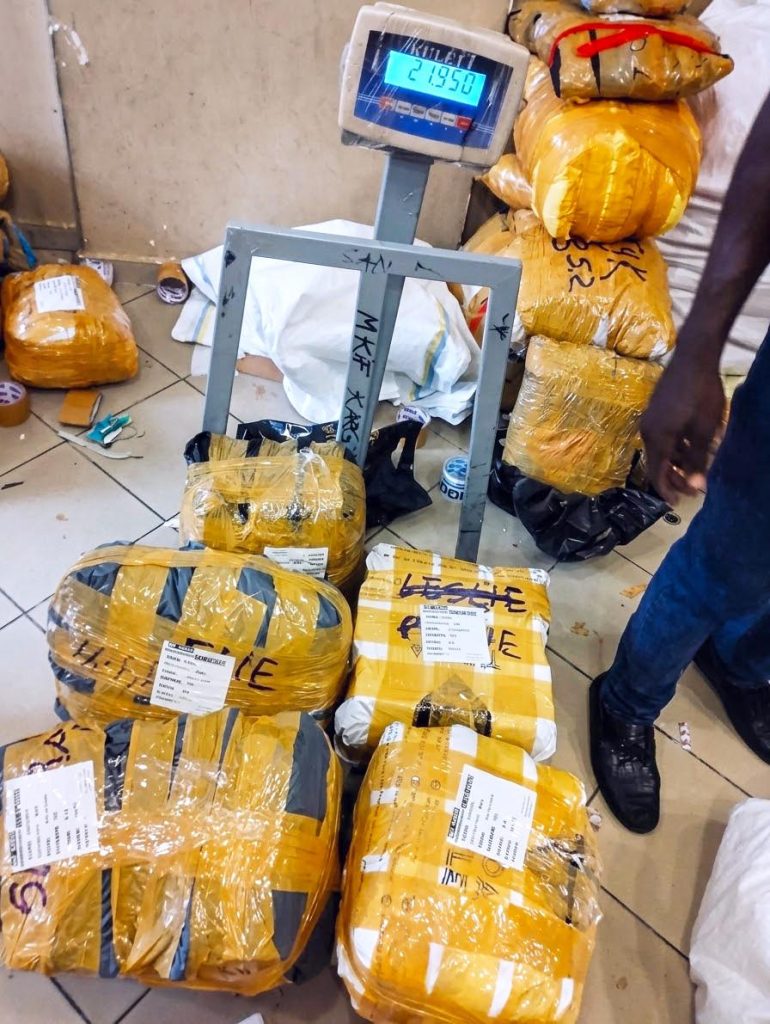
Ghana is once again being forced to confront hard questions about its international image and how effective its campaign against drug trafficking really is. The reported seizure in Spain of 2.6 tonnes of suspected cocaine hidden in a coconut consignment is a troubling development that demands serious national attention.
For a country that has repeatedly assured the world of its resolve to combat narcotics trafficking, a case like this is deeply embarrassing. Even more worrying is the suspicion that criminal networks are taking advantage of Ghana’s trade routes, ports and global connections to push illicit drugs across borders. The question many Ghanaians are quietly asking is blunt: is Ghana slowly becoming a favoured transit point for the international cocaine trade?
What Spanish Authorities Found
The particulars make the case more alarming. Spanish authorities confirmed that the two containers were loaded at Tema Port on August 2, 2026, and reached the Port of Valencia on August 22.
Investigators found that the drugs were not actually buried among the coconuts. Instead, traffickers had built false bottoms into the wooden crates holding the fruit and used those hidden compartments to carry the cocaine.
After the discovery, Spanish officials let the shipment proceed under surveillance. That decision paid off with the arrest of two men in Viator, Almería, who are suspected of involvement in importing and offloading the consignment.
It is at this point that Ghana’s national image suffers another serious blow.
From Tema To Europe: A Worrying Pattern
What makes the situation more disturbing is that this does not look like a one-off.
In September 2026, French customs reportedly intercepted nearly 3.9 tonnes of cocaine concealed in a shipment of plastic waste that originated from Ghana. The Narcotics Control Commission (NACOC) later announced arrests linked to that investigation, but nothing has been done about it. No one has been sacked or detained.
What This ‘Strange’ Cocaine Busts In Ghana Tell The World
Then came the October 31 case, in which a Syrian national was arrested in Beirut after flying in from Accra carrying roughly 46.7 kilogrammes of cocaine.
Add these to earlier major busts involving cargo moving from Tema to European destinations, and serious doubts emerge about how secure Ghana’s international trade channels are. When shipments from the same country keep drawing the attention of drug enforcement agencies abroad, writing it off as coincidence becomes harder and harder.
Is Ghana Becoming A Transit Point For Global Drug Cartels?
This is the question that calls for an urgent national conversation.
Over the years, Ghana has worked to build a reputation as a peaceful, stable and appealing destination for investment, tourism and lawful commerce. But what happens when its main export routes keep surfacing in international cocaine seizures? What signal does that send to prospective investors, trading partners and the wider global community?
More pressing still, are criminal networks exploiting gaps in port security, customs operations and export inspection systems?
It would be premature to label Ghana an international cocaine hub on the strength of these seizures alone. That drugs were shipped from Ghana does not automatically mean the exporters, the authorities or any other Ghanaian actors were complicit. Even so, the repeated incidents are too grave to be handled as routine law enforcement events.
Who Is Sleeping On The Job?
Ghanaians deserve answers. How did such a huge quantity of cocaine end up inside two containers loaded at Tema Port? Who inspected those containers before they left the country?
Were the false-bottomed wooden crates built locally, and if so, by whom? Did security lapses, insider involvement or a deliberate effort to bypass inspection procedures play a part? Security agencies must investigate all of this thoroughly, and the government must hold accountable the institutions charged with guarding Ghana’s borders, ports and trade routes.
Don’t Make The Cocaine Scandal A Political Football— Jennifer Queen
Public voices have already weighed in. Democracy and Development Fellow Dr Kwame Asiedu Sarpong has cautioned that the repeated interceptions are worrying and that Ghana must not come to be seen as a narcotics transit point. Professor H. Kwasi Prempeh has called on President John Dramani Mahama to make officials responsible for port security answer for what has happened.
The Wider Damage To Legitimate Trade
The issue runs deeper than the cocaine itself. Ghana is home to hardworking farmers, exporters and entrepreneurs trying to compete in global markets. Their goods deserve to be known for their quality, not shadowed by suspicion of drug smuggling.
Consider the extra scrutiny Ghanaian exporters could face if foreign authorities begin treating shipments from the country as inherently suspect. Consider the reputational harm to businesses that have nothing to do with narcotics but must operate under the cloud of repeated seizures. The fallout could reach well beyond policing, touching trade, investment and the confidence of international partners. Ghana cannot let drug syndicates erode the credibility of its legitimate export sector.
Beyond Partisan Politics
This should not be turned into a partisan quarrel. Whether the NDC or the NPP is in power, defending Ghana’s global reputation and keeping the country from becoming a convenient corridor for drug traffickers must be a national priority.
President Mahama’s government must make sure investigations go further than the arrests made overseas. Elsewhere, top officials would have been sacked by now. Authorities need to identify the people behind the shipments, probe possible local accomplices and shut down any loopholes criminal networks may be using. NACOC, Customs, the Ghana Ports and Harbours Authority and other relevant agencies must show that Ghana’s ports are not playgrounds for international traffickers.
The cocaine in the coconut shipment may have been caught in Spain, but the questions it raises start in Ghana.
How many more embarrassing seizures must happen before the country treats this problem with the urgency it deserves? The national disgrace is mounting. Ghana deserves better, and its good name must not be sacrificed to the ambitions of criminal networks.
One thought on “Is Ghana Becoming A Cocaine Transit Hub? The Full Episode”