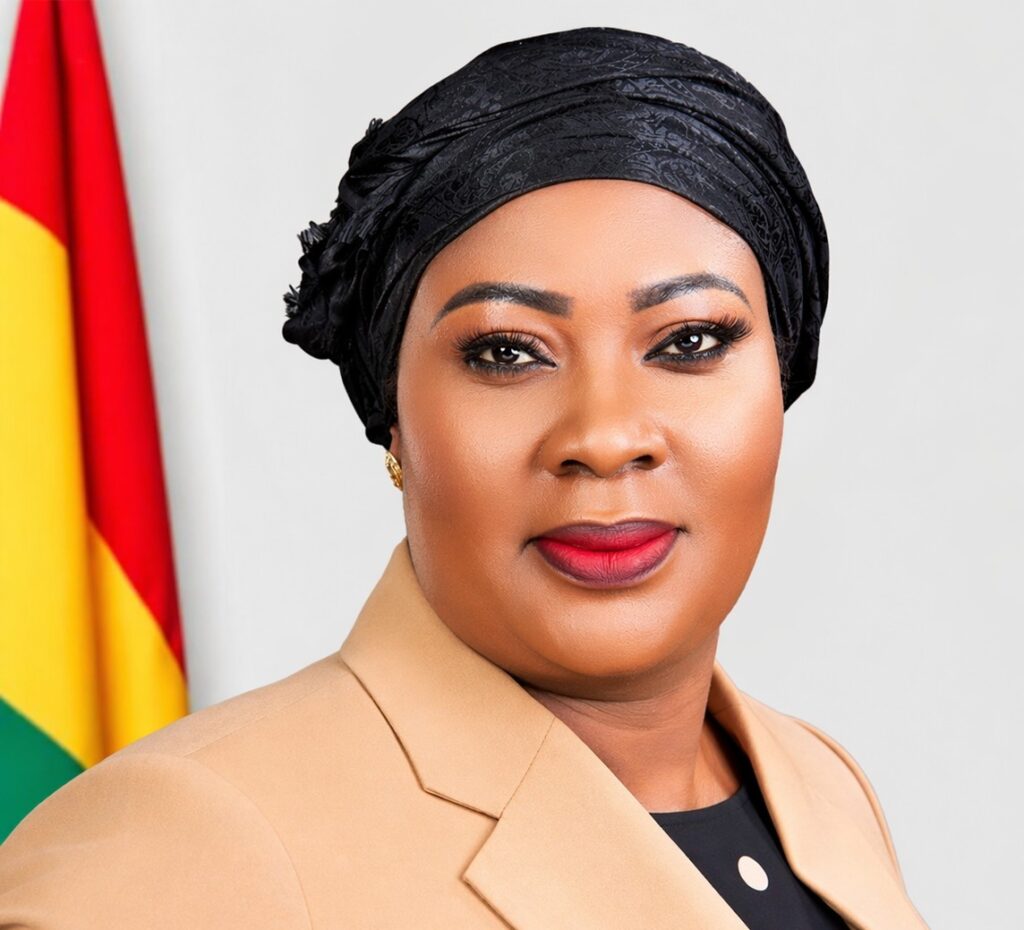
The chief executive of the Ghana Free Zones Authority, Dr. Mary Awusi, has issued an unreserved public apology to the Chairman of the Church of Pentecost, Apostle Dr. Eric Nyamekye, and the entire Pentecost denomination, after her sharp rebuke of the clergyman over his comments on galamsey sparked swift and fierce condemnation across the country.
Speaking on Accra FM — the same station where she had launched her original attack just a day prior — Dr. Awusi acknowledged that she had allowed her feelings to get the better of her, and expressed deep regret over her conduct.
“I never intend to disrespect the Pentecost church chairman Apostle Nyamekye,” she said. “As human as I am, I allowed my emotions to move me. I am sorry to him and the Church of Pentecost. I retract and aplogise. I respect him”
What Triggered the Storm:
The controversy traces back to remarks Apostle Nyamekye had made publicly about the devastating toll that galamsey — illegal small-scale mining — is taking on Ghana’s water bodies. The revered church leader had drawn particular attention to how the pollution of rivers and streams was beginning to affect fundamental religious practices, including water baptism, in communities ravaged by the menace.
Rather than engage his concerns, Dr. Awusi dismissed them entirely. In her now-controversial interview on Accra FM on April 23rd, she branded the Apostle’s comments as “highly political,” accused him of descending into partisan territory, and issued a thinly veiled threat — warning that if he continued on that path,
“we will deal with him as a politician.” She added, almost as an afterthought, that as a man of God, they would forgive him “this time.” The remarks detonated immediately.
Among the most vocal critics to hit back was Dr. Nana Ayew Afriyie, Member of Parliament for Effiduase-Asokore and a known ally of Apostle Nyamekye. He issued a blunt 48-hour ultimatum, demanding Dr. Awusi retract her words and apologise — or, as he put it, “face our wrath.” He described her statements as a “senseless bluff” and made clear that there would be consequences if she chose silence over accountability.
The Truth Behind The Sudden Silence On Galamsey In Ghana
The backlash was swift enough that Dr. Awusi did not wait out the ultimatum. Her apology came the following day, with the speed of her about-turn widely read as an attempt to contain a rapidly escalating situation before it spiralled further out of control.
Beyond the personal drama lies a deeper, more consequential debate — one that cuts to the heart of Ghana’s unresolved struggle with illegal mining. Should religious leaders speak out on national crises like environmental destruction? Or does doing so cross a line into political territory?
For many Ghanaians, the answer is obvious. Apostle Nyamekye was not issuing a campaign manifesto; he was describing a lived reality in communities where the water that feeds rivers for baptism — a sacred act — has turned brown and toxic. The idea that a faith leader raising alarm bells about an environmental emergency is somehow engaging in politics speaks, critics argue, to a broader discomfort among some in authority with accountability coming from any quarter.
The galamsey crisis remains one of the most urgent and unresolved challenges facing the country. That it has now drawn the Church of Pentecost — one of Ghana’s largest and most influential denominations — into a public confrontation with a government official underscores just how far its consequences now reach: from the nation’s forests and rivers, into its pulpits, and now, its front pages.