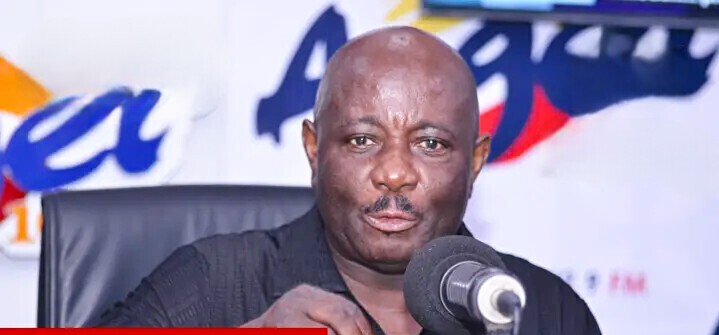
Akwasi Addai Odike has ignited fresh political debate after launching a sharp critique of Ghana’s two main political parties, accusing them of offering little in the way of new ideas to address the country’s economic challenges.
Speaking on Angel FM on Monday, May 5, Odike argued that both the New Patriotic Party (NPP) and the National Democratic Congress (NDC) approach governance with striking similarities, particularly in their handling of financial sector issues such as the recent losses recorded by the Bank of Ghana (BoG).
“NPP and NDC use the same template. They think alike. They have nothing new to offer Ghana,” Odike stated during the interview. “When it comes to managing the economy, especially institutions like the Bank of Ghana, you don’t see any real difference in their thinking.”
Odike’s remarks come against the backdrop of ongoing public scrutiny over the financial performance of the Bank of Ghana, which has reported significant losses in recent years. The issue has become a major point of political contention, with both the ruling government and opposition trading blame over the causes and implications.
While government officials have attributed the losses largely to global economic shocks and domestic policy interventions, critics argue that governance lapses and weak oversight structures have contributed to the situation.
Odike insists the debate itself exposes a deeper problem.
“They are busy blaming each other, but the truth is both sides have managed the system in similar ways over the years,” he said. “We need a complete shift in thinking, not this back-and-forth.”
Some Ghanaians have echoed Odike’s sentiments, expressing frustration with what they describe as a lack of ideological diversity in the country’s political space.
Political analyst Dr. Kwame Asah-Asante noted that such views are not new but are gaining traction amid economic hardship.
“There’s a growing perception, especially among younger voters, that the two dominant parties are not fundamentally different in how they govern. Statements like Odike’s resonate because people are looking for alternatives”, he explained.
A communicator aligned with the New Patriotic Party argued that the party’s economic policies and flagship programmes clearly distinguish it from its rival.
“It is inaccurate to say NPP and NDC are the same. Our records in areas like digitalisation, infrastructure, and social intervention speak for themselves,” the communicator said.
Similarly, a representative of the National Democratic Congress dismissed Odike’s comments as overly simplistic.
“The NDC has consistently proposed alternative economic policies, including reforms to strengthen institutions like the Bank of Ghana. To say both parties think alike ignores clear policy differences.” the spokesperson stated.
Odike, who has long positioned himself as a voice outside the two-party dominance, used the platform to renew calls for Ghanaians to consider alternative political movements.
How Ghana’s Banks Could Unlock The Full Potential Of One Of West Africa’s Most Valuable Commodities
“Ghana needs fresh ideas and bold leadership. We cannot keep rotating the same approaches and expect different results,” he stressed.
His comments have once again brought attention to the broader conversation about political reform and the viability of third-party movements in Ghana’s democratic system.
As debates over the Bank of Ghana losses continue, Odike’s critique highlights a growing undercurrent of dissatisfaction among sections of the electorate.
Whether this sentiment will translate into meaningful political change remains uncertain, but for now, it has added another layer to an already heated national conversation about governance, accountability, and the future direction of Ghana’s economy.