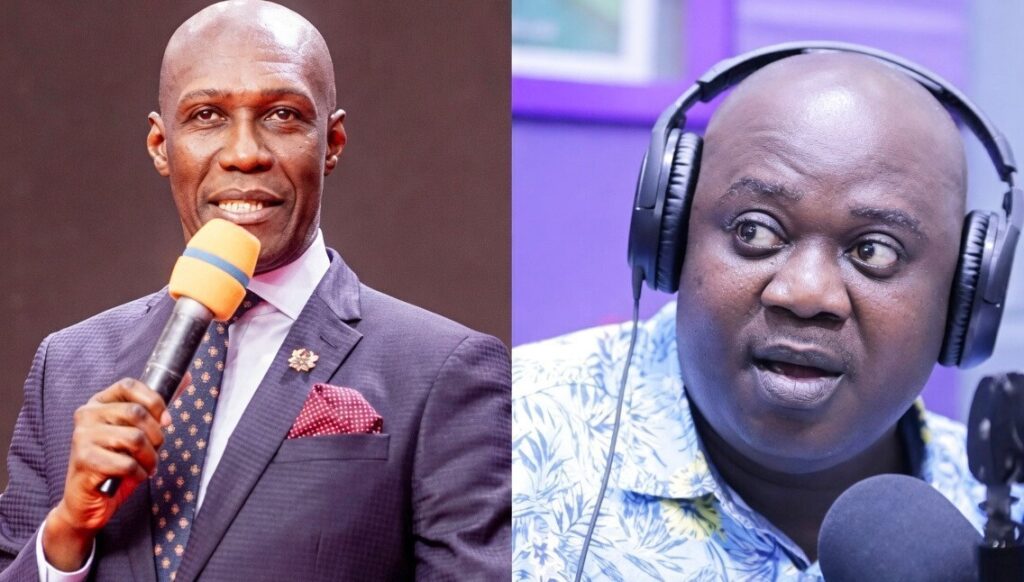
Veteran Ghanaian journalist Omanhene Kwabena Asante has called on firebrand preacher Prophet Kofi Oduro to exercise greater circumspection in his public commentary — particularly as the country grapples with persistent power outages that have tested the patience of citizens and stoked debate across multiple platforms.
Omanhene made the appeal during a candid exchange with host Osei Bonsu on Asempa FM Monday, May 4, arguing that public influence carries an obligation that must be honoured with deliberate, measured speech.
While acknowledging criticism as a cornerstone of democratic discourse, the veteran communicator drew a sharp distinction between speaking truth to power and doing so in a way that inflames rather than informs. The difference, he argued, lies not in the message but in its delivery.
“Prophet Oduro commands a vast following,” Omanhene noted, underscoring that the Alabaster International Ministry leader’s reach amplifies the consequences of every word he utters. A respected religious voice, he stressed, has the capacity to shape opinion, stir emotion, and — if unguarded — deepen social tensions at a time when the nation can least afford division.
Communications Minister Calls Out Ghana AIDS Commission Over Gay Lubricants
Omanhene’s remarks land at a moment of palpable national frustration. Intermittent electricity supply has become a rallying point for public anger, drawing sharp commentary from politicians, media personalities, and now — conspicuously — the pulpit. In that climate, the journalist argued, figures of moral and spiritual authority bear a particular responsibility: to channel public discontent into cohesion rather than conflict.
His appeal was clear — religious leaders should lead with wisdom, not amplify grievances in ways that could deepen societal fractures.
The remarks have since sparked spirited debate. Many listeners rallied behind Omanhene’s call for restraint, agreeing that influential voices must be stewards of national stability. Others, however, pushed back — insisting that religious leaders retain every right to speak candidly and fearlessly on issues that directly burden the people they serve.
The exchange reflects a broader tension in Ghanaian public life: balancing the freedom of speech that democratic society guarantees with the social responsibility that influence demands.