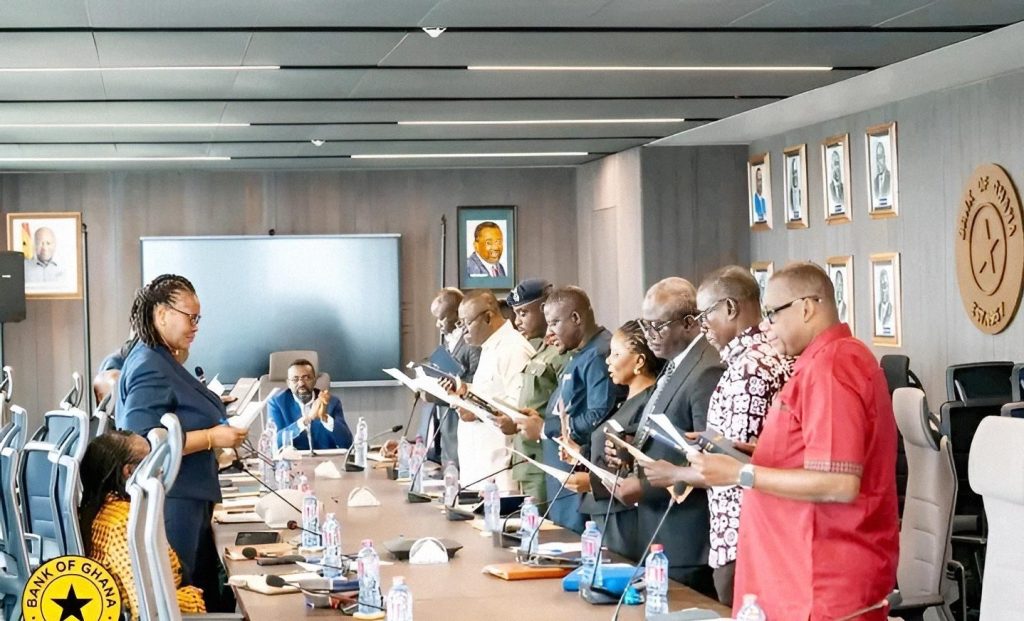
A significant step in bolstering Ghana’s financial controls and resolving worries about the flow of undeclared foreign currency via the nation’s borders has been taken with the establishment of a Preliminary Investigation Committee on Seized Foreign Currency by the Bank of Ghana (BoG).
Cases involving foreign currency confiscated at Ghana’s airports and other entry and exit points are anticipated to be looked into by the recently formed multi-agency committee, especially when the necessary declaration procedures have not been followed.
The program is in response to worries that significant quantities of foreign currency might be passing through Ghana’s borders without being properly reported to the appropriate authorities.
The integrity of the nation’s financial system is seriously threatened by unreported currency fluctuations. In addition to making it more challenging for authorities to gather precise information about the flow of money into and out of the nation, such activities can provide chances for money laundering, tax evasion, illegal financial flows, and other types of financial crime.
The significance of making sure that foreign currency entering or leaving the nation goes via the proper regulatory procedures has been emphasized by the Bank of Ghana.
Two New Non-Executive Directors Are Added To CalBank PLC’s Board
The efficacy of the official foreign exchange market can be weakened and attempts to increase transparency within Ghana’s financial sector undermined when large sums of money are transferred outside of disclosed and regulated procedures.
Important organizations in charge of financial regulation, border security, tax mobilization, and the investigation of economic crimes are brought together by the Preliminary Investigation Committee.
The participating agencies include the Bank of Ghana, Ghana Revenue Authority, Ghana Airports Company Limited, National Security, Economic and Organised Crime Office (EOCO), Financial Intelligence Centre (FIC) and the Attorney-General’s Office.
Their collaboration is expected to improve information-sharing and coordination in dealing with seized foreign currency and related investigations.
The committee will also provide a platform for the various agencies to work together in identifying the source, ownership and intended destination of seized funds where necessary, while ensuring that appropriate legal and regulatory procedures are followed.
The move reflects growing efforts by Ghanaian authorities to strengthen controls around foreign exchange transactions and prevent the country’s financial system from being exploited for illicit purposes.
For the Bank of Ghana, ensuring that currency flows remain transparent and properly accounted for is essential to maintaining confidence in Ghana’s financial system and supporting a stronger, more accountable foreign exchange market.
The multi-agency approach is therefore expected to strengthen Ghana’s ability to protect its borders, financial markets and national resources while ensuring that the financial system works in the interest of the Ghanaian public.