89 Goals And A Powerful Message: Has Harry Kane Changed The Ballon d’Or Conversation?
For years, football’s biggest individual awards have existed at the intersection of extraordinary talent, commercial appeal, media attention and global popularity. But what happens when a player’s numbers become so compelling that the noise surrounding football’s biggest superstars is no longer enough to dominate the conversation?
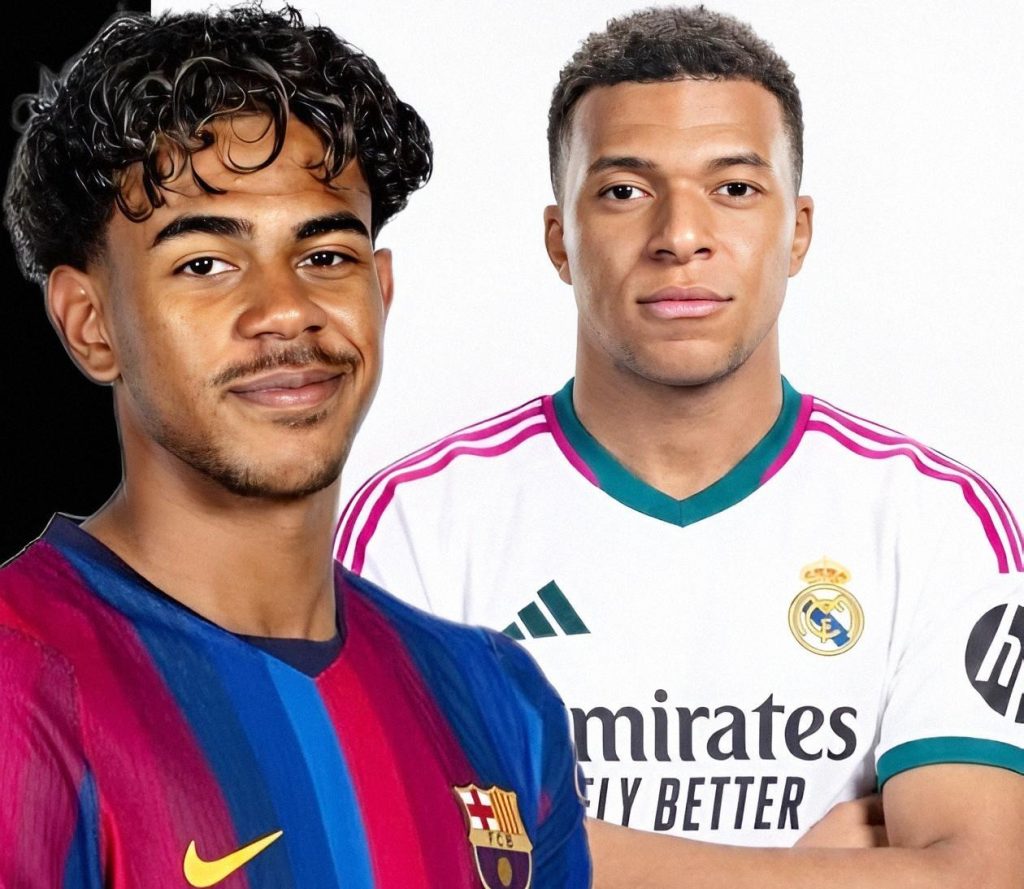
That is the debate sparked by the claim that Harry Kane has emerged ahead of Kylian Mbappé and Lamine Yamal in the 2026 Ballon d’Or conversation.
The bigger question is not only about who deserves football’s most prestigious individual honour. It is whether the modern game is finally moving towards a system in which consistent production matters more than celebrity status, social media influence and the power of football’s most commercially dominant clubs.
Harry Kane has spent much of his career establishing himself as one of the most accomplished strikers of his generation. His finishing, intelligent movement, passing ability and consistency have made him much more than a conventional penalty-box forward.
His move to Bayern Munich also placed him under a different kind of scrutiny. Having built his reputation in English football, Kane entered the Bundesliga with enormous expectations and the challenge of proving himself in a new environment.
The argument surrounding his reported 89-goal output is straightforward: extraordinary production should carry enormous weight in any discussion about individual excellence.
Goals remain football’s most decisive currency. They change matches, win trophies and transform seasons. When a player consistently delivers at an exceptional level, it becomes increasingly difficult to dismiss his contribution simply because another footballer commands more headlines.
However, the Ballon d’Or debate is more complicated than counting goals. The period being assessed, the competitions involved, team achievements and individual influence all matter. Kane’s case must therefore be judged against the same criteria applied to his rivals.
Has The Football Media Created A hierarchy Of Fame?
Real Madrid and Barcelona have historically benefited from enormous global audiences, commercial reach and sustained media attention. Their stars frequently become central figures in conversations about football’s biggest individual prizes.
That visibility is not automatically evidence of unfair treatment. Both clubs have produced exceptional players who have earned recognition through outstanding performances.
Yet the concentration of attention around these institutions raises a legitimate question: does playing for a globally dominant club sometimes give a footballer an advantage in the public conversation?
A player who performs brilliantly for Bayern Munich, Liverpool, Manchester City or another major club may have to compete with a different kind of narrative when the spotlight is dominated by Real Madrid and Barcelona.
The challenge is to separate genuine sporting achievement from the amplification that comes with global celebrity.
Football is, after all, a sport in which a decisive goal can be worth more than millions of online impressions. But in the modern media environment, attention often determines which performances receive the most discussion.
Mbappé and Yamal represent different kinds of football stardom
Kylian Mbappé and Lamine Yamal are not just popular footballers. They represent different stages of modern football’s evolution.
Mbappé has established himself as a global superstar through his extraordinary pace, finishing and performances on major stages. Yamal, meanwhile, has attracted enormous attention as a young talent whose creativity and confidence have made him one of the most closely watched players in the sport.
Their popularity cannot fairly be reduced to marketing or social media hype. Both have demonstrated substantial ability on the pitch.
Nevertheless, their prominence illustrates how modern football increasingly operates through narratives. Age, transfer stories, rivalries, national identity and viral moments can all influence how fans and commentators perceive a player’s season.
Kane’s strongest argument, if supported by the relevant statistics and achievements, is that a sustained record of decisive contributions should remain central to the conversation.
The question is not whether Mbappé or Yamal deserve this year’s Ballon d’Or or attention. It is whether every contender receives a fair assessment based on the same standards.
Football has become a digital spectacle. A spectacular dribble can attract millions of views within minutes, while a striker’s consistent movement, intelligent positioning or contribution to team structure may receive comparatively little attention.
This creates a potential imbalance between what is most visible and what is most valuable.
A player can dominate online conversations without necessarily having the strongest overall season. Equally, a footballer who attracts fewer viral moments can deliver extraordinary consistency and influence.
That is why awards such as the Ballon d’Or must look beyond popularity. Goals, assists, performances in important matches, overall influence and achievements during the relevant assessment period provide a stronger foundation for judging excellence than online engagement alone.
Harry Kane Named Germany’s Footballer Of The Year 2026
Still, the reverse is also true: impressive statistics should not automatically settle the debate. Footballers operate in different tactical systems, competitions and team environments. Numbers need context.
The real objective should be to reward excellence without allowing either celebrity or statistics to become the only measure.
Could Kane change the Ballon d’Or conversation?
If Kane were to overcome the more heavily publicised contenders, the significance would extend beyond one individual award. It would strengthen the argument that sustained performance can challenge established narratives.
But one result would not, by itself, prove that football’s media structures had changed permanently. A single award cannot establish that Real Madrid and Barcelona have lost their influence, nor can it demonstrate that popularity has ceased to matter.
What it could do is encourage a more serious conversation about how footballers are evaluated.
Should a player’s club profile matter? How much weight should be given to individual statistics compared with team success? Should decisive performances in major competitions carry more influence than consistent excellence across an entire season?
These questions deserve transparent answers, regardless of which player eventually receives the trophy.
Reputation versus Production
Football has always celebrated its storytellers. From legendary rivalries to unforgettable finals, narratives are part of what makes the game compelling.
But stories should illuminate performances, not replace them.
Harry Kane’s career offers a powerful reminder that footballing excellence is not limited to spectacular dribbles, dramatic celebrations or enormous online followings. It can also be found in intelligent movement, ruthless finishing, consistency and the ability to deliver when a team needs a goal.
PSG Too Powerful For Barcelona? Stunning Win Sparks Debate
Mbappé brings his own extraordinary qualities. Yamal offers a different kind of brilliance. The task is not to diminish their achievements to celebrate Kane, but to ensure that every contender is judged fairly.
The Ballon d’Or should reward the footballer who makes the strongest case on the pitch, not simply the one who generates the loudest conversation off it.
If Kane’s achievements place him ahead of his rivals under the award’s established criteria, he should be recognised accordingly. If another player has the stronger overall case, that player deserves the same standard of judgment.
Ultimately, football does not need less excitement, fewer rivalries or quieter fans. It needs a clearer distinction between popularity and performance.
And that may be the most important question raised by the Kane debate: in a sport increasingly driven by attention, can excellence still speak for itself?