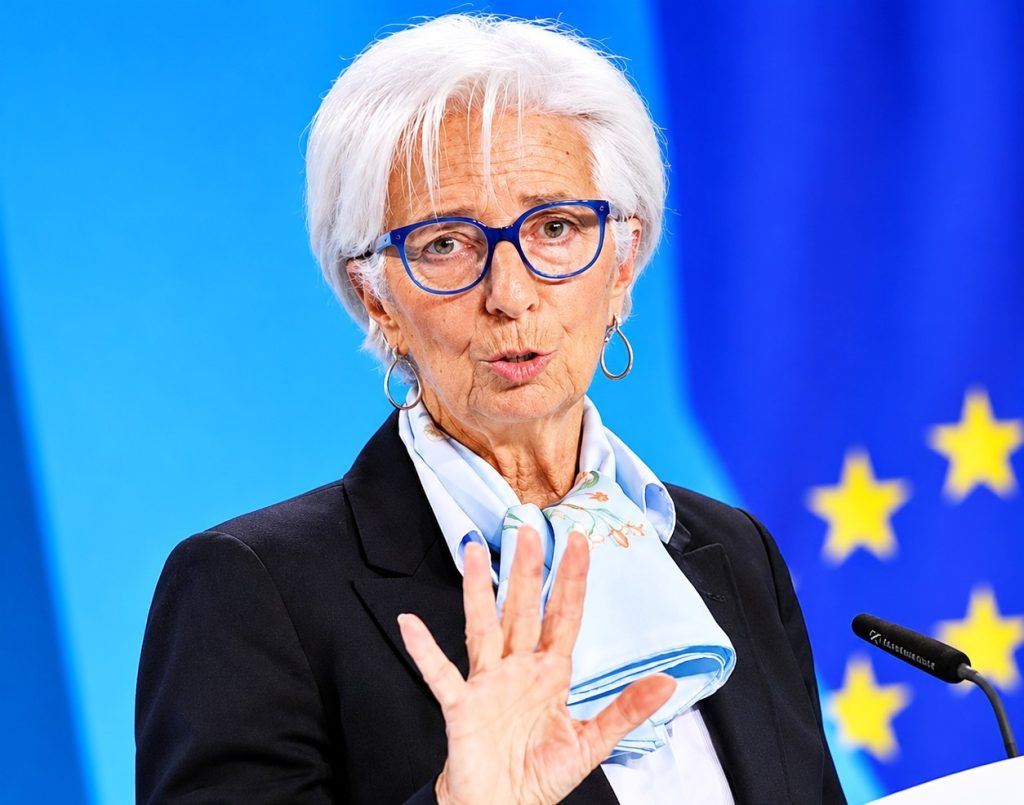
European Central Bank President Christine Lagarde has confirmed she will step down early from her post, prioritizing the ability to speak candidly on global affairs and challenge what she views as the distortion of facts over completing her full tenure.
The announcement puts an end to months of intense speculation regarding her leadership. Lagarde will vacate the presidency in early 2027, cutting her official eight-year mandate short by approximately nine months before its scheduled conclusion in October 2027.
Delivering a remarkably direct rationale, Lagarde explained that the strict neutrality mandates imposed on central bankers restrict her capacity to participate in broader macroeconomic and geopolitical discussions—a constraint she is no longer willing to accept.
“I want to have the freedom of speech, the freedom of expression and the freedom to engage on matters that are not monetary policy matters,” Lagarde stated.
She revealed her decision at the conclusion of a press briefing detailing the ECB’s latest monetary policy stance, during which the governing council opted to maintain the landmark deposit rate at 2.5%, despite eurozone inflation climbing to a multi-year high of 3.8%.
Reflecting on her tenure, Lagarde noted that monetary authorities operate under rigid impartiality rules designed to shield them from political bias, describing these public silence requirements as the inevitable trade-off for central bank autonomy. However, after more than twenty years navigating high-stakes international economics, she signaled an unwillingness to remain sidelined on non-monetary global challenges.
To mitigate market volatility and ease institutional concerns, Lagarde assured stakeholders that the transition process is already underway, emphasizing the depth of qualified leadership available to assume the mantle.
Key figures cited as prospective contenders for the presidency include:
- Klaas Knot, former head of the Dutch central bank
- Pablo Hernández de Cos, former governor of the Bank of Spain
- Joachim Nagel, current president of Germany’s Bundesbank
- Nadia Calviño, president of the European Investment Bank
Under EU framework, the appointment of the ECB chief—who guides interest rate policy and financial stability across the single-currency bloc—falls to the European Council, comprised of EU heads of state and government.
Canada Could Become EU Associate Member In A Historic First
Following her departure, the former International Monetary Fund chief is widely tipped to take the helm at the World Economic Forum, filling the leadership vacuum left by founder Klaus Schwab following his resignation amid contested financial and ethical allegations.
Concurrently, political analysts view the timing of her exit through a strategic lens. Reports suggest French President Emmanuel Macron encouraged the former French finance minister to step down early, ensuring EU leaders can secure a stable successor before France’s upcoming presidential elections next spring, while freeing Lagarde to engage directly in the surrounding political arena.
Since assuming leadership in late 2019, Lagarde’s term has been defined by unprecedented macroeconomic crises—from the COVID-19 shock and energy disruption driven by the war in Ukraine to heightened trade tensions and renewed inflation pressures.
By opting to relinquish her central banking mandate, Lagarde trades institutional constraint for an uninhibited global platform, shifting attention to both her immediate successor and her next political chapter.