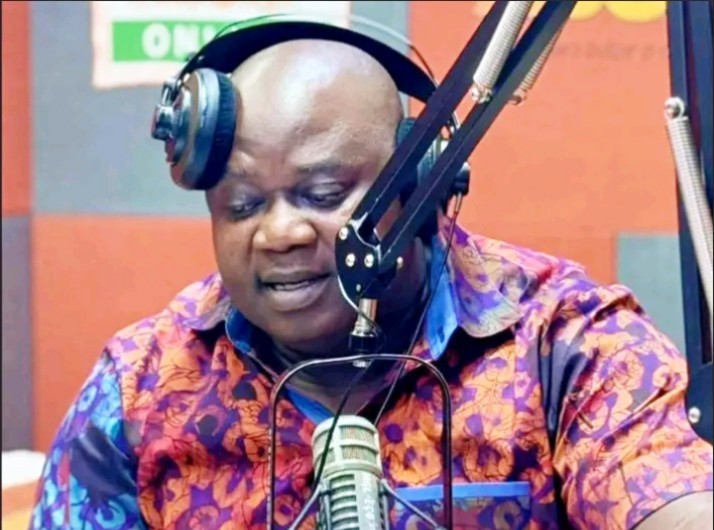
Media personality Omanhene Kwabena Asante has questioned whether the New Patriotic Party (NPP) fully appreciates the extent to which the party’s political appeal has declined among sections of the Ghanaian electorate.
Speaking on Asempa FM on Friday, August 7, 2026, during a programme hosted by Osei Bonsu (OB), Omanhene Kwabena Asante raised concerns about the current posture of the opposition party and cited a number of reasons he believes may have contributed to its declining attractiveness.
His comments come at a time when the NPP is seeking to regroup and reposition itself following its defeat in the 2024 general elections, while also mounting strong opposition to several actions of the governing National Democratic Congress (NDC).
One of the issues he touched on was the party’s decision to protest against the arrest of some of its members by the NDC government. According to Omanhene Kwabena Asante, the NPP’s response to the arrests should be viewed within the broader political realities confronting the party. He questioned whether the party was properly assessing how such actions are perceived by ordinary Ghanaians, particularly voters who may no longer be as receptive to the NPP as they were in previous years.
NPP Loses Its Appeal?
Omanhene Kwabena Asante’s central concern was whether the NPP has recognised that its political brand may have suffered significant damage.
He suggested that instead of assuming that its traditional support base remains firmly behind it, the party must confront the possibility that some Ghanaians have become increasingly dissatisfied with its leadership, communication and political approach.
For him, the challenge goes beyond individual arrests or isolated political controversies. It is about the broader perception of the party and whether the NPP is giving voters enough reasons to reconnect with it.
Political parties, he noted, cannot rely indefinitely on their historical achievements, ideological identity or traditional strongholds. They must constantly demonstrate relevance, credibility and an understanding of the concerns of the electorate.
The comments therefore raise a fundamental question for the NPP: Does the party understand why some voters have become less attracted to it, and is it prepared to make the necessary changes?
Criticism of Protest Over Arrests
Omanhene Kwabena Asante also addressed the NPP’s decision to protest against the arrest of some of its members. The party has been vocal about what it considers politically motivated arrests and the treatment of some of its members under the current administration. The NPP has argued that the government must respect the rule of law and ensure that political opponents are not targeted through state institutions.
However, Omanhene Kwabena Asante appeared to take a more critical view of the party’s approach. His argument, as expressed during the discussion, was that the NPP must carefully consider how its actions resonate with the wider public. While defending members and demanding due process may be legitimate responsibilities of an opposition party, the manner in which such issues are handled can also influence public perception.
The comments therefore point to a delicate balancing act for the NPP: protecting its members while simultaneously convincing the broader electorate that the party has learned from its past mistakes and is ready to offer a credible alternative.
The NPP’s current situation reflects a broader challenge that opposition parties often face after losing power.
Beyond criticising the government, an opposition party must convince citizens that it has the ideas, leadership and discipline required to return to government.
For the NPP, that task may require a reassessment of its communication strategy, internal organisation and relationship with the Ghanaian electorate.
The party also faces the challenge of reconnecting with young voters and sections of the population who may not necessarily be strongly attached to either of Ghana’s two major political parties.
Omanhene Kwabena Asante’s comments suggest that simply opposing the NDC may not be enough to restore the NPP’s political fortunes.
The party must also present a compelling reason for voters to choose it again.
A Moment for Introspection
The remarks could also be interpreted as a call for introspection within the NPP. Political parties often become defensive when criticised, particularly when criticism comes during periods of intense political activity. However, the ability to listen to uncomfortable opinions can be crucial to rebuilding public confidence.
NPP Intentionally Discredited Mahama’s First Term—Solomon Owusu
The NPP has a long history in Ghanaian politics and remains one of the country’s two dominant political forces. Its challenge, therefore, is not necessarily about political survival but about rebuilding trust, renewing its appeal and convincing Ghanaians that it has evolved.
Omanhene Kwabena Asante’s intervention adds another voice to the growing conversation about what went wrong for the party and what must change.
His comments also highlight the importance of distinguishing between defending party members and defending actions that may not necessarily enjoy broad public support.
As the NPP reorganises itself in opposition, questions about its future direction are likely to remain at the centre of political discussions. The party will have to determine how it responds to government policies, how aggressively it challenges the NDC, how it handles legal and political controversies involving its members, and most importantly, how it reconnects with voters.
For Omanhene Kwabena Asante, the starting point appears to be acknowledging the reality of the party’s current political standing.
His message is, in essence, that the NPP cannot solve a problem it refuses to acknowledge.
Whether the party agrees with his assessment or not, the debate he has raised touches on a critical issue: political relevance cannot be taken for granted. For a party seeking to regain power, recognising why voters have become distant may be just as important as criticising the government of the day.
The NPP’s ability to listen, reflect, reform and reconnect with Ghanaians could ultimately determine whether it succeeds in rebuilding its appeal and positioning itself as a strong alternative in Ghana’s next political contest.