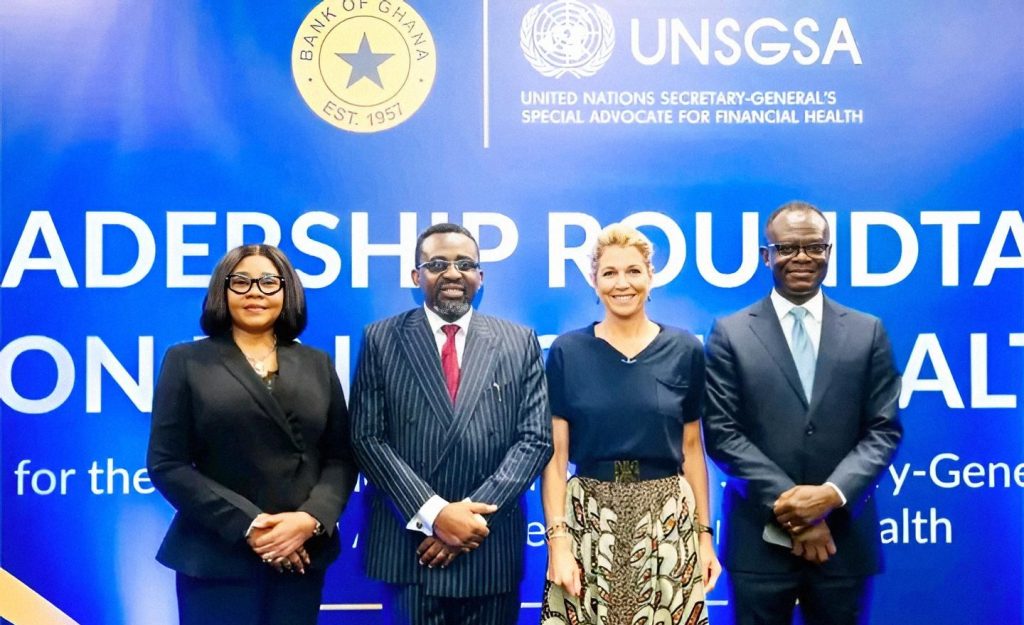
A pivotal delegation convened at Bank Square in Accra, uniting top policy architects and international figures to rethink how Ghanaians manage, safeguard, and grow their wealth. Hosted by the Bank of Ghana, the executive session welcomed Her Majesty Queen Máxima of the Netherlands in her capacity as the United Nations Secretary-General’s Special Advocate for Financial Health (UNSGSA).
Flanked by Bank of Ghana Governor Dr. Johnson Pandit Asiama, Deputy Governor Matilda Asante-Asiedu, and prominent industry regulators, the gathering shifted the conversation away from passive account ownership toward active, long-term personal economic endurance. At the core of the delegation’s agenda was a provocative reality check: If your primary revenue stream vanished tomorrow, how long could your household comfortably survive?
That single scenario framed the day’s deliberations, driving leaders to construct actionable strategies to insulate everyday citizens against sudden market shifts, health crises, or job disruptions.
The Three Pillars of Household Endurance
To insulate individuals against systemic and personal volatility, conference leaders prioritized three core pillars of financial self-defense:
Emergency Reserves: Establishing dedicated, liquid emergency funds capable of absorbing immediate living expenses during lean periods.
Strategic Wealth Generation: Demystifying investment vehicles so working citizens can outpace inflation and accumulate durable assets.
Targeted Risk Management: Broadening access to affordable insurance coverage to prevent medical emergencies or business losses from wiping out family savings.
Participants emphasized that tools must do more than simply exist on paper—they must be accessible, intuitive, and tailored to the everyday realities of underbanked and working-class communities.
Glitz Africa: Matilda Asante-Asiedu Named Corporate Personality Of The Year
Fortifying Consumer Protections Against Market Hazards
Broader access to capital brings heightened exposure to predatory forces. The roundtable addressed the growing shadow of predatory lending networks, digital fraud, and deceptive investment schemes targeting vulnerable consumers.
Regulators drafted multi-layered defense strategies, focusing on:
Aggressive Regulatory Oversight: Enforcing stricter oversight on non-bank lenders and digital credit providers.
Elevated Consumer Rights: Implementing transparent disclosures so borrowers fully grasp real borrowing costs before signing.
Digital Hygiene & Awareness: Rolling out nationwide campaigns to help citizens recognize and bypass sophisticated financial scams.
The recommendations from Bank Square will directly inform the next phase of Ghana’s National Financial Inclusion Strategy. The summit signaled a definitive shift in metric success: opening a bank account or downloading a mobile money wallet is merely the starting line. True success lies in whether those financial tools genuinely empower families to weather sudden hardships, stay out of destructive debt cycles, and plan for the future with confidence.
Building a resilient nation requires more than raising income levels—it demands equipping every Ghanaian with the tools to save intelligently, invest safely, and withstand economic uncertainty.