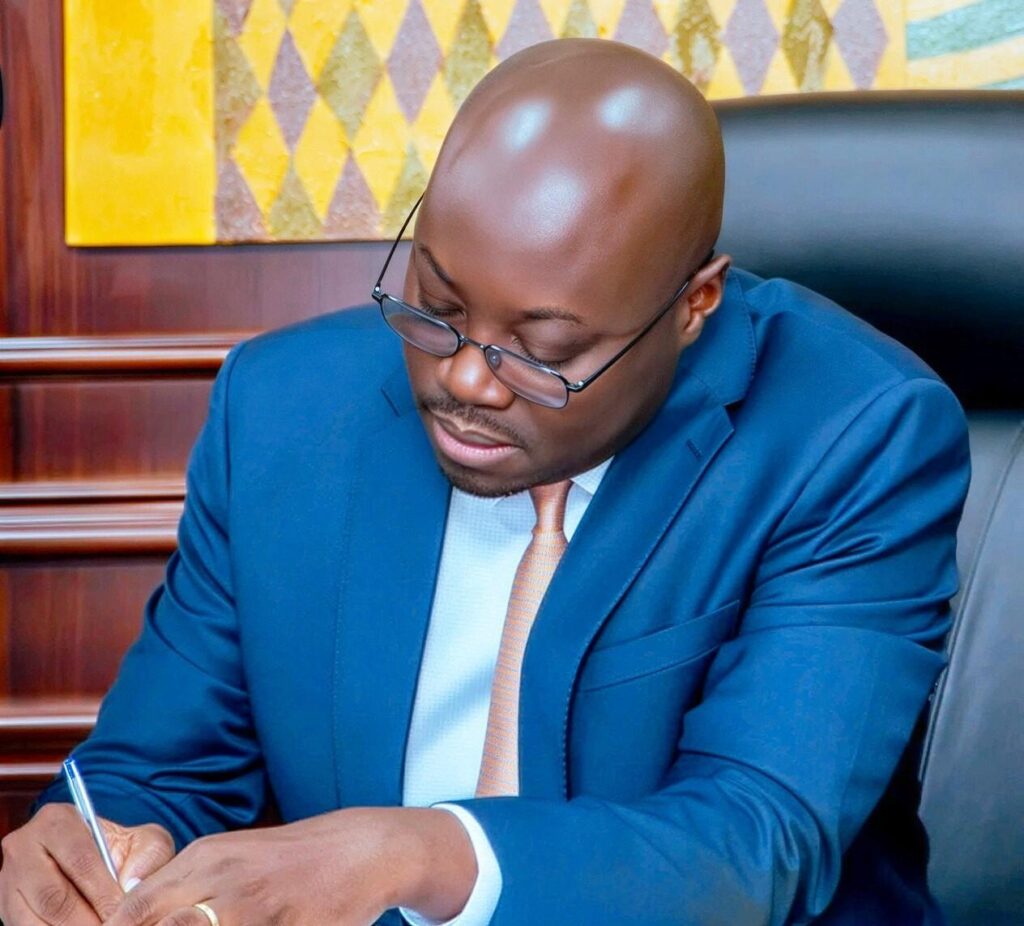
After three years of painful reforms, fiscal discipline and close international supervision, Ghana has officially concluded its Extended Credit Facility programme with the IMF — a milestone that marks both an achievement and the beginning of a harder test.
It has been a long and difficult road. In 2022 and 2023, Ghana found itself in the grip of one of its most severe economic crises in recent memory — inflation spiralling, the cedi in freefall, debt levels unsustainable, and investor confidence shattered.
The country was forced to seek emergency support from the International Monetary Fund, entering into a $3 billion Extended Credit Facility arrangement that came with strict conditions, uncomfortable reforms, and the kind of external scrutiny that no government welcomes.
Three years later, Ghana has walked to the other side of that arrangement. The government has officially announced the successful conclusion of the ECF programme — and with it, the end of a chapter that tested the country’s institutions, its policymakers, and above all, its people.
The IMF arrangement approved in 2023 was never going to be painless. In exchange for financial support and policy guidance, Ghana committed to a sweeping set of reforms that touched nearly every corner of its economic management.
Domestic debt was restructured — a process that imposed losses on bondholders and reshaped the country’s obligations to its creditors.
Fiscal consolidation measures tightened public spending at a time when many Ghanaians were already under severe financial pressure. Revenue mobilisation was overhauled to bring more resources into government coffers. And tight monetary policy was sustained over an extended period to break the back of inflation that had been eroding household purchasing power at an alarming rate.
None of these were popular measures. Many were painful. But according to government officials, they were necessary — and the results, they argue, justify the discipline.
The economic indicators that have shifted over the programme period tell a story of genuine, hard-won stabilisation. Inflation, which had reached crisis levels, has been brought down significantly. The cedi, though still carrying the scars of its earlier collapse, has found greater stability. Foreign reserves have been rebuilt. And investor confidence — fragile and volatile at the height of the crisis — has begun to return.
The Ministry of Finance has been careful to frame the programme’s conclusion not as a finish line, but as a transition point. Prudent economic management, officials insist, does not end when the IMF’s supervision does. The discipline that the programme demanded will need to become a permanent feature of how Ghana manages its finances — not a temporary posture adopted to satisfy external reviewers.
Matilda Asante-Asiedu’s Key Message At The Women In Finance Conference 2026
Government representatives have described the conclusion as a demonstration of resilience, framing Ghana’s ability to complete a demanding three-year reform programme as evidence that the country’s institutions can hold under pressure and deliver on complex international commitments.
The IMF’s Role in Ghana’s Recovery
The ECF programme was more than a credit line. It provided a structured framework for reforms that Ghana’s own political economy might have struggled to implement without the external anchor of international accountability.
Each disbursement from the IMF came only after periodic performance reviews confirmed that Ghana was meeting agreed benchmarks — a mechanism that kept the reform effort honest even when domestic pressures pushed in the other direction. That external discipline is now gone. And that, more than anything else, defines the nature of the challenge ahead.
The Harder Test Begins Now
Economic analysts are united on one point: completing an IMF programme is significantly easier than sustaining its gains without one. The real measure of Ghana’s recovery will not be written in the months immediately following the programme’s conclusion — it will be written over the years that follow, as the government navigates the temptations and pressures that come with restored financial credibility and reduced external oversight.
The agenda ahead is formidable. Debt sustainability must be maintained as Ghana returns to managing its obligations independently. Job creation — a dimension of economic recovery that fiscal stabilisation alone cannot deliver — must move to the centre of policy attention. The cost of living, which remains elevated for millions of Ghanaians despite the improvements in headline inflation, must be addressed in ways that reach ordinary households.
Industrial growth must be nurtured. And investor confidence, rebuilt with considerable effort, must be sustained through consistency and transparency.
Analysts caution that each of these goals requires not just good intentions but continued structural reform and responsible public spending — precisely the disciplines that prove most difficult to maintain when the IMF’s watchful eye is no longer in the room.
Ghana deserves to acknowledge what it has accomplished. Entering an IMF programme is never easy — it requires a government to accept constraints on its sovereignty and to impose costs on its citizens in the name of long-term stability. Completing one, with the reforms implemented and the benchmarks met, is a genuine institutional achievement.
But the mood in serious economic circles is not triumphant. It is cautiously optimistic — and deliberately so. The conclusion of the ECF programme is best understood not as the resolution of Ghana’s economic story, but as the closing of one difficult chapter and the opening of another that will demand equal, if not greater, discipline.
Ghana has proven it can stabilise. The question that the next few years will answer is whether it can grow — sustainably, inclusively, and on its own terms.