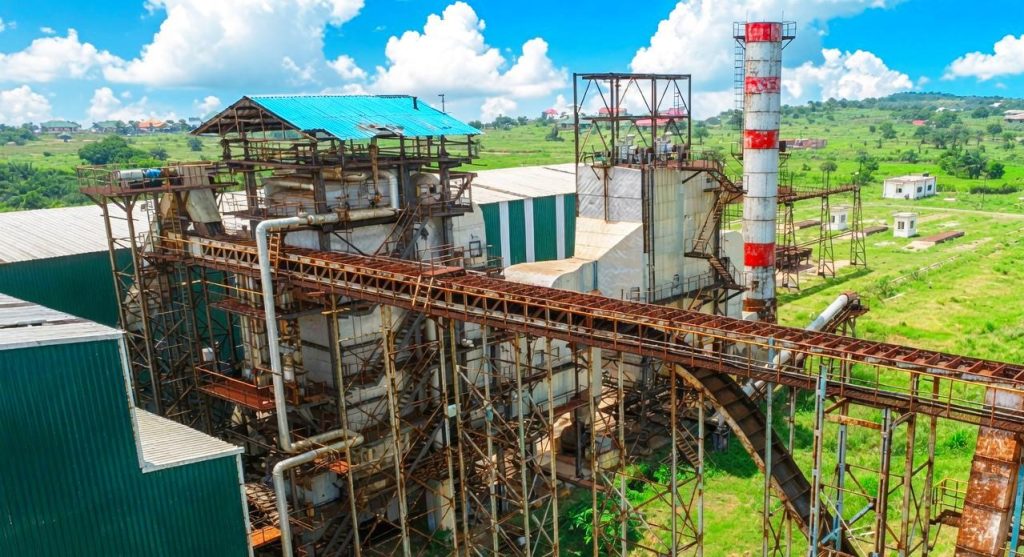
The Komenda Sugar Factory has apparently received more than $34 million in investment, but it has not been able to produce sugar for the last ten years, which has sparked fresh worries about the state-owned asset’s management and security.
Despite the significant public investment, the facility, which was supposed to lessen Ghana’s reliance on imported sugar, provide employment, and boost the local economy, has remained mainly dormant.
With indications that some of the factory’s machinery and equipment have been stolen, the situation has now taken a concerning turn.
In order to prevent the facility from deteriorating further, calls for stricter security measures and accountability have increased in response to the suspected theft. The most recent incident has also rekindled public discussion about the Komenda Sugar Factory’s future, with many calling on the government to resurrect operations, safeguard the surviving assets, and guarantee that the substantial investment yields the desired financial returns.
Restoring the facility to full output, according to stakeholders, may increase local manufacturing, help sugarcane growers, generate jobs, and lessen Ghana’s need on sugar imports.
The Komenda Sugar Factory, situated in Ghana’s Central Region, was designed as a major agro-industrial project with the goals of increasing the local sugarcane sector, reducing the nation’s reliance on imported sugar, and creating thousands of jobs.
Ghana’s Corruption Impunity Problem: Why The Powerful Rarely Face Justice
Dr. Kwame Nkrumah, Ghana’s first president, founded the facility in the 1960s, but it eventually closed.
With the help of a concessional loan from the Indian government, it was renovated and expanded.
At a cost of over US$35 million, the renovated facility was put into service in 2016.
It was anticipated that the factory would:
Every year, produce hundreds of tonnes of refined sugar.Provide both direct and indirect employment opportunities.
• Give sugarcane growers in the Central Region and beyond a ready market.
• Lower Ghana’s yearly sugar import expenditures.
• Encourage local value addition and industry development.
The factory has encountered ongoing difficulties despite its potential, such as:
• There is not enough sugarcane available from neighboring fields.
• Technical and operational challenges.
• Challenges in finance and management.
• Lack of a sustainable business concept causes periods of idleness.
As a result, despite the massive public investment, the factory has been essentially dormant for years, producing little to no commercial sugar.
Concerns regarding the safety and preservation of the state asset have increased as a result of recent allegations claiming that criminals have targeted the factory’s machinery and equipment. Stronger protection, accountability, and immediate action to revitalize the factory before more degradation takes place have all been called for in the wake of the disaster.
Many industry watchers think that the Komenda Sugar Factory might still play a significant role in Ghana’s industrialization, food security, and job creation given sufficient funding, dependable sugarcane farming, capable management, and efficient security.