The United Kingdom has signed a landmark free trade agreement with the Gulf Cooperation Council, making it the first G7 country to clinch such a deal with the six-nation bloc — a milestone that carries as much geopolitical weight as it does economic promise.
For a Britain still navigating its post-Brexit trading identity, the agreement represents one of its most consequential commercial partnerships to date. Announced on Wednesday, it is projected to add £3.7 billion annually to the UK economy over the long term while lifting wages by £1.9 billion a year, according to the Department for Business and Trade. The GCC — already Britain’s fourth-largest non-EU export market — currently sustains £54 billion in bilateral trade each year.
At its core, the deal is a tariff-slashing exercise with immediate effect. An estimated £580 million in duties on British goods entering the Gulf will be eliminated, covering a broad sweep of sectors from food and medical equipment to advanced manufacturing. Of that total, £360 million in tariffs will fall on the very first day the deal takes effect — opening duty-free access for everyday British staples including cereals, cheddar cheese, chocolate and butter.
The agreement spans all six GCC member states: Bahrain, Kuwait, Oman, Qatar, Saudi Arabia and the United Arab Emirates. But it reaches beyond the movement of physical goods. In a significant digital-first commitment, the GCC has — for the first time in any trade agreement — pledged to uphold the free flow of data, sparing British firms the cost of building local data centres in the region.
The World At 8.3 Billion: What Population Growth Means For The Planet — And Why Africa Holds The Key
The deal lands at a moment of acute strategic sensitivity. It has been struck in the shadow of the Iran war — a conflict ignited by US-Israeli strikes against Iran in February, which triggered retaliatory Iranian attacks across the wider region, straining both energy and food supply chains. Against that backdrop, Business and Trade Secretary Peter Kyle framed the agreement as reinforcing “the strength and stability of the UK’s trading relationship with the Gulf at a critical moment.”
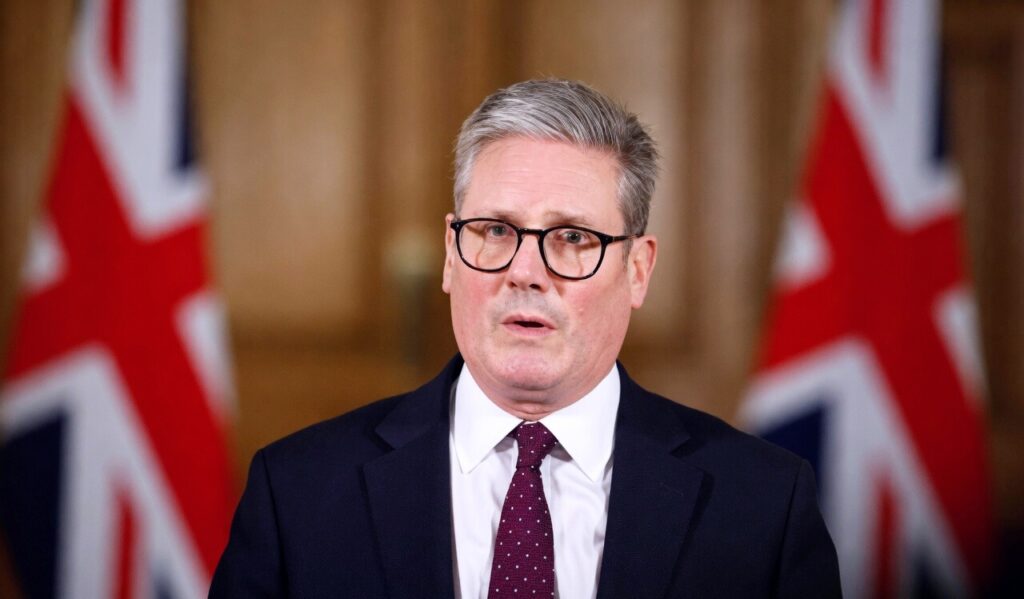
For Prime Minister Keir Starmer, who has weathered considerable domestic political turbulence in recent months, the announcement offers a rare moment of unambiguous good news.
“Today’s agreement is a huge win for British business, and for working people who will feel the benefits in the years ahead through higher wages and more opportunities,” he said.
The Gulf deal joins a rapidly expanding portfolio of post-Brexit trade agreements under the current government, alongside recently concluded pacts with India, the United States, South Korea and the European Union — part of a deliberate effort to diversify Britain’s commercial ties in an era of sweeping American tariffs and shifting global trade alignments. The agreement is not yet in force.
Both the UK and each of the six GCC member states must complete their respective domestic ratification processes before businesses can begin trading under its terms. The economic dividends — significant on paper — remain contingent on that procedural clock running its course.