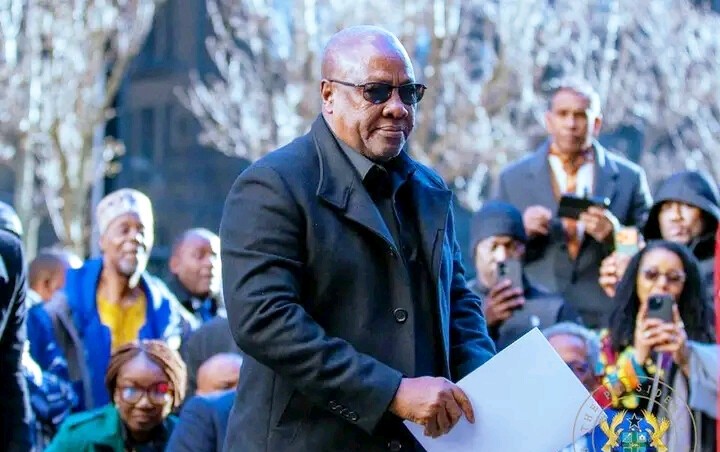
Ghana’s President John Dramani Mahama convened a landmark High-Level Special Event on Reparatory Justice for the Trafficking in Enslaved Africans and the Racialised Chattel Enslavement of Africans at the United Nations Headquarters in New York on Tuesday, March 24, 2026 — bringing one of history’s most consequential unresolved injustices to the world’s foremost diplomatic stage.
Addressing the gathering, President Mahama called on the international community to confront the history of the transatlantic slave trade with unflinching honesty, describing it as one of the gravest injustices ever perpetrated against humanity — a system deliberately engineered to strip Africans of their humanity, dignity and fundamental rights.
He was unequivocal in drawing the line between that history and the present, arguing that the enduring consequences of slavery are not relics of a distant past but living realities, still manifesting in patterns of racial discrimination, economic disparity and structural inequality across societies and continents.
For President Mahama, the path forward demands a collective global response — one rooted not in political convenience, but in truth, recognition and accountability. He announced that a resolution set to be tabled on March 25, 2026 will seek to formally designate the transatlantic slave trade and slavery as crimes against humanity, while contributing to broader efforts toward healing, restoration and justice for Africans and people of African descent worldwide.
Mahama Bags Honorary Doctorate From Prestigious Yonsei University In Korea
Foreign Affairs Minister Samuel Okudzeto Ablakwa, who also delivered the opening remarks, framed the occasion as a critical opportunity for the international community to reckon honestly with the historical realities of the slave trade and the long shadow it continues to cast. He was direct in his assessment: the system reduced millions of Africans to commodities, fundamentally distorted the course of development across continents, and set in motion a chain of consequences that continues to shape global inequalities and social outcomes to this day.
Minister Ablakwa stressed that the legacies of slavery remain plainly visible in contemporary structures of exclusion and disparity, and called for sustained, coordinated efforts among governments, scholars and civil society organisations to document and preserve the historical record — including archival materials, testimonies and material artefacts.
He underscored that the gathering reflected a shared commitment to justice, dignity and equality, and expressed hope that it would deepen dialogue on concrete pathways toward reparatory justice and meaningful restoration for Africans and people of African descent.