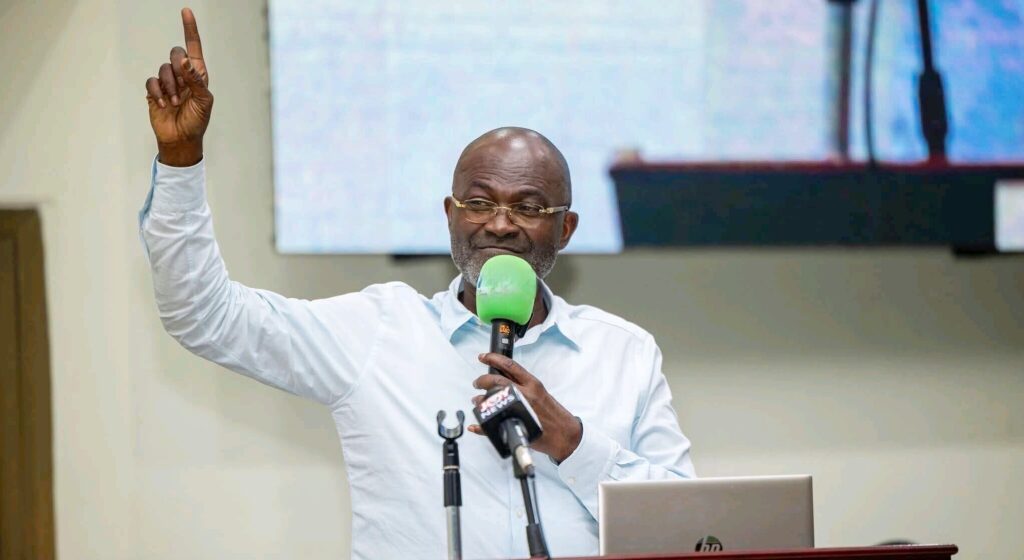
Former Assin Central Member of Parliament Kennedy Ohene Agyapong has delivered one of his most pointed interventions on Ghana’s chronic flooding crisis, placing the blame squarely on decades of human negligence and institutional failure rather than the forces of nature.
In a forceful social media post that has ignited fresh debate online, the outspoken politician argued that Ghana has had ample warning — and has repeatedly chosen to ignore it.
Agyapong’s core argument is as uncomfortable as it is hard to dismiss: Ghana is not a country battered by hurricanes or tsunamis, yet it continues to suffer catastrophic flood losses year after year. The culprit, he insists, is not rainfall — it is the accumulated consequence of poor choices made by individuals, communities, and governments over generations.
Blocked drainage systems, rampant construction on waterways, indiscriminate waste dumping, weak enforcement of planning regulations, and a stubborn disregard for expert warnings have all combined, he argues, to transform every rainy season into a potential disaster.
Agyapong framed his message with a stark statistical indictment that cut through political noise.
“Ghana has been flooding since before Independence,” he wrote. “3,000 dead. 700,000 displaced. $1 billion lost. Not from hurricanes. Not from tsunamis. From gutters we blocked ourselves. From waterways we built on. From warnings we ignored. The rain didn’t fail us. We failed ourselves.”
The raw simplicity of those figures — lives lost, families uprooted, wealth destroyed — strips away every excuse and lays bare the true cost of decades of collective inaction.
The flooding crisis is felt most acutely in Accra, where the pressures of rapid urbanisation have long outpaced the city’s drainage infrastructure. Settlements have expanded into flood-prone zones, waterways have been encroached upon, and enforcement of building and planning codes has remained chronically weak. Every heavy downpour tests an urban system that was never designed — or properly maintained — to cope with the demands placed upon it.
Calls For Replacement Of Ghana’s False News Law Intensify
Agyapong’s remarks arrive against the backdrop of renewed public alarm following recent rains that inundated communities across the country, once again forcing families from their homes and disrupting livelihoods.
Beyond Government — A Call for Public Accountability
While successive administrations have faced legitimate criticism for their handling of flood management, Agyapong’s message deliberately extends accountability beyond the corridors of power. He is calling on ordinary Ghanaians to confront their own role in perpetuating the crisis — from the habit of dumping refuse into gutters to the acceptance of illegal structures on waterways as a normal feature of urban life.
His intervention has resonated widely online, with many Ghanaians acknowledging that stronger building regulation enforcement, meaningful investment in drainage infrastructure, and a fundamental shift in public attitudes toward environmental stewardship are all necessary if the country is to break this grim seasonal cycle.
A Warning Ghana Can No Longer Afford to Ignore
What gives Agyapong’s message its particular weight is its historical sweep. This is not a new crisis triggered by unusual weather — it is a crisis that has been building, flood by flood, decade by decade, long before independence. The warning signs have always been there. The question Ghana must now seriously confront is whether the political will and public resolve exist to finally act on them — or whether the country will continue to rebuild, mourn, and repeat.