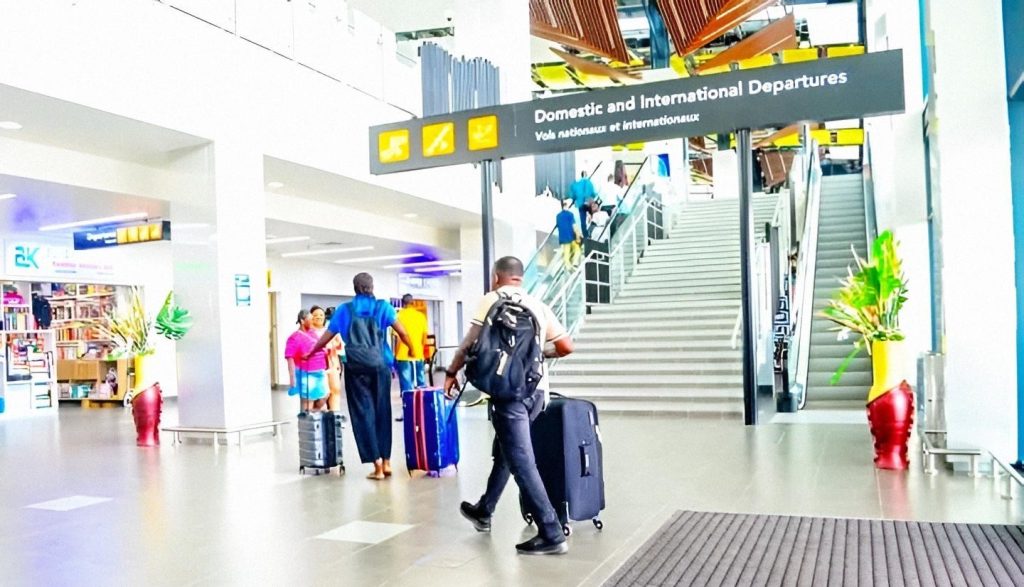
An airport is more than a place where aircraft land and take off. It is often the first physical impression a visitor has of a country and, for departing travellers, the final memory they carry home.
That is why the growing concerns over alleged begging by some workers at Accra International Airport deserve more than passing conversations. Perhaps, in the midst of the brouhaha, the airport needs something as simple as a complaint box—or, better still, a properly structured and highly visible passenger feedback system.
The suggestion may sound old-fashioned in an age of smartphones, websites and social media. But sometimes, simple solutions can provide powerful channels for people who feel uncomfortable making complaints directly.
Passengers arrive at an airport with expectations of professionalism, courtesy and security. They should not have to wonder whether asking for assistance will expose them to an unsolicited demand for money or whether refusing to give something will result in unfriendly treatment.
At the same time, allegations should not automatically become convictions. Not every worker who assists a passenger is necessarily begging, and not every request for money may represent official airport conduct. The distinction between legitimate service, tips voluntarily offered by passengers and inappropriate solicitation is important.
That is precisely why an effective complaint mechanism matters.
A strategically positioned complaint box could give passengers an opportunity to report their experiences without confrontation. A digital version could allow travellers to submit complaints anonymously, identifying the location, time, nature of the incident and, where possible, the department or category of worker involved.
More importantly, such a system should not merely collect complaints. It must lead to action. Management should periodically review the complaints, identify patterns and investigate credible allegations. Where wrongdoing is established, appropriate sanctions should follow. Where complaints are found to be mistaken or unsupported, workers should also be protected from unfair accusations. The issue is ultimately bigger than begging.
It is about institutional culture
An international airport represents the nation. The conduct of a single employee can influence how a foreign visitor perceives an entire country. A passenger who leaves Ghana feeling welcomed, respected and safely assisted may become an unofficial ambassador for the country. Conversely, a traveller who feels harassed, exploited or embarrassed may tell an entirely different story.
More Airline Revenue Flowing To Foreign Carriers Instead Of Ghana
Ghana has invested significantly in tourism and in presenting itself as a welcoming destination. The airport, therefore, should be one of the places where that hospitality is most visible—not an environment where passengers feel pressured to part with money simply because they need assistance.
Perhaps the answer is not just a complaint box. Maybe what is really needed is a Passenger Protection and Feedback System combining physical complaint boxes, QR-code reporting, telephone channels and an online platform. Every passenger should know where to report misconduct and, importantly, believe that the report will be taken seriously.
There should also be clear identification of airport workers and service providers. Passengers should be able to distinguish between immigration officials, security personnel, porters, cleaners, airline employees, taxi operators, airport contractors and other service providers.
Transparency can prevent confusion. The airport authorities could also publish clear guidelines stating what services are free, what services attract legitimate fees, and whether tipping is permitted in particular circumstances. When passengers know exactly what they are expected to pay—and what they are not expected to pay—they become less vulnerable to exploitation. But accountability should go both ways.
Airport workers deserve dignity, fair remuneration and protection from passengers who may mistreat or falsely accuse them. The objective should not be to create an atmosphere where every worker is viewed with suspicion. Rather, it should be to establish a professional environment where both passengers and workers understand their rights and responsibilities.
The controversy surrounding alleged begging should therefore become an opportunity for reflection. Instead of allowing the issue to become another cycle of accusations, denials and social-media outrage, authorities can turn it into a catalyst for reform.
Put a complaint box there. Put a QR code beside it. Provide a hotline. Create an online reporting platform. Investigate complaints. Publish clear rules. Reward good conduct. Punish proven misconduct.
These measures would cost far less than the reputational damage that repeated allegations can create. An international airport should communicate confidence, order and hospitality.
And if a humble complaint box can help achieve that, then perhaps it is time to put one there. Because sometimes, the smallest box can carry the biggest message:
“We are listening.”