Ghana has risked US$270 million on artificial intelligence, but the scale of the computing facility the nation constructs will not be the only indicator of its success. It will depend on whether the investment gives regular Ghanaians new possibilities, enterprises, employment, and skills.
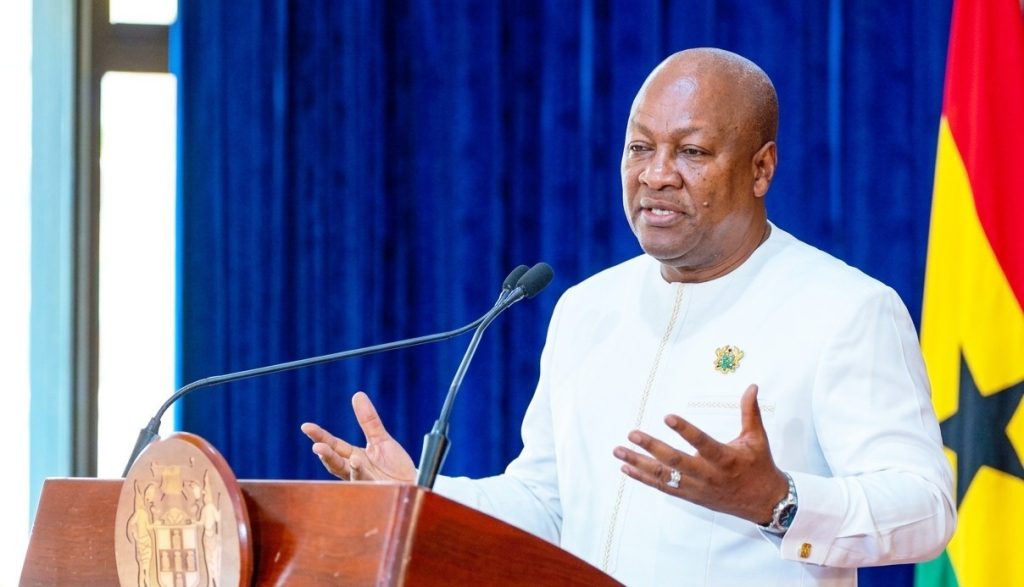
In April 2026, Ghana’s National Artificial Intelligence Strategy (2025–2035) was introduced by President John Dramani Mahama, who also announced a US$270 million commitment to advance the nation’s AI goals and establish Ghana as a premier hub for digital innovation in Africa.
A world-class National AI Computing Center will get US$250 million of the funds, and an additional US$20 million will be used to support the strategy’s short- to medium-term execution. In addition to providing Ghanaian developers and companies with access to the infrastructure required to create AI solutions, the proposed center is anticipated to assist research, innovation, and corporate development.
Ghana has mostly relied on technology. By encouraging Ghana to actively participate in the development, management, and application of AI technology, the nation’s new AI plan aims to alter that attitude.
Software developers, data scientists, cybersecurity experts, AI researchers, digital entrepreneurs, engineers, content producers, educators, and hundreds of other individuals whose jobs might not even exist today could find possibilities in a well-developed AI ecosystem.
This skills push is anticipated to be aided by the government’s One Million Coders Program, which aims to train 300,000 Ghanaians in digital and AI-related skills by 2026.
Leadership, Not Technology, Will Define AI Impact — BoG Deputy Governor
At this point, the US$270 million investment transcends its status as a technology initiative. Since artificial intelligence is already altering how organizations function globally, the job question cannot be disregarded. While some jobs are being reinvented around AI, others are being automated.
However, ensuring that young people have the skills necessary to engage in the new economy may be more of a challenge for Ghana than having robots replace millions of current employment.
An important viewpoint is provided by a recent World Bank assessment. It discovered that while developing economies are now less exposed to AI-related jobs than wealthier nations, they might still benefit greatly from increased productivity if they enhance their access to energy, the internet, and digital skills.
Ghana’s AI prospects will therefore be significantly influenced by events that take place outside the computer labs.
Eventually, a young person in Tamale, Kumasi, Takoradi, Ho, or Accra should be able to apply AI talents to make money, start a business, serve clients abroad, or create a solution to a Ghanaian issue.
If not, Ghana might have an amazing AI infrastructure but an economy that still imports the majority of the technology’s value.
AI in agriculture could assist farmers with identifying crop illnesses, analyzing weather patterns, improving irrigation, and making more informed planting decisions. AI tools could help healthcare providers with patient records, information access, and diagnosis.
AI-powered learning technologies have the potential to enhance access to educational resources and personalize training for both teachers and students. AI has the potential to improve customer service, risk assessment, and fraud detection in the financial industry. Artificial intelligence has the potential to enhance public service delivery, process documents, and analyze vast volumes of data.
Talks With MOONDOOG Technologies On AI-Powered Public Services
In a similar vein, the World Bank has maintained that rather than trying to duplicate the massive AI infrastructure of the world’s wealthiest economies, emerging nations can profit from relatively inexpensive AI tools tailored to local circumstances.
The investment’s economic impact could go well beyond the initial US$270 million if it generates a generation of highly qualified developers, researchers, entrepreneurs, and digital professionals. However, the project’s revolutionary potential may be restricted if it turns into a costly infrastructure initiative with weak ties to universities, private businesses, startups, vocational training, and jobs.
Universities, IT firms, startups, and an increasing number of young people who are accustomed to using digital technologies already exist in Ghana. The National AI Strategy was developed in large part by organizations like KNUST, highlighting the significance of linking government funding with scholarly research and experience.
Creating an ecosystem where those organizations collaborate closely with business is the next stage.This includes research grants, startup funding, AI labs, technology parks, internships, apprenticeships, export opportunities, and hands-on training.
It also entails ensuring that Accra does not continue to be the center of AI development.
Ghana is not merely betting $270 million on artificial intelligence. It is betting that technology can become a new engine of jobs, productivity and economic opportunity.